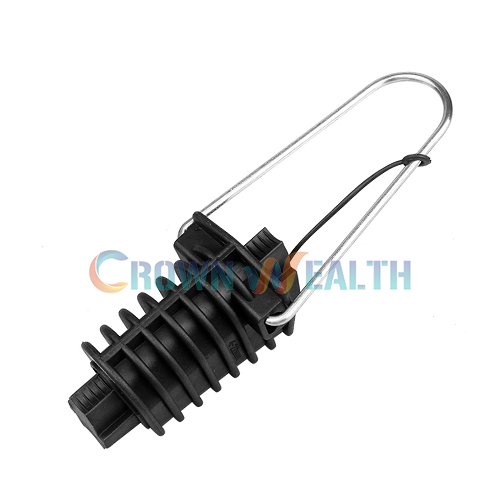
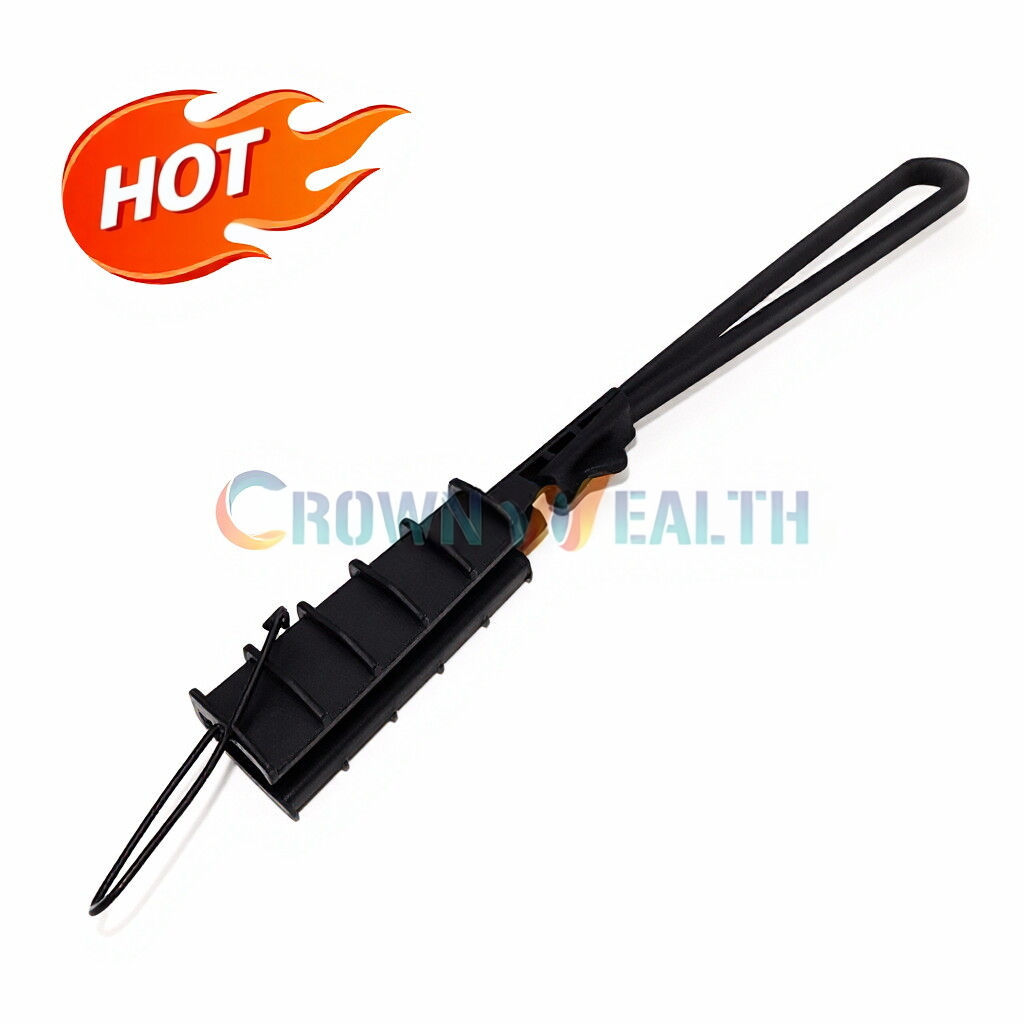
The relentless growth of global data traffic—driven by cloud computing, streaming services, AI workloads, and 5G deployment—has placed unprecedented demands on fiber optic infrastructure. While much attention is given to cables and transceivers, fiber optic clamps are the unsung heroes ensuring network reliability. Standard, one-size-fits-all clamps are no longer sufficient. Today’s telecom networks and hyperscale data centers require tailored clamp designs that address specific environmental, mechanical, and operational challenges.
This article explores why customized fiber optic clamps are critical, the key design factors involved, and how tailored solutions enhance performance in modern telecommunications and data center environments.
Why Tailoring Matters: The Limits of Generic Clamps
Generic fiber clamps may work adequately in low-density, static environments. However, in high-performance telecom and data center applications, they often fall short due to:
-
Excessive insertion loss or back reflection caused by improper bend radius control
-
Microbending and macrobending losses from uneven pressure distribution
-
Fiber fatigue or breakage under vibration, thermal cycling, or mechanical stress
-
Inefficient cable management, leading to congestion and airflow blockage
-
Installation errors, such as over-tightening or misalignment
Tailored clamps mitigate these risks by aligning mechanical design with the precise requirements of the fiber type, cable construction, routing path, and operating environment.
Key Design Factors in Tailored Fiber Optic Clamps
Designing an effective custom fiber clamp requires a systems-level understanding of both optical and mechanical interactions. The following factors are central to tailoring clamp solutions.
1. Fiber and Cable Characteristics
Different fibers and cable designs demand different clamping approaches:
|
Fiber/Cable Type |
Design Consideration |
|---|---|
|
Single-mode fiber |
Requires tighter bend radius control; sensitive to microbending |
|
Multimode fiber |
More tolerant of bending, but still needs strain relief |
|
Loose-tube cables |
Needs gentle support to avoid tube deformation |
|
Tight-buffered cables |
Benefits from firm grip without crushing the buffer |
|
Ribbon fiber |
Requires flat, even pressure across the ribbon width |
|
Armored cables |
May need stronger retention force and corrosion-resistant materials |
A tailored clamp accounts for these physical properties to minimize optical degradation while maintaining secure fixation.
2. Application Environment
Environmental conditions heavily influence material selection and structural design:
Telecom Outdoor Installations
-
Temperature extremes: Clamps must withstand −40 °C to +85 °C cycles
-
UV exposure: UV-stabilized polymers or anodized metals are essential
-
Moisture and corrosion: Stainless steel or composite materials prevent rust
-
Wind and ice loading: Mechanical robustness ensures long-term stability
Data Center Interiors
-
High density: Low-profile, stackable clamps maximize rack space
-
Airflow optimization: Open-frame or vented designs reduce thermal hotspots
-
Frequent reconfiguration: Quick-release or tool-less clamps speed up moves, adds, and changes
-
Electromagnetic compatibility (EMC): Non-metallic clamps avoid interference in sensitive zones
3. Mechanical Performance Requirements
Tailored clamps are engineered to meet precise mechanical specifications:
-
Retention force: Must securely hold cables under tension without slippage
-
Strain relief: Distributes stress away from fragile fiber junctions
-
Vibration damping: Elastomeric inserts or dampening geometries reduce resonance
-
Thermal expansion compensation: Materials with matched coefficients prevent loosening or over-compression
For example, a clamp used in a mobile base station must absorb vibration, whereas a data center patch panel clamp prioritizes repeatable, low-loss connections during frequent handling.
4. Material Selection
Material choice defines durability, optical performance, and compliance with industry standards:
-
Engineering plastics (e.g., polycarbonate, nylon): Lightweight, insulating, cost-effective
-
Stainless steel: High strength, corrosion resistance, suitable for outdoor use
-
Elastomers (e.g., EPDM, silicone): Provide cushioning and vibration isolation
-
Ceramic components: Used in ultra-high-precision or high-temperature contexts
Materials are often selected to meet UL 94 V-0 flammability ratings, RoHS/REACH compliance, and Telcordia GR-20 or IEC 61754 standards.
5. Ergonomics and Installation Efficiency
Even the best-designed clamp fails if it is difficult to install correctly. Tailored designs often incorporate:
-
Color-coded components for fiber type identification
-
Integrated labeling surfaces for documentation and traceability
-
Tool-less operation for rapid deployment and maintenance
-
Visual installation indicators (e.g., “click” feedback when properly seated)
These features reduce human error, accelerate deployment, and simplify future troubleshooting.
Examples of Tailored Clamp Applications
A. Hyperscale Data Centers
In high-density spine-leaf architectures, space is at a premium. Custom clamps may feature:
-
Ultra-low profile to fit between tightly spaced transceivers
-
Vertical stacking to manage multiple fibers in minimal footprint
-
Angled exits to improve bend radius and airflow
Result: Higher fiber density, better thermal performance, and faster provisioning.
B. FTTH (Fiber to the Home) Networks
Clamps for drop cables must balance security with ease of installation:
-
Pre-configured entry points for various sheath diameters
-
Integrated slack storage to accommodate temperature-induced length changes
-
Corrosion-resistant finishes for long-term outdoor exposure
These designs streamline field deployment while ensuring decades of reliable service.
C. Mobile Network Base Stations
Antennas mounted on towers or rooftops face constant wind and vibration. Tailored clamps may include:
-
Reinforced metal bodies for structural integrity
-
Elastomeric linings to dampen vibration and prevent fiber fretting
-
Locking mechanisms resistant to wind-induced torque
This combination preserves signal integrity despite harsh mechanical conditions.
Benefits of Tailored Fiber Optic Clamp Designs
Organizations adopting customized clamp solutions typically realize:
-
Lower insertion loss and return loss, improving overall link budgets
-
Reduced fiber failures, lowering repair costs and downtime
-
Higher packing density, maximizing usable rack and cabinet space
-
Faster installation and maintenance, reducing labor expenses
-
Longer service life, decreasing total cost of ownership (TCO)
In mission-critical networks, these benefits translate directly into higher uptime, better user experience, and stronger competitive positioning.
Conclusion: Designing for the Future of Connectivity
As fiber networks scale to meet the demands of 5G, edge computing, and AI-driven workloads, precision-engineered fiber optic clamps will become increasingly indispensable. Tailored designs align mechanical support with optical sensitivity, environmental resilience, and operational efficiency.
By moving beyond generic hardware and embracing application-specific clamp engineering, telecom operators and data center architects can ensure their fiber infrastructure is not only robust today but also ready for the bandwidth-intensive future ahead.