In the high-stakes world of telecommunications and data transmission, fiber optic networks are the silent workhorses powering our digital age. While much attention is paid to the purity of the glass core or the speed of the transceivers, one often-overlooked component plays a critical role in network longevity and safety: the fiber optic clamp.
As global environmental regulations tighten and supply chains become more transparent, the demand for RoHS and REACH compliant fiber optic clamps has surged. These aren't just buzzwords; they represent a commitment to safety, environmental responsibility, and superior material science. This article delves into what makes these clamps "safe and eco-friendly" and why compliance is a non-negotiable standard for modern network deployments.
Understanding the Regulatory Landscape: RoHS & REACH
Before exploring the clamps themselves, it’s essential to understand the frameworks that govern them.
What is RoHS?
The Restriction of Hazardous Substances (RoHS) Directive is a European Union law that restricts the use of specific hazardous materials in electrical and electronic equipment. For fiber optic clamps, this primarily relates to the metal alloys and plastic components used in manufacturing. The directive limits substances such as:
-
Lead (Pb)
-
Mercury (Hg)
-
Cadmium (Cd)
-
Hexavalent Chromium (Cr⁶⁺)
-
Polybrominated Biphenyls (PBB)
-
Polybrominated Diphenyl Ethers (PBDE)
A RoHS-compliant clamp ensures that these toxic elements are either eliminated or kept well below the maximum concentration values (MCVs), making the product safer for installers and end-users.
What is REACH?
REACH (Registration, Evaluation, Authorisation, and Restriction of Chemicals) is another EU regulation that addresses the production and use of chemical substances. Unlike RoHS, which focuses on specific restricted substances, REACH requires manufacturers to identify and manage the risks linked to the substances they manufacture and market in the EU. Compliance means full disclosure and control over chemicals like phthalates (used in plastics) and other potentially harmful compounds.
The Anatomy of an Eco-Friendly Fiber Optic Clamp
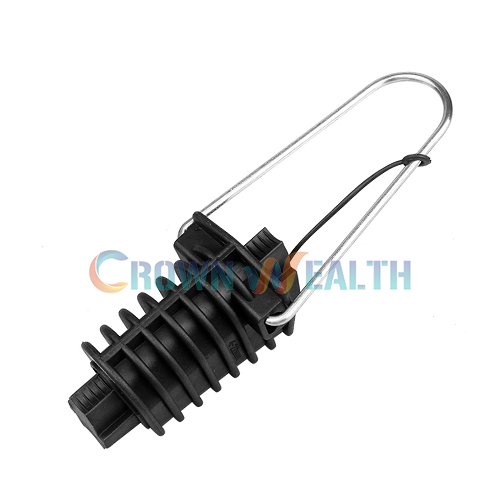
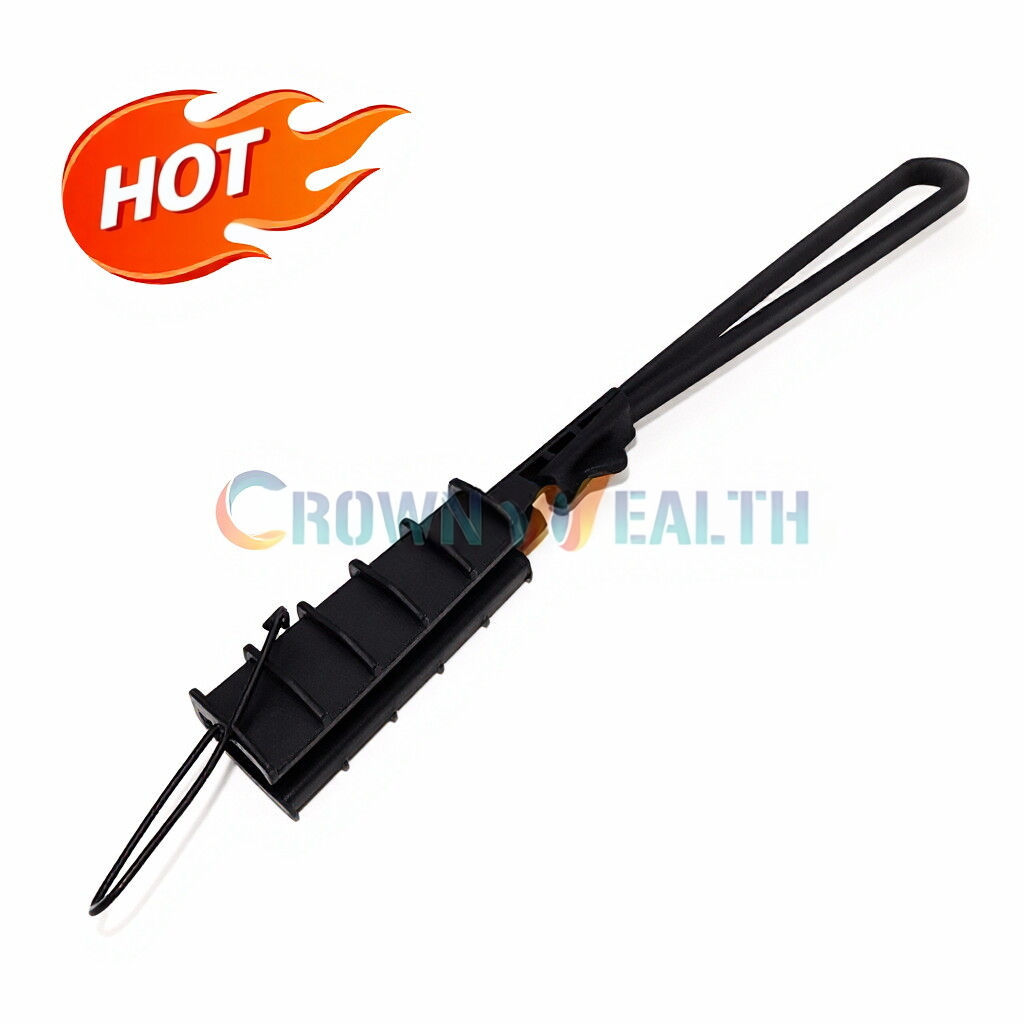
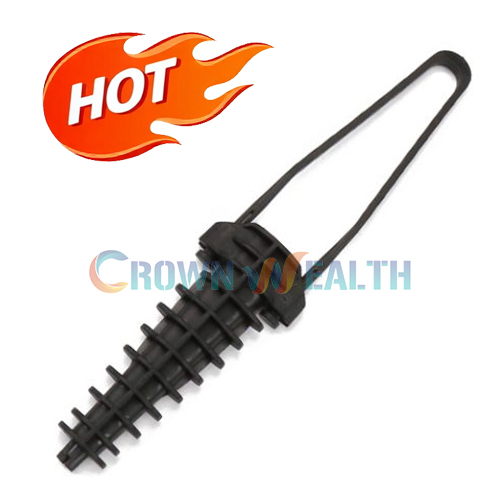
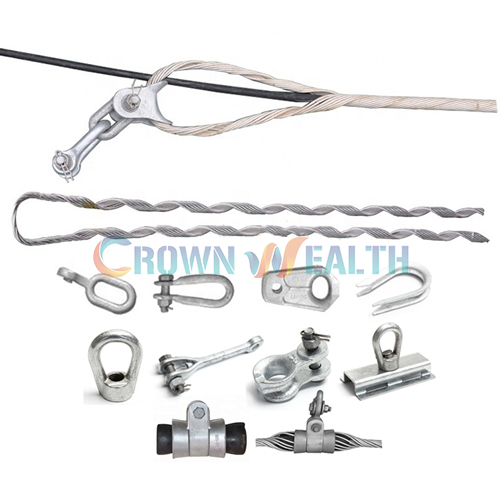
A fiber optic clamp—whether a drop clamp, aerial clamp, or splice closure clamp—must endure harsh environmental conditions while securely holding delicate glass fibers. Achieving this without hazardous substances requires advanced engineering.
1. Advanced Material Selection
To meet RoHS and REACH standards, manufacturers have moved away from traditional, cheaper materials.
|
Component |
Traditional Material |
RoHS/REACH Alternative |
Benefit |
|---|---|---|---|
|
Metal Body |
Zinc-Aluminum Alloys with Lead |
High-Purity Zinc-Aluminum (Lead-Free) |
Prevents lead leaching; maintains high tensile strength. |
|
Plating |
Hexavalent Chromium (Cr⁶⁺) |
Trivalent Chromium (Cr³⁺) Passivation |
Non-carcinogenic plating that offers equivalent corrosion resistance. |
|
Insert/Pad |
PVC or Rubber with Phthalates |
Thermoplastic Elastomers (TPE) / Silicone |
Flexible, UV-resistant, and free from endocrine-disrupting chemicals. |
2. Corrosion Resistance Without Compromise
Standard clamps often rely on hexavalent chromium plating for rust protection. In contrast, compliant clamps utilize trivalent chromium (Cr³⁺) or mechanical zinc plating. This provides the same level of protection against oxidation and salt spray but without the toxic runoff associated with Cr⁶⁺, which is classified as a known carcinogen.
3. UV and Weather Stability
Eco-friendly clamps incorporate UV stabilizers directly into the polymer matrix (often using REACH-compliant additives). This prevents the plastic from becoming brittle and cracking under prolonged sun exposure, ensuring the clamp’s lifespan matches that of the fiber cable itself—often 20+ years.
Why Compliance Matters: Beyond "Green" Marketing
Choosing RoHS and REACH compliant clamps is not merely an ethical choice; it is a strategic business decision with tangible benefits.
1. Installer and Public Safety
Fiber optic technicians often work in confined spaces or handle large quantities of hardware. Eliminating lead, cadmium, and hex-chrome drastically reduces the risk of heavy metal poisoning, allergic reactions, and long-term health issues for installation crews. Furthermore, in the event of a fire, compliant clamps do not release toxic halogenated gases, improving safety for first responders and building occupants.
2. Global Market Access
Regulations similar to RoHS and REACH exist worldwide (e.g., China RoHS, California Proposition 65). By sourcing compliant components, network operators ensure their infrastructure meets international standards, avoiding costly redesigns or import restrictions when expanding networks across borders.
3. End-of-Life Recycling and Circular Economy
Fiber networks eventually require upgrades or decommissioning. RoHS-compliant clamps are easier to recycle because the heavy metals that contaminate scrap metal streams are absent. This aligns with corporate sustainability goals and reduces landfill waste.
Applications in Modern Networks
These safe and eco-friendly clamps are vital across various deployment scenarios:
-
FTTH (Fiber to the Home) Drop Clamps: Securing the drop cable from the pole to the residence. Materials must resist weathering and physical stress without leaching toxins.
-
Aerial Cable Suspension Clamps: Used on telephone poles, these require extreme tensile strength and corrosion resistance in all weather conditions.
-
Splice Closure Clamps: Holding internal splice trays secure within a closure. Here, material purity is crucial to avoid contamination of the optical environment.
Conclusion: The Future is Compliant
The era of "cheap and dirty" hardware is ending. As network infrastructure becomes more integrated into smart cities, green buildings, and sensitive environmental monitoring systems, the integrity of every component matters.
RoHS and REACH compliant fiber optic clamps represent the industry's evolution toward responsible manufacturing. They prove that high performance and environmental stewardship are not mutually exclusive. By investing in these certified components, telecom operators, contractors, and engineers are not just securing fiber cables—they are securing a safer, cleaner, and more sustainable future for global communications.