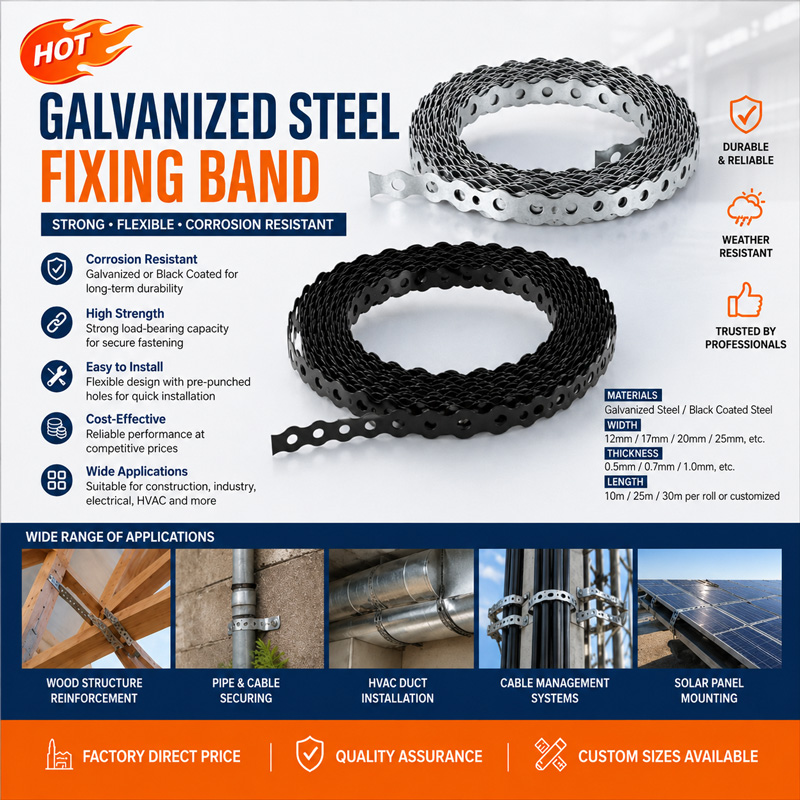
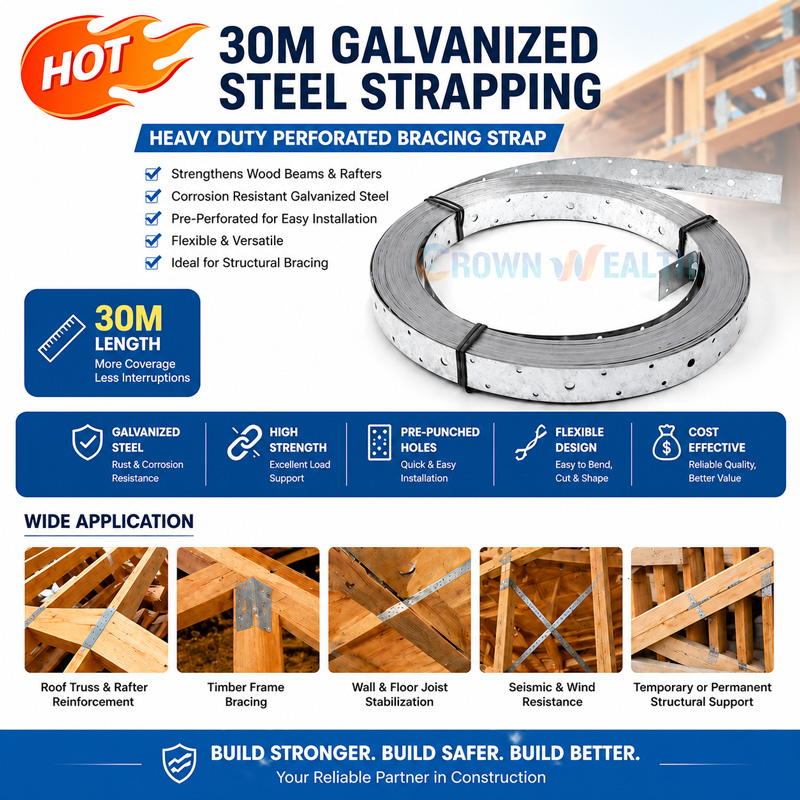
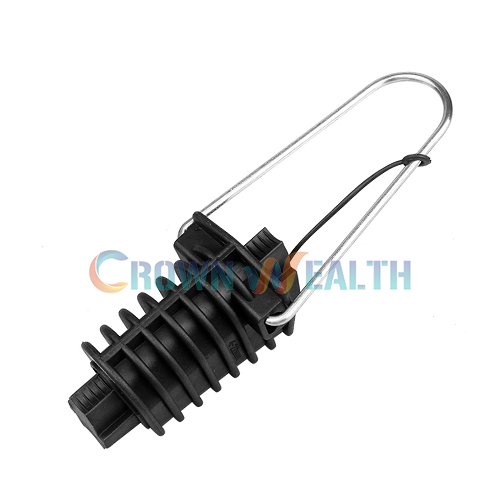
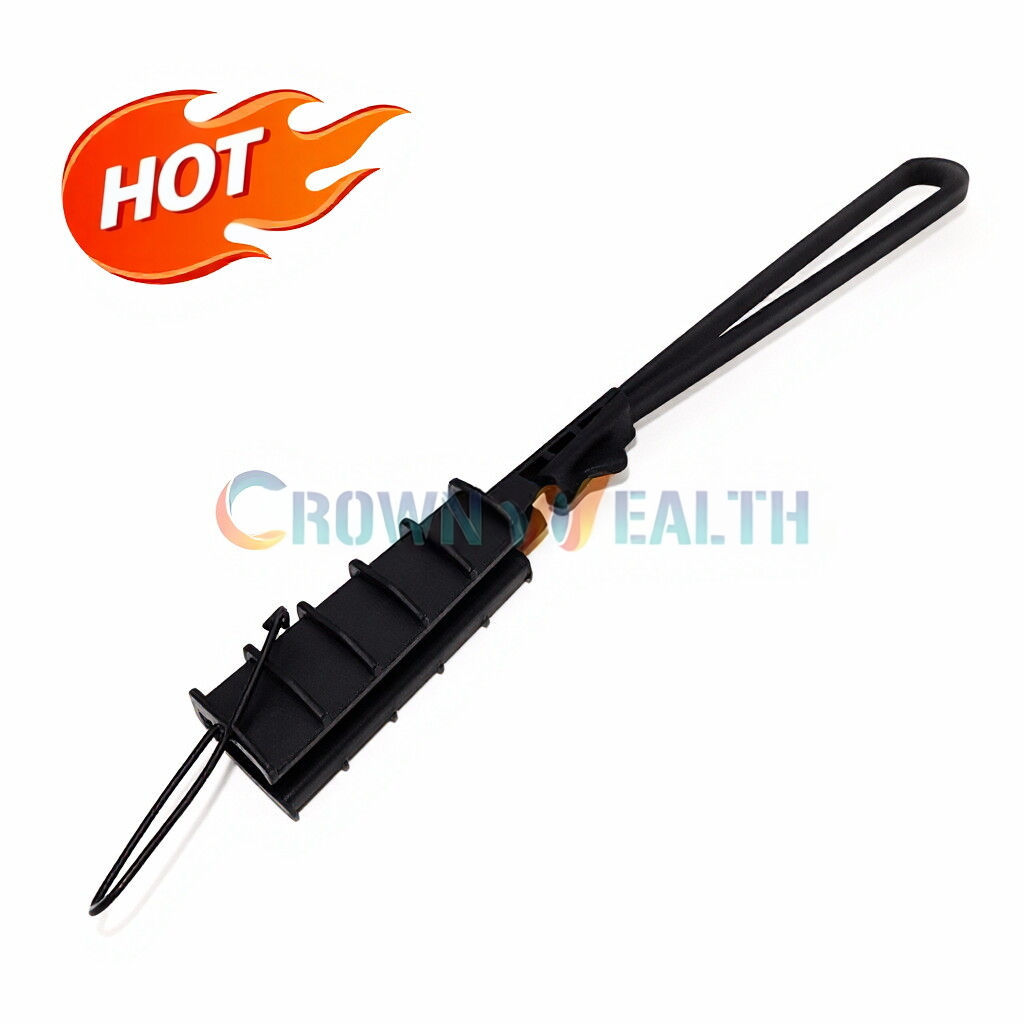
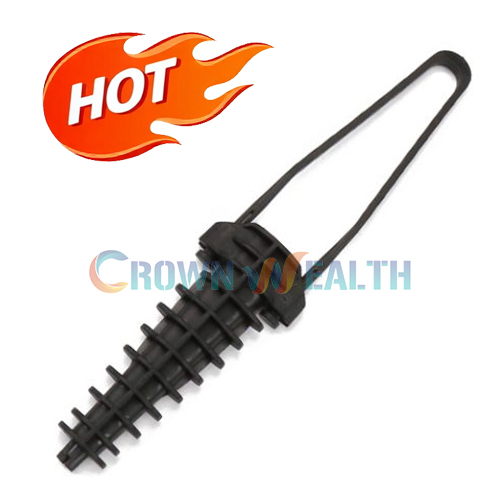
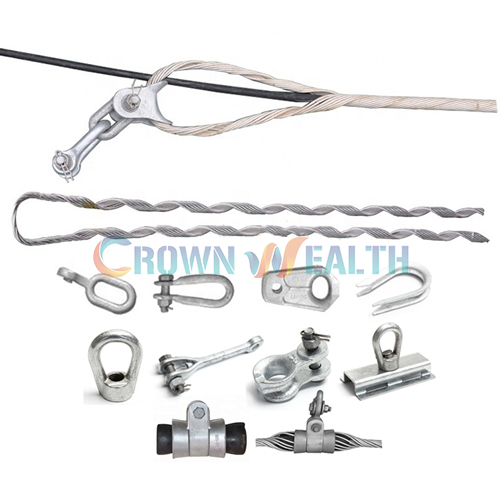
In the sprawling infrastructure of modern telecommunications, where data travels at the speed of light, the focus often falls on the fiber optic cables themselves. However, the reliability of a network—be it aerial, ducted, or buried—hinges critically on the quality of its hardware. Among the most vital yet overlooked components are Telecom-Grade Fiber Cable Clamps. These devices are not mere accessories; they are the sentinels that ensure network integrity against environmental stressors, mechanical strain, and the relentless march of time.
This article explores the engineering, application, and selection criteria for fiber cable clamps designed to meet the rigorous demands of telecom-grade networks.
What Defines "Telecom-Grade"?
A "telecom-grade" component signifies adherence to standards far beyond generic hardware. For fiber cable clamps, this designation implies:
-
Material Integrity: Use of high-grade stainless steel (e.g., SUS304, SUS316) or UV-stabilized, high-impact polymers.
-
Corrosion Resistance: Ability to withstand salt spray, industrial pollution, and moisture for decades without degradation.
-
Tensile Strength: Engineered to support specific load ratings (e.g., 500 lbs, 1000 lbs) without deformation.
-
Microbend Protection: Designed with smooth surfaces and precise radii to prevent stress on the optical fiber, which can cause signal attenuation.
-
Thermal Stability: Performance consistency across extreme temperature ranges (-40°C to +65°C).
Section 1: Aerial Fiber Cable Clamps – Battling Gravity and Wind
Aerial deployments expose cables to wind, ice loading, and gravity. Here, clamps must provide secure suspension while minimizing tension on the fiber.
Key Types & Applications:
1. Figure-8 Cable Clamps (Drop Wire Clamps):
Used for connecting self-supporting figure-8 cables from the pole to the customer premises.
-
Design: Typically features a malleable iron body with a grooved rubber insert. The "figure-8" shape accommodates both the messenger wire and the fiber sheath.
-
Feature Focus: The rubber insert is critical—it must grip the cable firmly without crushing the dielectric core.
2. Suspension Clamps:
Used on intermediate poles to support the weight of long-span aerial cables.
-
Design: Often a cradle-like assembly that distributes the cable’s weight over a wider area.
-
Feature Focus: High tensile strength and flexibility to allow for thermal expansion and contraction of the messenger strand.
3. Dead-End Clamps (Anchors):
Installed at the ends of a cable run to terminate and anchor the tension.
-
Design: Robust metal bodies that completely encircle the cable, often used with a helical dead-end grip for enhanced holding power.
Industry Insight: In areas prone to hurricanes or heavy ice, Vibration Dampers are often paired with suspension clamps to mitigate Aeolian vibration, preventing fatigue failure at the clamp interface.
Section 2: Duct Fiber Cable Clamps – Navigating the Underground Labyrinth
Duct networks require clamps that facilitate organized routing, pulling, and long-term stability within confined spaces.
Key Types & Applications:
1. Duct Rodder/Plug Clamps:
Used to secure the end of a duct rodder during the cable-pulling process.
-
Design: Simple, strong compression clamps that attach the pulling rope to the rodder.
2. Innerduct Clamps & Couplers:
Secure smaller innerducts within a larger main conduit.
-
Design: Snap-in or screw-tight plastic clamps that hold the innerduct firmly against the outer duct wall, preventing "fishmouthing" or movement during pulling.
3. Cable Ties and Lashing Straps (Inside Manholes/Handholes):
While seemingly simple, telecom-grade nylon ties differ significantly from consumer versions.
-
Feature Focus: They are made from UV-resistant, low-smoke, zero-halogen (LSZH) materials to comply with fire safety codes in underground vaults.
Section 3: Buried Fiber Cable Clamps – The Direct Burial Challenge
Direct burial presents the harshest conditions: soil acidity, water immersion, and physical pressure. Hardware must survive without maintenance.
Key Types & Applications:
1. Buried Clamp Assemblies (for Messenger Wire):
In scenarios where a messenger wire is buried alongside the cable for future retrieval, clamps secure the cable to the messenger.
-
Design: Fully encapsulated polymer or stainless steel clamps that are waterproof and resist electrolysis.
2. Splice Case Mounting Brackets:
While not clamps in the traditional sense, these brackets secure splice closures to concrete pads or existing structures within a handhole.
-
Feature Focus: Must resist corrosion from standing water and de-icing salts.
Comparative Analysis: Material Science in Clamp Selection
The choice of material is paramount and depends entirely on the deployment environment.
|
Environment |
Recommended Material |
Key Advantage |
Potential Weakness |
|---|---|---|---|
|
Coastal / Marine |
Stainless Steel (SUS316) |
Superior resistance to salt spray and chloride corrosion. |
Higher cost; potential for galvanic corrosion if mixed with dissimilar metals. |
|
Urban / Industrial |
Stainless Steel (SUS304) |
Excellent general corrosion resistance; good strength. |
May eventually show surface rust in highly polluted atmospheres. |
|
General Aerial |
Hot-Dip Galvanized Steel |
Cost-effective; robust mechanical protection. |
Zinc coating can wear off over decades, leading to red rust. |
|
Duct / Indoor |
UV-Stabilized Polymer |
Lightweight; non-conductive; resistant to chemicals. |
Can become brittle under prolonged UV exposure if not properly stabilized. |
Best Practices for Installation & Longevity
Selecting the right clamp is only half the battle. Proper installation ensures performance:
-
Respect the Bend Radius: Never force a clamp to accommodate a bend tighter than the cable manufacturer’s specified minimum bend radius. This is the fastest way to induce microbends and signal loss.
-
Torque Matters: Over-tightening metal clamps can deform the cable jacket and compromise the internal fibers. Under-tightening can lead to slippage. Always follow manufacturer torque specifications.
-
Avoid "Zippering": When using lashing wire or straps, ensure the ends are properly trimmed and secured to prevent them from whipping in the wind ("zippering") and damaging adjacent cables.
-
Compatibility Check: Ensure the clamp is compatible with the specific cable diameter and jacket type (e.g., PE, AT, Plenum).
The Future of Fiber Clamping: Smart & Sustainable
The industry is evolving. We are seeing the emergence of:
-
Pre-lubricated Clamps: Integrated friction-reducing gels to ease installation and reduce pulling tension.
-
Recyclable Polymers: A push towards sustainable materials that do not sacrifice performance for environmental responsibility.
-
Integrated Sensors: Experimental clamps with embedded sensors to monitor tension, temperature, and even detect vandalism or rodent activity.
Conclusion
Telecom-grade fiber cable clamps are the silent guardians of our digital age. From the windswept heights of an aerial span to the corrosive depths of a buried trench, these components ensure that the promise of high-speed connectivity is delivered reliably. By understanding the nuances of their design, material science, and application, network engineers and installers can build infrastructures that are not only functional today but resilient for decades to come. In telecommunications, strength truly lies in the details—and few details are as critical as the humble clamp.