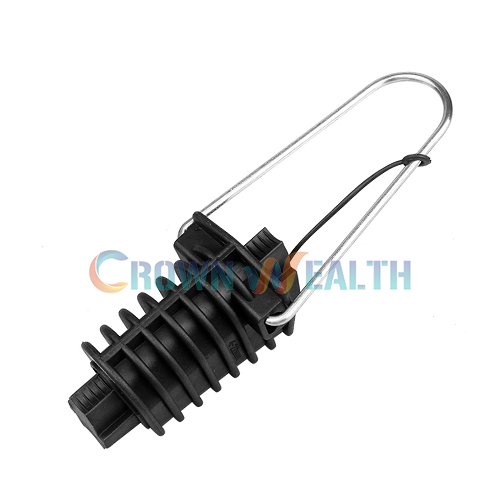
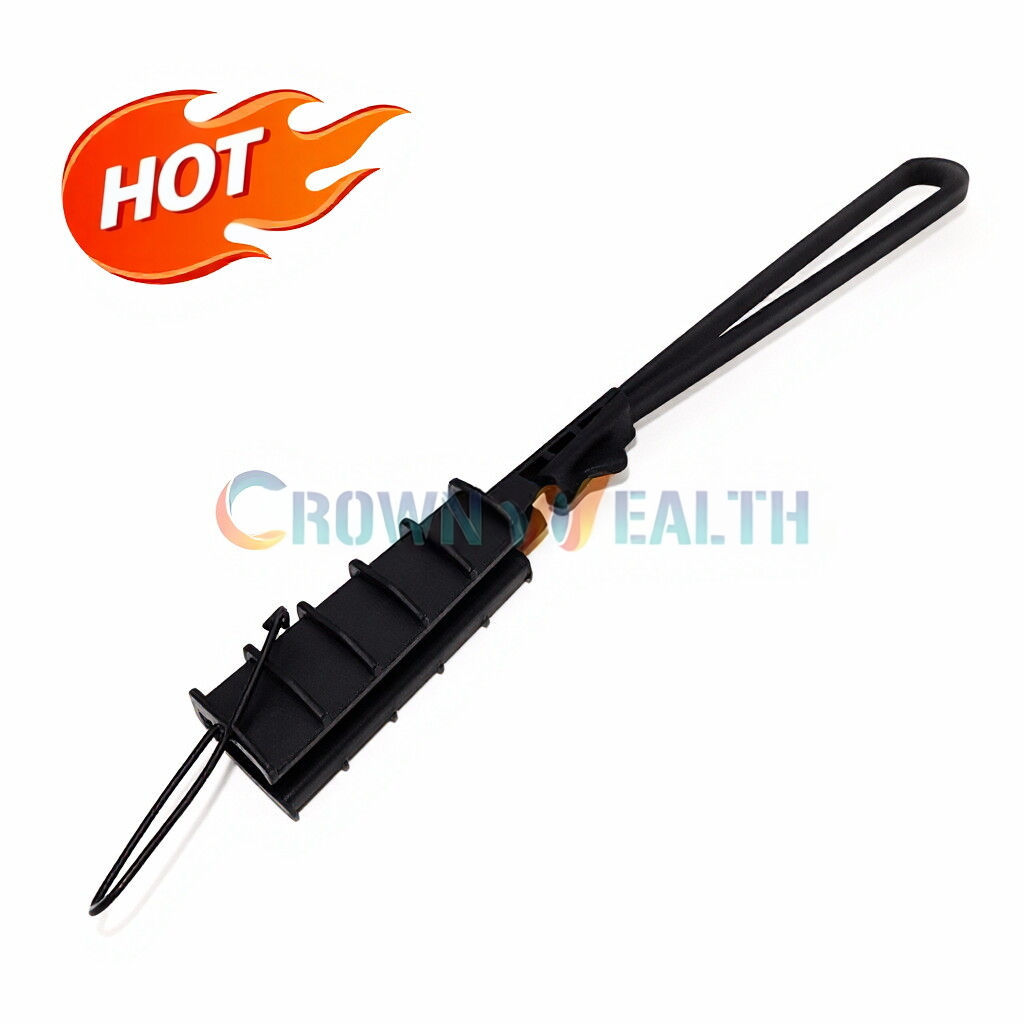
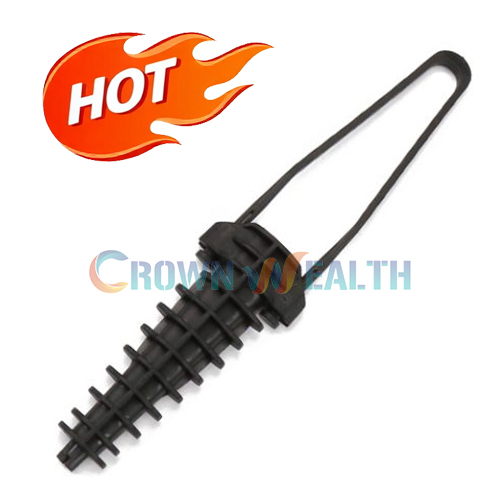
As a supplier of ADSS Down Lead Clamps, I've witnessed firsthand the critical role these components play in ensuring the reliable operation of fiber optic networks. ADSS (All-Dielectric Self-Supporting) cables are widely used in overhead power lines due to their excellent electrical insulation properties and high tensile strength. The down lead clamp is a crucial fitting that secures the ADSS cable from the main span to the ground or other support structures. In this blog, I'll discuss the standards that an ADSS Down Lead Clamp should meet to ensure optimal performance and safety.
Mechanical Strength and Durability
One of the primary requirements for an ADSS Down Lead Clamp is its mechanical strength. The clamp must be able to withstand the mechanical loads imposed on the ADSS cable, including its own weight, wind forces, ice loading, and any dynamic forces caused by vibrations or swaying. A high-quality clamp should be designed to provide a secure grip on the cable without causing damage to its outer sheath or internal fibers.
The material used in the construction of the clamp is a key factor in determining its mechanical strength and durability. Common materials include aluminum alloy, stainless steel, and high-strength plastics. Aluminum alloy clamps are lightweight, corrosion-resistant, and have good electrical conductivity, making them suitable for most applications. Stainless steel clamps offer superior corrosion resistance and are ideal for harsh environments or areas with high humidity. High-strength plastics can be used in applications where weight is a concern or where electrical insulation is required.
In addition to the material, the design of the clamp is also important. A well-designed clamp should have a smooth inner surface to prevent abrasion of the cable sheath. It should also have a proper clamping mechanism that distributes the clamping force evenly along the length of the cable, reducing the risk of stress concentration and cable damage. Some clamps feature a split design that allows for easy installation and removal, while others use a compression or bolted design for a more secure fit.


Electrical Insulation
Since ADSS cables are used in overhead power lines, electrical insulation is a critical consideration for the down lead clamp. The clamp must provide adequate insulation to prevent electrical arcing or short circuits between the cable and the support structure. This is especially important in areas with high voltage power lines or where there is a risk of lightning strikes.
The electrical insulation properties of the clamp are determined by the material used and its design. Non-conductive materials such as high-strength plastics or rubber can be used to provide insulation. Some clamps are also coated with an insulating material to enhance their electrical performance. The design of the clamp should also minimize the risk of electrical contact between the cable and the support structure, for example, by using insulating spacers or bushings.
Corrosion Resistance
ADSS cables are often installed in outdoor environments, where they are exposed to various environmental factors such as moisture, salt, and chemicals. Therefore, the down lead clamp must have good corrosion resistance to ensure its long-term performance and reliability. Corrosion can weaken the clamp, reduce its mechanical strength, and increase the risk of cable failure.
As mentioned earlier, materials such as aluminum alloy and stainless steel are commonly used for their corrosion-resistant properties. Aluminum alloy clamps can be treated with a protective coating, such as anodizing, to enhance their corrosion resistance. Stainless steel clamps are highly resistant to corrosion and are suitable for use in coastal areas or other harsh environments. In addition to the material, the design of the clamp should also prevent the accumulation of moisture or debris, which can accelerate corrosion.
Compatibility with ADSS Cables
The ADSS Down Lead Clamp must be compatible with the specific type and size of the ADSS cable being used. Different cables have different outer diameters, tensile strengths, and sheath materials, and the clamp must be designed to accommodate these variations. Using an incompatible clamp can result in improper installation, reduced clamping force, and increased risk of cable damage.
When selecting a clamp, it is important to consider the cable's outer diameter, tensile strength, and operating temperature range. The clamp should have a clamping range that matches the outer diameter of the cable, allowing for a secure and reliable fit. It should also be able to withstand the maximum tensile load of the cable without slipping or causing damage. Additionally, the clamp should be able to operate within the temperature range specified for the cable, ensuring its performance in all environmental conditions.
Ease of Installation and Maintenance
Ease of installation and maintenance is another important factor to consider when choosing an ADSS Down Lead Clamp. A clamp that is difficult to install can increase labor costs and installation time, while a clamp that is difficult to maintain can lead to increased downtime and maintenance costs.
A well-designed clamp should be easy to install, even in difficult-to-reach locations. It should come with clear installation instructions and all the necessary hardware. Some clamps can be installed using simple hand tools, while others may require specialized installation equipment. In addition to installation, the clamp should also be easy to maintain. This may include features such as easy access to inspection ports or the ability to replace worn parts without disassembling the entire clamp.
Compliance with Standards and Regulations
To ensure the quality and safety of ADSS Down Lead Clamps, it is important to choose products that comply with relevant standards and regulations. These standards specify the requirements for the design, manufacturing, and testing of clamps, ensuring that they meet the necessary performance and safety criteria.
Common standards for ADSS Down Lead Clamps include international standards such as IEC (International Electrotechnical Commission) and national standards such as IEEE (Institute of Electrical and Electronics Engineers). These standards cover aspects such as mechanical strength, electrical insulation, corrosion resistance, and installation requirements. By choosing a clamp that complies with these standards, you can be confident that it has been tested and approved for use in overhead power line applications.
Conclusion
In summary, an ADSS Down Lead Clamp must meet several important standards to ensure its optimal performance and safety. These standards include mechanical strength and durability, electrical insulation, corrosion resistance, compatibility with ADSS cables, ease of installation and maintenance, and compliance with relevant standards and regulations. As a supplier of ADSS Down Lead Clamps, we are committed to providing high-quality products that meet these standards and exceed our customers' expectations.
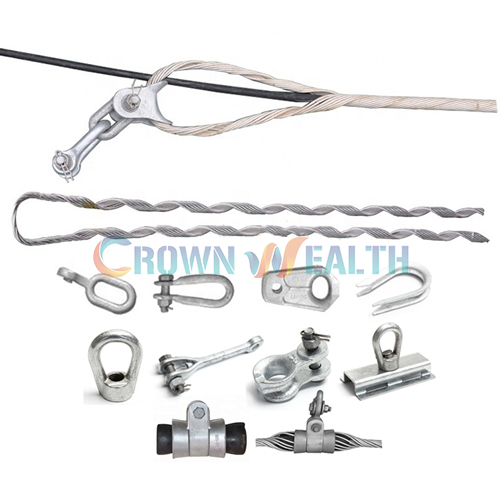
If you are in the market for ADSS Down Lead Clamps or other fiber optic cable fittings, such as Overhead Line Suspension Clamp, Fastening Fixture, or ADSS Fastening Clamp, please feel free to contact us for more information. We would be happy to discuss your specific requirements and provide you with a customized solution.
References
- International Electrotechnical Commission (IEC). IEC standards for fiber optic cable fittings.
- Institute of Electrical and Electronics Engineers (IEEE). IEEE standards for overhead power line components.
- Manufacturer's product specifications and installation guides for ADSS Down Lead Clamps.