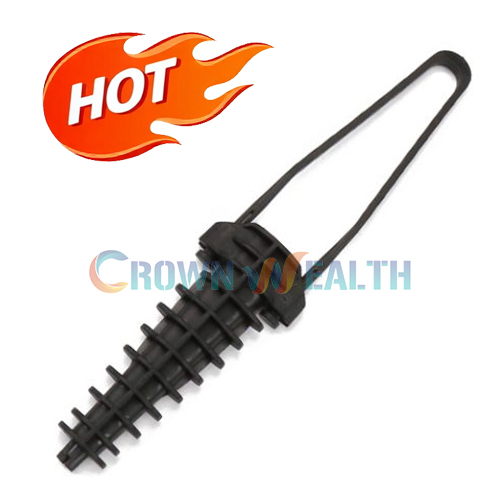
When it comes to the installation of an ADSS (All-Dielectric Self-Supporting) Down Lead Clamp on a curved surface, there are several methods that can be employed. As a supplier of ADSS Down Lead Clamps, I have extensive experience in this field and would like to share some insights on the different installation techniques.


Understanding the ADSS Down Lead Clamp
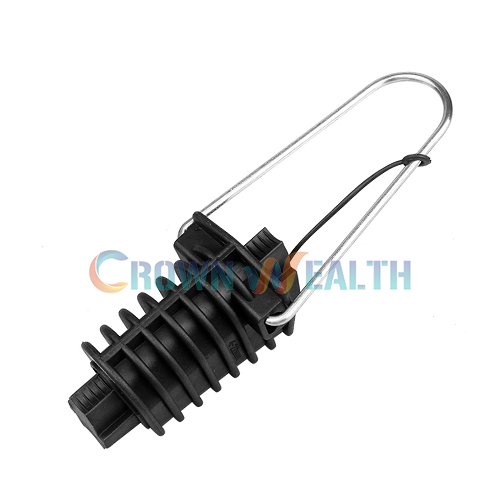
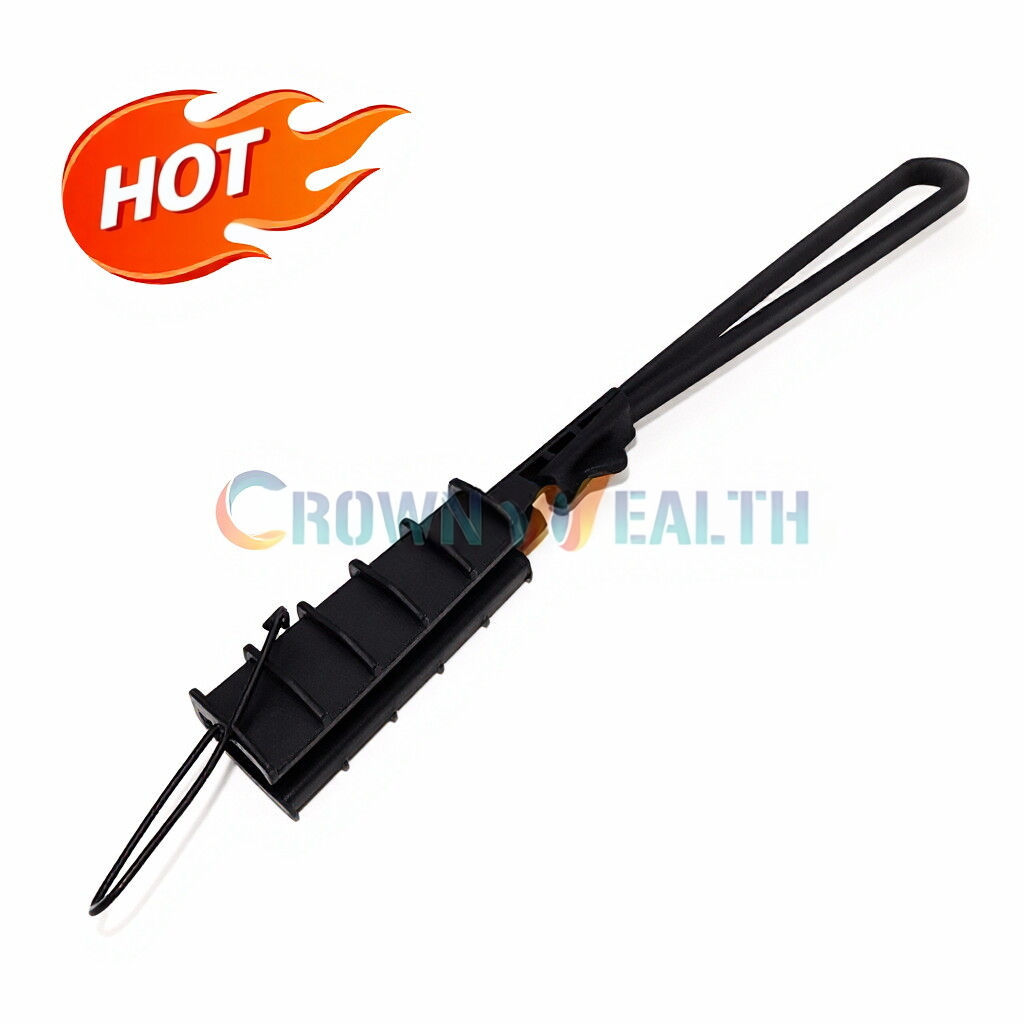
Before delving into the installation methods, it's important to understand the role and design of the ADSS Down Lead Clamp. This clamp is specifically designed to secure the ADSS cable as it descends from the main span to the ground or a lower structure. It needs to provide a reliable and stable connection while accommodating the unique characteristics of the ADSS cable, such as its lightweight and high - strength properties.
Installation Methods
1. Pre - Formed Installation
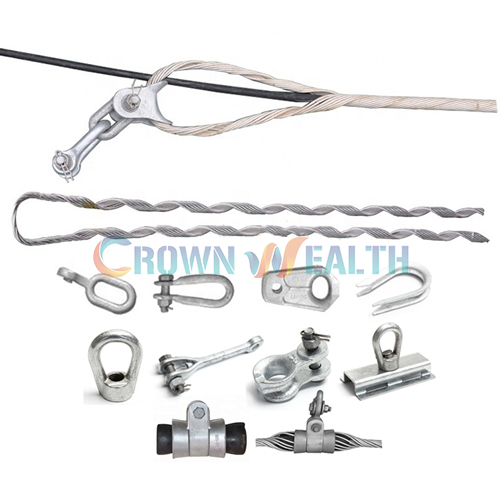
The pre - formed installation method is one of the most common ways to install an ADSS Down Lead Clamp on a curved surface. This method involves using pre - formed wires or strands that are wrapped around the cable and the curved surface. The pre - formed elements are designed to conform to the shape of the cable and the surface, providing a tight and secure fit.
First, the pre - formed wires are carefully measured and cut to the appropriate length. Then, they are wrapped around the ADSS cable in a specific pattern. The curvature of the surface is taken into account during the wrapping process to ensure that the clamp can be properly seated. Once the pre - formed wires are in place around the cable, the clamp is attached to the pre - formed assembly. The advantage of this method is that it can adapt well to different curvatures, and it provides a distributed load on the cable, reducing the risk of damage.
2. Bolted Installation
Bolted installation is another effective method for installing an ADSS Down Lead Clamp on a curved surface. In this method, the clamp is designed with bolt holes, and bolts are used to secure the clamp to the curved surface.
To start, the position of the clamp on the curved surface is marked accurately. Holes are then drilled into the surface at the marked positions. The ADSS cable is placed in the appropriate position within the clamp, and the clamp is aligned with the drilled holes. Bolts are inserted through the holes in the clamp and tightened to secure the clamp to the surface. This method provides a strong and rigid connection, but it requires more precise drilling and alignment, especially on curved surfaces. Special care must be taken to ensure that the bolts are tightened evenly to avoid uneven stress on the cable and the clamp.
3. Adhesive Installation
Adhesive installation can be a suitable option for certain curved surfaces where drilling or pre - forming is not practical. This method involves using a high - strength adhesive to bond the ADSS Down Lead Clamp to the surface.
The surface must be thoroughly cleaned and prepared before applying the adhesive. Any dirt, grease, or debris can affect the bonding strength. The adhesive is applied to the back of the clamp and the contact area of the curved surface. The clamp is then carefully placed on the surface and held in position until the adhesive cures. It's important to choose an adhesive that is compatible with the materials of the clamp and the surface, and that can withstand environmental factors such as temperature changes and moisture.
Considerations for Installation on Curved Surfaces
When installing an ADSS Down Lead Clamp on a curved surface, several factors need to be considered:
Surface Curvature
The degree of curvature of the surface is a crucial factor. Different installation methods may be more suitable for different curvatures. For example, pre - formed installation is often better for highly curved surfaces, while bolted installation may be more appropriate for surfaces with a relatively gentle curve.
Cable Protection
The ADSS cable is a delicate component, and the installation process should not cause any damage to it. All installation methods should be carried out in a way that distributes the load evenly on the cable to prevent stress concentration.
Environmental Conditions
The installation site's environmental conditions, such as temperature, humidity, and exposure to sunlight, can affect the performance of the clamp and the installation method. For example, in cold climates, an adhesive may need to have good low - temperature properties to maintain its bonding strength.
Related Products
In addition to the ADSS Down Lead Clamp, there are other related products that can be used in conjunction with it. For instance, the Fastening Clamp for Pole Or Tower can be used to secure the ADSS cable to poles or towers, providing additional support. The ADSS Cable Storage Bracket is useful for storing excess cable in an organized manner. And the Preformed Dead End Guy Grips Sets for ADSS can be used at the end of the ADSS cable to provide a secure termination.
Conclusion
Installing an ADSS Down Lead Clamp on a curved surface requires careful consideration of the installation method, the surface curvature, cable protection, and environmental conditions. As a supplier, we offer high - quality ADSS Down Lead Clamps that are designed to meet the diverse needs of different installation scenarios. Whether you choose pre - formed, bolted, or adhesive installation, our products are engineered to provide reliable and long - lasting performance.
If you are in the market for ADSS Down Lead Clamps or other related fiber - optic cable fittings, we invite you to contact us for more information and to discuss your specific requirements. Our team of experts is ready to assist you in selecting the right products and installation methods for your project.
References
- "Fiber Optic Cable Installation Handbook", published by a leading industry association.
- Technical documents from major manufacturers of ADSS cable and related fittings.