Spiral vibration dampers are widely used in various industries to mitigate vibrations, but the question remains: Can they reduce all types of vibrations? As a supplier of spiral vibration dampers, I have delved deep into this topic to provide a comprehensive answer.


Understanding Spiral Vibration Dampers
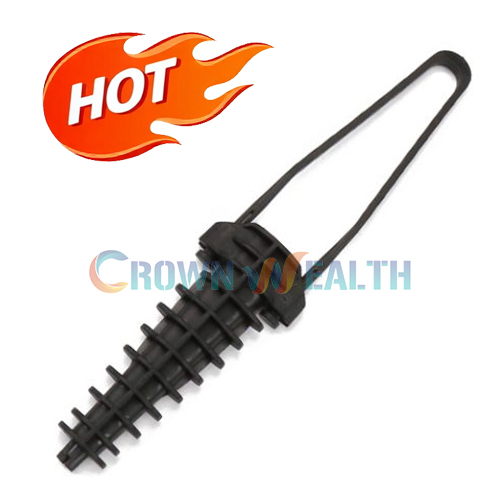
Spiral vibration dampers are mechanical devices designed to absorb and dissipate the energy of vibrations. They typically consist of a spiral-shaped wire or cable that is attached to the vibrating structure. When vibrations occur, the damper's spiral shape allows it to deform and stretch, converting the kinetic energy of the vibration into heat energy through internal friction. This process effectively reduces the amplitude of the vibrations and helps protect the structure from damage.
Types of Vibrations
Before discussing whether spiral vibration dampers can reduce all types of vibrations, it's essential to understand the different types of vibrations that exist. Vibrations can be classified into several categories based on their frequency, amplitude, and mode of vibration.
1. Free Vibrations
Free vibrations occur when a structure is disturbed from its equilibrium position and then allowed to vibrate freely without any external force acting on it. For example, when a pendulum is displaced and released, it will oscillate back and forth in free vibration. Spiral vibration dampers can be effective in reducing free vibrations by dissipating the energy of the initial disturbance and preventing the structure from continuing to vibrate at its natural frequency.
2. Forced Vibrations
Forced vibrations occur when a structure is subjected to an external periodic force. This force can be caused by machinery, wind, or other environmental factors. For instance, the blades of a wind turbine experience forced vibrations due to the wind acting on them. Spiral vibration dampers can help reduce forced vibrations by absorbing and dissipating the energy of the external force, thereby reducing the amplitude of the vibrations.
3. Resonant Vibrations
Resonant vibrations occur when the frequency of an external force matches the natural frequency of a structure. This can lead to a significant increase in the amplitude of the vibrations, which can cause severe damage to the structure. Spiral vibration dampers can play a crucial role in preventing resonant vibrations by changing the natural frequency of the structure or by dissipating the energy of the resonant vibrations before they cause damage.
Limitations of Spiral Vibration Dampers
While spiral vibration dampers are effective in reducing many types of vibrations, they do have some limitations.
1. Frequency Range
Spiral vibration dampers are most effective within a specific frequency range. If the frequency of the vibrations is too high or too low, the damper may not be able to absorb and dissipate the energy effectively. For example, in high - frequency applications, the damper may not be able to deform fast enough to keep up with the vibrations, resulting in reduced effectiveness.
2. Amplitude of Vibrations
In some cases, if the amplitude of the vibrations is extremely large, the spiral vibration damper may reach its maximum deformation limit. Once this limit is reached, the damper may not be able to absorb any more energy, and the vibrations may continue to cause damage to the structure.
3. Complex Vibrations
In real - world scenarios, vibrations can be very complex, consisting of multiple frequencies and modes of vibration. Spiral vibration dampers may not be able to handle these complex vibrations as effectively as they can handle simple, single - frequency vibrations.
Applications of Spiral Vibration Dampers
Despite their limitations, spiral vibration dampers have a wide range of applications in different industries.
1. Power Transmission Lines
In power transmission lines, spiral vibration dampers are used to reduce the vibrations caused by wind. These vibrations can lead to fatigue and damage to the conductors and other components of the transmission line. By installing spiral vibration dampers, the lifespan of the power transmission lines can be significantly extended.
2. Telecommunication Towers
Telecommunication towers are also susceptible to vibrations caused by wind and other environmental factors. Spiral vibration dampers can be installed on the towers to reduce these vibrations and ensure the stability and safety of the towers.
3. Machinery
In industrial machinery, vibrations can cause wear and tear on the components, leading to reduced efficiency and increased maintenance costs. Spiral vibration dampers can be used to reduce these vibrations, improving the performance and reliability of the machinery.
Complementary Products
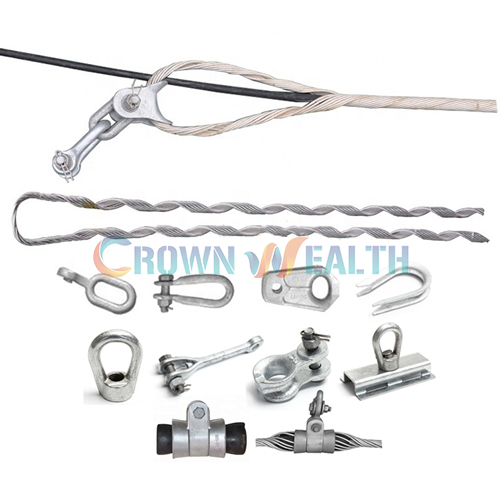
In addition to spiral vibration dampers, there are other products that can be used in conjunction with them to further enhance vibration reduction. For example, Preformed Guy Grips are used to secure guy wires, which can help stabilize structures and reduce vibrations. Preformed Conductor Tension Set is used to adjust the tension of conductors in power transmission lines, which can also have an impact on vibration levels. And Preformed Armor Rods for Conductor Repair can be used to reinforce conductors and protect them from damage caused by vibrations.
Conclusion
In conclusion, while spiral vibration dampers are a valuable tool for reducing vibrations, they cannot reduce all types of vibrations. Their effectiveness depends on factors such as the frequency range, amplitude, and complexity of the vibrations. However, in many applications, they can significantly reduce vibrations and protect structures and machinery from damage.
If you are facing vibration problems in your industry and are considering using spiral vibration dampers or other related products, I encourage you to contact us for more information. Our team of experts can help you determine the most suitable solution for your specific needs and provide you with high - quality products and professional services.
References
- Meirovitch, L. (2001). Fundamentals of Vibrations. McGraw - Hill.
- Inman, D. J. (2014). Engineering Vibration. Pearson.
- Den Hartog, J. P. (1985). Mechanical Vibrations. Dover Publications.