Hey there! As a supplier of Cable Storage Assemblies, I often get asked the question: "How much cable can a cable storage assembly store?" Well, let's dive into this topic and break it down.
First off, it's important to understand that the storage capacity of a cable storage assembly isn't a one - size - fits - all kind of thing. There are several factors that play a role in determining just how much cable it can hold.
Factors Affecting Cable Storage Capacity
1. Size and Design of the Assembly
The physical dimensions of the cable storage assembly are a major factor. Larger assemblies, obviously, have more space to store cable. For example, a big, industrial - grade cable storage unit with multiple compartments and a large footprint can hold a heck of a lot more cable than a small, single - compartment one designed for home use.


The design also matters. Some assemblies are designed with a spiral or coiling mechanism that allows for more efficient use of space. This means you can pack in more cable without it getting all tangled up. Others might have adjustable shelves or dividers, which can be configured to fit different lengths and types of cable.
2. Cable Type and Thickness
Not all cables are created equal. Different types of cables have different thicknesses, and this directly impacts how much can be stored. For instance, a thick, heavy - duty power cable will take up more space compared to a thin, fiber - optic cable.
Let's say you're dealing with Ethernet cables. These are relatively thin and flexible, so you can coil a long length of them in a relatively small storage assembly. On the other hand, if you're storing high - voltage power cables, they're thicker and stiffer, and you'll need a larger assembly with more room for proper coiling and storage.
3. Coiling Method
How you coil the cable also affects storage capacity. A tight, uniform coil will take up less space than a loose, haphazard one. Some cable storage assemblies come with guides or spools that help you create tight, consistent coils. This not only maximizes the amount of cable you can store but also makes it easier to access and manage the cable later on.
Calculating Cable Storage Capacity
Now, let's talk about how you can actually calculate the storage capacity of a cable storage assembly. It's not an exact science, but there are some general guidelines you can follow.
First, measure the available space inside the assembly. If it's a rectangular box, measure the length, width, and height. Then, consider the diameter of the cable you want to store.
Let's assume you have a cable storage box with dimensions of 2 feet by 2 feet by 1 foot. And you're storing a cable with a diameter of 0.5 inches.
The volume of the box is (V = ltimes wtimes h=2times2times1 = 4) cubic feet. Since 1 cubic foot is equal to 1728 cubic inches, the volume of the box in cubic inches is (4times1728 = 6912) cubic inches.
To estimate how much cable can fit, you need to consider the space taken up by the coiled cable. A rough estimate is that the volume of a coiled cable is proportional to the cross - sectional area of the coil and the length of the cable.
If we assume a tight coil, we can use the formula for the volume of a cylinder (since a coiled cable can be approximated as a cylinder). The cross - sectional area of the coil of the cable with a diameter of 0.5 inches is (A=pitimes(frac{0.5}{2})^2=pitimes0.0625approx0.196) square inches.
Let's say the average length of cable per layer in the box is related to the dimensions of the box. If we assume we can stack the coils neatly, we can estimate the number of layers and the length of cable per layer.
This is a very simplified example, and in real - world scenarios, there are other factors like the shape of the assembly, the presence of dividers, and the flexibility of the cable that can affect the calculation.
Real - World Examples
In a commercial setting, like a data center, cable storage assemblies are crucial for managing the vast amount of cables. A large - scale cable storage rack in a data center might be able to store thousands of feet of Ethernet and fiber - optic cables. These racks are designed with multiple levels of shelves and spools to keep the cables organized and easily accessible.
On the other hand, in a small office or home environment, a simple wall - mounted cable storage box might only be able to hold a few hundred feet of cable. These are usually designed for easy installation and basic cable management.
Our Cable Storage Assemblies
As a supplier of Cable Storage Assemblies, we offer a wide range of products to meet different needs. Whether you're a small business looking to manage your network cables or a large industrial facility dealing with high - voltage power cables, we've got you covered.
Our assemblies are designed with the latest technology to maximize storage capacity and ensure easy cable access. We use high - quality materials to ensure durability and long - term performance.
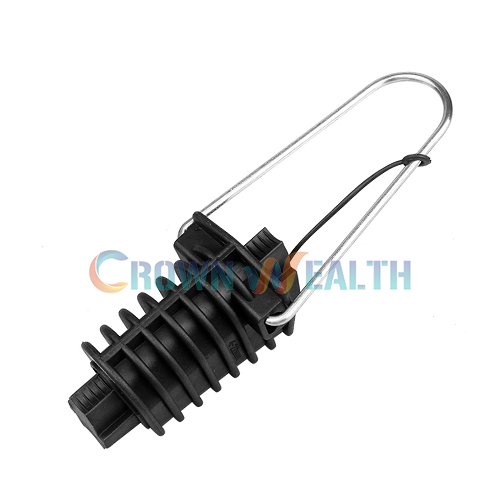
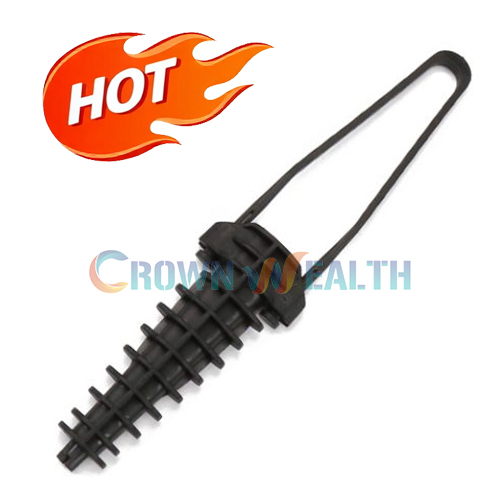
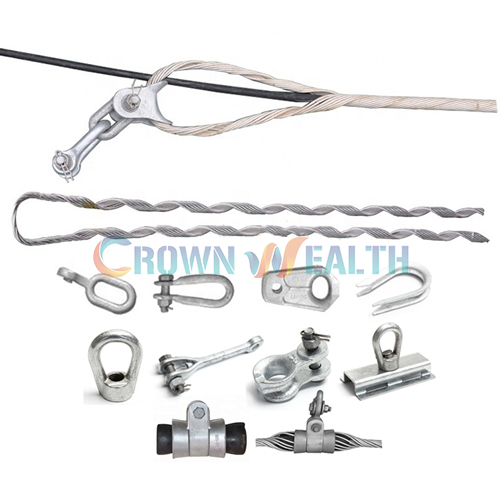
And if you're in the market for cable fittings, we also have some great options. Check out our OPGW Preformed Helical Tension Clamp, OPGW Strain Clamp, and Tension Clamp for Overhead Line. These fittings are essential for proper cable installation and management.
Conclusion
So, to answer the question "How much cable can a cable storage assembly store?", it depends on a variety of factors including the size and design of the assembly, the type and thickness of the cable, and the coiling method. By understanding these factors, you can make an informed decision when choosing a cable storage assembly for your needs.
If you're interested in our Cable Storage Assemblies or have any questions about cable storage capacity, feel free to reach out. We're here to help you find the perfect solution for your cable management needs. Let's start a conversation and see how we can work together to make your cable storage more efficient.
References
- Industry standards for cable storage and management
- Technical manuals for cable storage assemblies