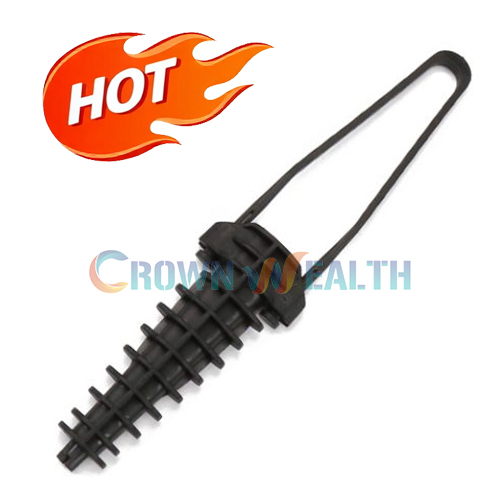
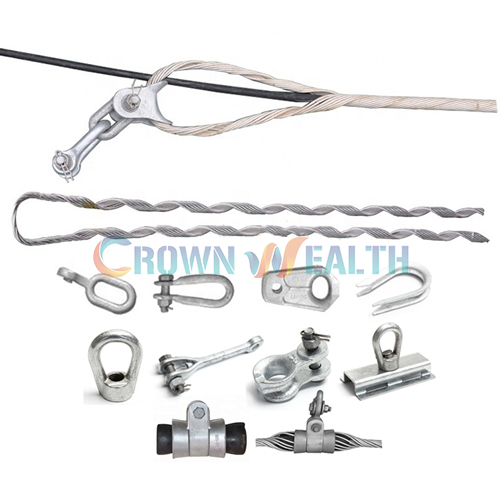
In the realm of industrial and mechanical applications, link fittings play a crucial role in connecting different components. As a reliable link fitting supplier, I have witnessed firsthand the significance of these seemingly simple yet highly functional pieces in various projects. In this blog, I will delve into how link fittings connect different components, exploring their types, working principles, and applications.
Types of Link Fittings and Their Connecting Mechanisms
1. Hooks and Eyes
One of the most basic and widely used types of link fittings is the hook - and - eye combination. Hooks are designed with a curved end that can easily engage with an eye, which is a circular or oval - shaped loop. This type of connection is commonly used in applications where quick and easy attachment and detachment are required. For example, in the rigging industry, hooks and eyes are used to connect ropes, chains, and other lifting components. The hook can be easily inserted into the eye, and the connection is secured by the shape of the hook preventing it from accidentally coming out. However, in high - stress applications, additional safety mechanisms such as safety latches on the hooks may be necessary to ensure the reliability of the connection.
2. Bolts and Nuts
Bolts and nuts are another fundamental type of link fitting. A bolt is a threaded rod with a head at one end, and a nut is a threaded fastener that is screwed onto the bolt. When used to connect different components, holes are drilled through the parts to be joined, and the bolt is inserted through these holes. The nut is then tightened onto the bolt, creating a clamping force that holds the components together. This type of connection is very strong and can withstand high levels of tension and shear forces. For instance, in the construction of steel structures, bolts and nuts are used to connect beams, columns, and other structural elements. The tightness of the connection can be adjusted by the amount of torque applied when tightening the nut, which is crucial for ensuring the structural integrity of the assembly.
3. Couplings
Couplings are used to connect two shafts together. There are different types of couplings, such as rigid couplings and flexible couplings. Rigid couplings are used when the two shafts need to be perfectly aligned and transmit torque without any flexibility. They are typically made of a single piece or two pieces that are bolted together. Flexible couplings, on the other hand, can accommodate some misalignment between the shafts, whether it is angular, parallel, or axial misalignment. They are often made of materials such as rubber or elastomers, which can deform slightly to absorb the misalignment while still transmitting torque. For example, in the automotive industry, couplings are used to connect the engine shaft to the transmission shaft, allowing the power from the engine to be transferred to the wheels.
4. YLP Type Extension Rod
The YLP Type Extension Rod is a specialized link fitting that is used to extend the reach of various tools or components. It is designed with a threaded end on one or both sides, which allows it to be easily connected to other threaded components. This type of extension rod is commonly used in industries such as construction, plumbing, and electrical work. For example, in plumbing, an extension rod can be used to reach pipes or fittings that are located in hard - to - reach places. The connection between the extension rod and the tool or component is made by screwing the threaded ends together, creating a secure and reliable link.
5. Preformed Ground Wire Tension Set Clamp
The Preformed Ground Wire Tension Set Clamp is a link fitting used in electrical grounding systems. It is designed to securely connect the ground wire to the grounding electrode or other electrical components. The preformed design of the clamp allows it to conform to the shape of the wire and the component, providing a tight and reliable connection. This type of clamp is typically made of materials that are resistant to corrosion, such as stainless steel or galvanized steel, to ensure the long - term performance of the grounding system. The connection is made by tightening the clamp onto the wire and the component, which creates a low - resistance path for electrical current to flow to the ground.
6. Hot Dip Galvanized U Bolt
The Hot Dip Galvanized U Bolt is a versatile link fitting that is shaped like the letter "U" with threads on both ends. It is commonly used to secure pipes, cables, or other cylindrical objects to a structure. The U - shaped design allows it to wrap around the object, and nuts are tightened onto the threaded ends to hold the object in place. The hot - dip galvanized coating on the U bolt provides excellent corrosion resistance, making it suitable for outdoor and harsh environment applications. For example, in the utility industry, U bolts are used to secure power lines to poles, ensuring the stability and safety of the electrical infrastructure.
Working Principles of Link Fittings
The working principle of link fittings is based on the transfer of forces between the connected components. When a load is applied to one of the components, the link fitting must be able to transmit this load to the other component without failing. This requires the link fitting to have sufficient strength and stiffness to withstand the forces acting on it.
For example, in a bolted connection, when a tensile force is applied to the connected components, the bolt is subjected to tension. The strength of the bolt must be sufficient to resist this tension without breaking. Similarly, in a coupling, when torque is transmitted from one shaft to another, the coupling must be able to withstand the shear forces generated by the torque.
In addition to strength, the fit and alignment of the link fitting are also crucial. A proper fit ensures that the forces are evenly distributed across the connection, reducing the risk of stress concentrations and premature failure. For example, in a hook - and - eye connection, if the hook is too large or too small for the eye, it may not engage properly, leading to a weak or unreliable connection.
Applications of Link Fittings
1. Construction Industry
In the construction industry, link fittings are used in a wide range of applications. Bolts and nuts are used to connect steel structures, while hooks and eyes are used for temporary connections during the construction process. Couplings are used in machinery such as cranes and elevators to transfer power between different components. The Hot Dip Galvanized U Bolt is used to secure pipes and cables to building structures, ensuring their stability and safety.


2. Automotive Industry
The automotive industry relies heavily on link fittings. Couplings are used to connect the engine to the transmission, and bolts and nuts are used to assemble various parts of the vehicle, such as the engine block, suspension system, and body panels. Hooks and eyes are used in the interior of the vehicle for securing seat belts and other accessories.
3. Electrical Industry
In the electrical industry, link fittings are essential for ensuring the proper functioning of electrical systems. The Preformed Ground Wire Tension Set Clamp is used for grounding, which is crucial for protecting people and equipment from electrical hazards. Bolts and nuts are used to connect electrical panels and switches, and couplings are used in electrical motors to transfer power.
4. Manufacturing Industry
In the manufacturing industry, link fittings are used in the assembly of products. They are used to connect different parts of machinery, tools, and equipment. The YLP Type Extension Rod can be used to extend the reach of manufacturing tools, allowing for more efficient production processes.
Why Choose Our Link Fittings
As a link fitting supplier, we are committed to providing high - quality products that meet the diverse needs of our customers. Our link fittings are made from top - grade materials, ensuring their strength, durability, and corrosion resistance. We have a strict quality control system in place to ensure that every product leaving our factory meets the highest standards.
We also offer a wide range of link fittings, including the YLP Type Extension Rod, Preformed Ground Wire Tension Set Clamp, and Hot Dip Galvanized U Bolt. Whether you are in the construction, automotive, electrical, or manufacturing industry, we have the right link fitting for your application.
If you are looking for reliable link fittings for your project, we invite you to contact us for procurement and further discussions. Our team of experts is ready to assist you in selecting the most suitable link fittings for your specific needs.
References
- Machinery's Handbook, 31st Edition
- ASME Boiler and Pressure Vessel Code
- ASTM International Standards for Fasteners