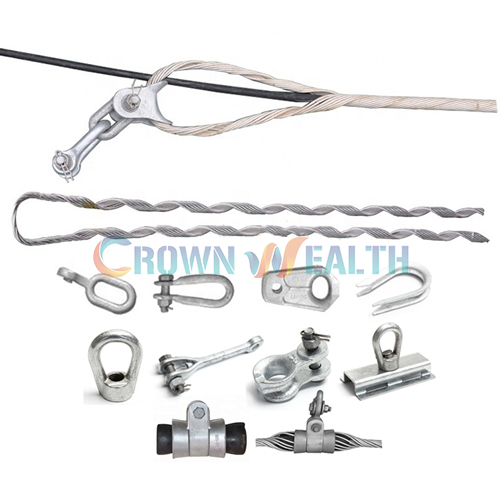
As a supplier of Preformed Armor, I've witnessed firsthand the critical role it plays in protecting electrical systems from various hazards, including static electricity. In this blog, I'll delve into the science behind how Preformed Armor safeguards against static electricity, exploring its design, materials, and applications.
Understanding Static Electricity in Electrical Systems
Static electricity is a common phenomenon that occurs when there is an imbalance of electric charges within or on the surface of a material. In electrical systems, static electricity can build up due to friction, induction, or contact between different materials. This buildup of static charge can lead to several problems, including electrical shocks, damage to sensitive electronic components, and interference with communication systems.
For example, in power transmission and distribution lines, static electricity can accumulate on the surface of conductors due to the movement of air, rain, or snow. This static charge can attract dust and other contaminants, which can reduce the insulation properties of the conductors and increase the risk of electrical breakdown. Additionally, static electricity can cause arcing and sparking, which can damage equipment and pose a safety hazard to personnel.
How Preformed Armor Works to Protect Against Static Electricity
Preformed Armor is a type of protective fitting that is designed to be installed on electrical conductors to provide mechanical protection and prevent damage from environmental factors. However, it also plays a crucial role in protecting against static electricity.


One of the key ways that Preformed Armor protects against static electricity is by providing a conductive path for the static charge to dissipate. The armor is typically made of a conductive material, such as aluminum or copper, which allows the static charge to flow through the armor and into the ground. This helps to prevent the buildup of static charge on the surface of the conductor, reducing the risk of electrical shocks and damage to equipment.
Another way that Preformed Armor protects against static electricity is by providing a physical barrier between the conductor and the environment. The armor helps to prevent the accumulation of dust, dirt, and other contaminants on the surface of the conductor, which can reduce the insulation properties of the conductor and increase the risk of static charge buildup. Additionally, the armor can help to protect the conductor from mechanical damage, such as abrasion and impact, which can also contribute to the buildup of static charge.
Design and Materials of Preformed Armor
The design and materials of Preformed Armor are carefully selected to ensure optimal protection against static electricity. The armor is typically preformed to fit the shape of the conductor, providing a snug and secure fit. This helps to ensure that the armor remains in place and provides continuous protection against static electricity.
The materials used in Preformed Armor are also chosen for their conductivity and durability. Aluminum and copper are commonly used materials due to their high conductivity and resistance to corrosion. These materials allow the static charge to flow easily through the armor and into the ground, while also providing long-lasting protection against environmental factors.
In addition to the conductive materials, Preformed Armor may also include other features to enhance its protection against static electricity. For example, some armor may be coated with a conductive paint or finish to improve its conductivity. Others may include grounding straps or other devices to ensure that the static charge is properly dissipated.
Applications of Preformed Armor in Protecting Against Static Electricity
Preformed Armor is used in a wide range of applications to protect against static electricity. Some of the most common applications include:
- Power Transmission and Distribution Lines: Preformed Armor is commonly used on power transmission and distribution lines to protect the conductors from static electricity and other environmental factors. The armor helps to prevent the buildup of static charge on the surface of the conductors, reducing the risk of electrical breakdown and improving the reliability of the power grid.
- Telecommunication Systems: In telecommunication systems, Preformed Armor is used to protect the cables from static electricity and other forms of interference. The armor helps to ensure that the cables remain free from static charge, which can cause signal distortion and other problems.
- Industrial Equipment: Preformed Armor is also used in industrial equipment to protect the electrical components from static electricity and other hazards. The armor helps to prevent damage to the equipment and ensures that it operates safely and efficiently.
Benefits of Using Preformed Armor for Static Electricity Protection
There are several benefits to using Preformed Armor for static electricity protection. Some of the key benefits include:
- Enhanced Safety: By providing a conductive path for the static charge to dissipate, Preformed Armor helps to reduce the risk of electrical shocks and other safety hazards. This is particularly important in environments where personnel are working with electrical equipment.
- Improved Equipment Reliability: Static electricity can cause damage to sensitive electronic components, leading to equipment failure and downtime. By protecting against static electricity, Preformed Armor helps to improve the reliability of electrical equipment and reduce maintenance costs.
- Long-Lasting Protection: Preformed Armor is designed to provide long-lasting protection against static electricity and other environmental factors. The armor is made of durable materials that are resistant to corrosion and wear, ensuring that it remains effective for many years.
Conclusion
In conclusion, Preformed Armor plays a crucial role in protecting electrical systems against static electricity. By providing a conductive path for the static charge to dissipate and a physical barrier between the conductor and the environment, Preformed Armor helps to reduce the risk of electrical shocks, damage to equipment, and interference with communication systems.
If you're interested in learning more about how Preformed Armor can protect your electrical systems against static electricity, or if you're looking to purchase Preformed Armor for your next project, please feel free to contact us. Our team of experts is available to answer your questions and provide you with the information you need to make an informed decision.
In addition to Preformed Armor, we also offer a wide range of other protective fittings, including Preformed Dead End Guy Grips, Square Spacer Damper, and Spiral Vibration Damper. These fittings are designed to provide additional protection for your electrical systems and help to ensure their reliable operation.
Thank you for reading this blog. I hope you found it informative and useful. If you have any questions or comments, please feel free to leave them below.
References
- Grover, F. W. (1973). Inductance Calculations: Working Formulas and Tables. Dover Publications.
- IEEE Standard for the Installation of Overhead Transmission Line Conductors (IEEE Std 524-2010).
- National Electrical Safety Code (NESC), ANSI C2.