Hey there! I'm a supplier of vibration dampers, and today I wanna have a chat about whether a vibration damper can be used in a space vehicle. It's a super interesting topic that combines the tech of vibration dampers with the wild world of space exploration.
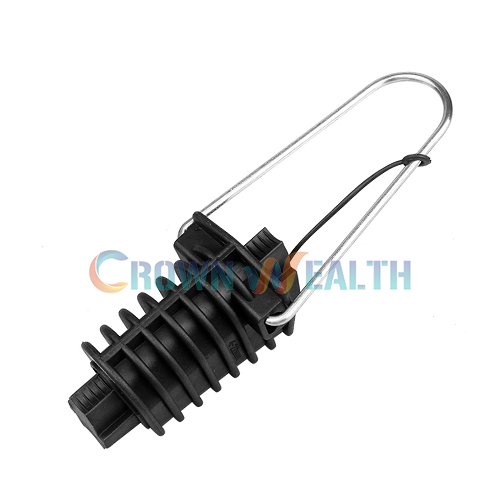
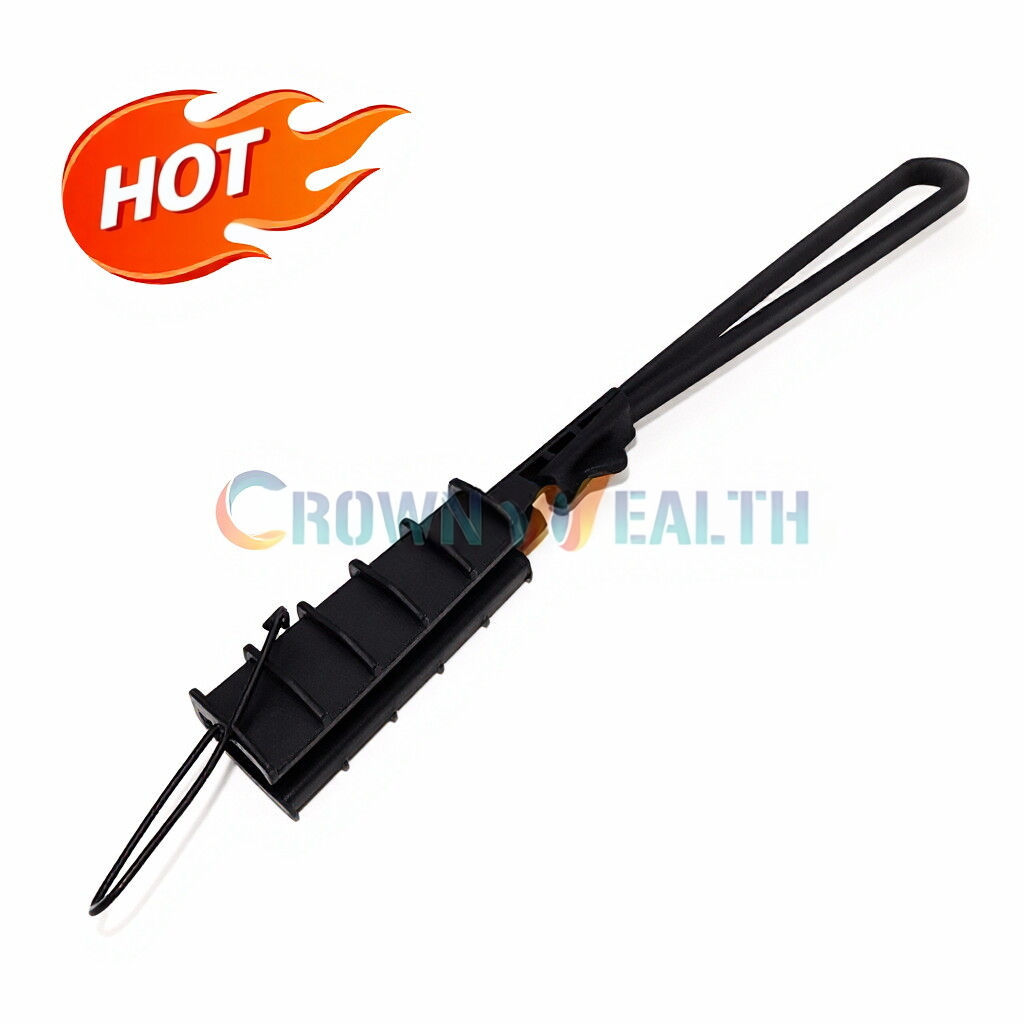
First off, let's understand what vibration dampers are. They're devices designed to reduce or eliminate vibrations. In normal, Earth - based scenarios, we use them in all sorts of places. For example, in power lines, Armor Rods and Cable Guy Grips are often paired with vibration dampers to protect the cables from damage caused by wind - induced vibrations. And Helical Guy Grips also play a role in keeping things stable on the ground. But when we talk about space vehicles, the situation gets a whole lot different.


Space vehicles face a unique set of challenges. During launch, they experience intense vibrations due to the powerful thrust of the rockets. The engines are firing at full blast, and all that energy creates a shaking effect. This vibration can be a real problem. It might damage sensitive equipment on board, like scientific instruments, communication devices, or even the structural integrity of the vehicle itself. That's where vibration dampers could potentially come in handy.
One of the key differences between using vibration dampers on Earth and in space is the environment. In space, there's no air, which means there's no air resistance. On Earth, some types of vibration dampers work by dissipating energy through air friction. But in space, we can't rely on that. So, we need to find other ways for the dampers to do their job.
There are different types of vibration dampers, like passive and active ones. Passive dampers are the simpler kind. They use mechanical elements like springs and dashpots to absorb and dissipate vibration energy. In a space vehicle, passive dampers could be placed in strategic locations to reduce the amplitude of vibrations. For example, near the engines where the vibrations are most intense. They're relatively low - cost and don't require external power sources, which is a big plus in space where power is limited.
Active dampers, on the other hand, are more high - tech. They use sensors to detect vibrations and then actuators to counteract them. These dampers can be adjusted in real - time based on the changing vibration conditions. In a space vehicle, active dampers could be used to fine - tune the vibration reduction, especially during different phases of the mission, like launch, orbit, or re - entry.
However, using vibration dampers in space vehicles isn't without its challenges. One major issue is the weight. Every extra pound on a space vehicle means more fuel is needed to get it into space. So, the vibration dampers need to be as lightweight as possible while still being effective. Another challenge is the long - term reliability. Space missions can last for months or even years. The dampers need to be able to withstand the harsh space environment, including radiation, extreme temperatures, and micrometeoroid impacts.
Let's talk about some of the potential benefits of using vibration dampers in space vehicles. By reducing vibrations, we can increase the lifespan of the equipment on board. Sensitive electronics are less likely to fail due to vibration - induced stress. This can save a lot of money in terms of maintenance and replacement costs. Also, it can improve the accuracy of scientific measurements. For example, if a telescope on a space probe is constantly vibrating, the images it takes will be blurry. Vibration dampers can help keep the telescope steady and get clearer images.
In addition, vibration dampers can enhance the safety of the space vehicle. A stable vehicle is less likely to experience structural failures during critical phases of the mission. This is crucial for the safety of the crew (if there is one) and the success of the mission.
Now, from a supplier's perspective, I've been thinking about how we can adapt our vibration dampers for space use. We're looking into new materials that are lightweight and strong enough to handle the space environment. For example, carbon - fiber composites could be a great option. They're light but have high strength and stiffness, which are ideal for vibration dampers.
We're also working on improving the design of our dampers. We're exploring ways to make them more modular so that they can be easily installed and replaced on the space vehicle. This is important because in space, it's not easy to perform complex maintenance tasks.
Another aspect we're considering is the testing. We need to simulate the space environment as accurately as possible to test the performance of our vibration dampers. This includes testing them in vacuum chambers, subjecting them to different levels of radiation, and exposing them to extreme temperatures.
So, can a vibration damper be used in a space vehicle? The answer is yes, but it comes with a lot of challenges. With the right technology and design, vibration dampers can play an important role in making space vehicles more stable, reliable, and safe.
If you're in the space industry and interested in our vibration dampers, or if you have any questions about how they could be used in your space projects, don't hesitate to reach out. We're always open to discussions and collaborations. Let's work together to make space exploration even better!
References
- "Spacecraft Design and Engineering" by John R. Wertz and Wiley J. Larson
- "Vibration Analysis and Control" by Singiresu S. Rao