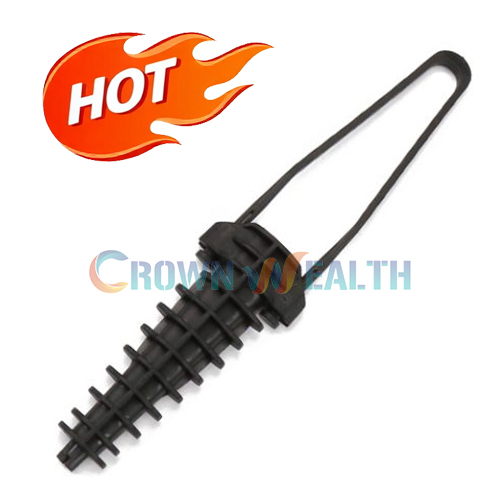
Anchor clamps are essential components in the installation and maintenance of overhead power lines. Designed to withstand tensile forces, these devices ensure that conductors remain taut and secure along their route. Properly installed anchor clamps prevent excessive sagging caused by gravity, wind loads, or ice accumulation, making them indispensable for modern electrical distribution networks.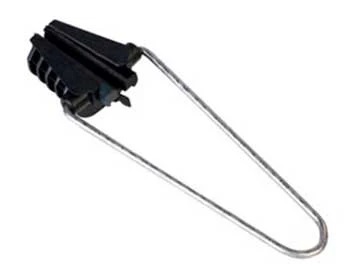
Where Are Anchor Clamps Used?
Anchor clamps serve as the primary termination and tensioning point for various types of self-supporting insulated conductors (LV-ABC and CIP). They are strategically deployed in the following scenarios:
-
Line Terminations: Securing the beginning and end points of a cable route.
-
Directional Changes: Anchoring wires during sharp turns or sudden changes in the line’s trajectory.
-
Elevation Differences: Compensating for significant height variations between adjacent poles or structures.
-
Building Transitions: Connecting overhead lines between utility poles and facades of residential, administrative, or industrial buildings.
While general regulations often specify a maximum span of 50 meters to the nearest support structure, the specific placement and quantity of anchor clamps depend heavily on the conductor's cross-sectional area and the calculated weight load.
Operating Principle and Design Features
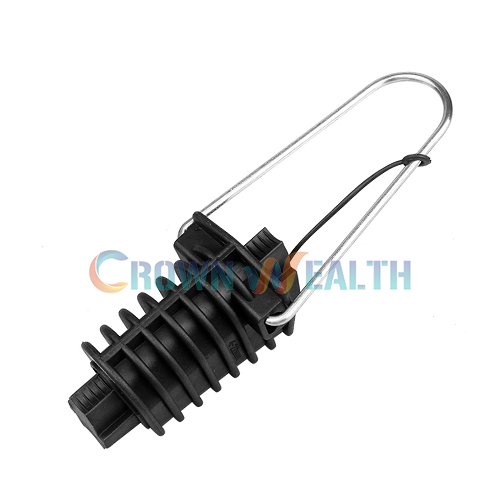
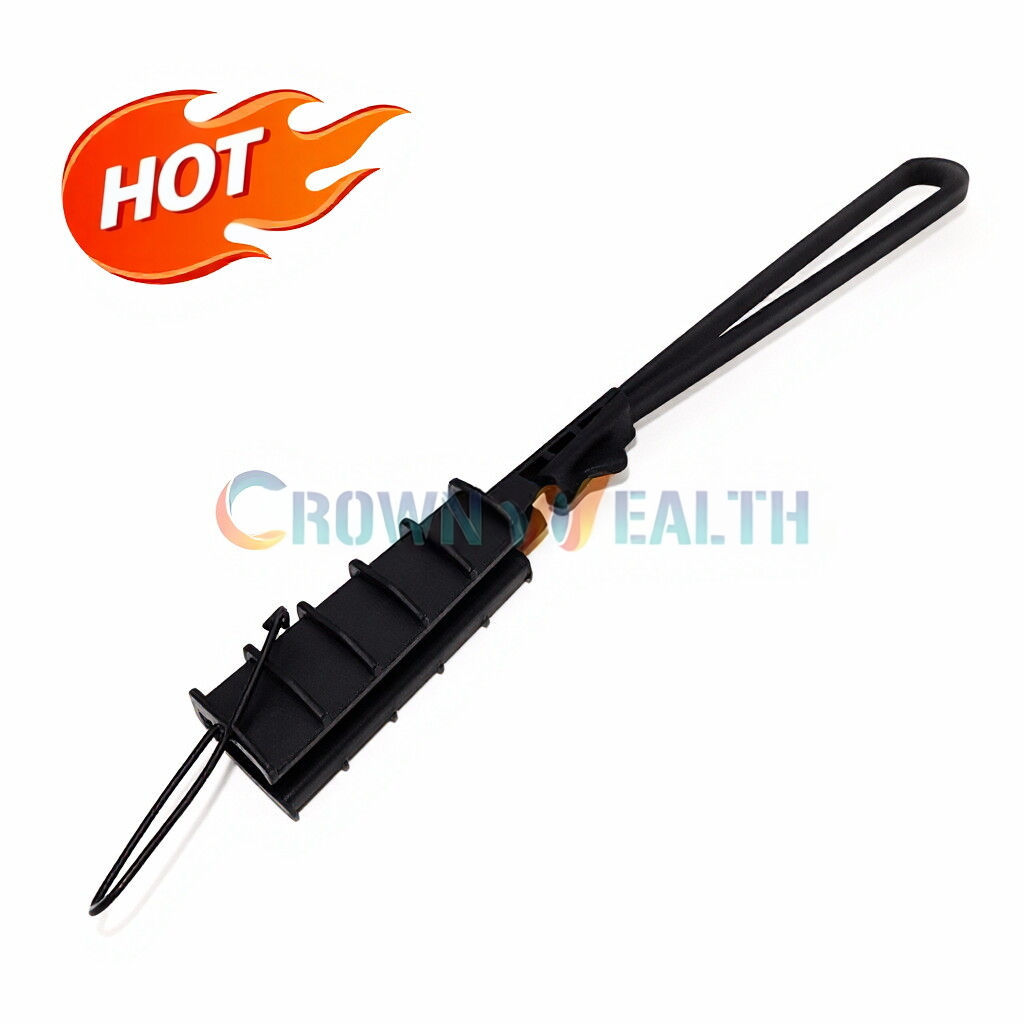
The core function of an anchor clamp is to create a slip-free strain connection without compromising the integrity of the cable's insulation.
-
Wedge Mechanism: The cable is inserted into a wedge-shaped plastic insert housed within the clamp body.
-
Automatic Locking: When tension is applied to the wire, it is automatically wedged tighter between the teeth of the insert and the inner conical surface of the clamp.
-
Insulation Protection: A key design feature is the non-invasive grip. The clamp secures the conductor firmly without stripping or damaging the outer insulation layer, thereby maintaining the cable's weatherproof and dielectric properties.
This mechanism ensures that in the event of overloads, the clamp may fail safely (preventing collapse) while protecting the primary support structures (poles or buildings) from damage.
Mounting Configurations and Hardware
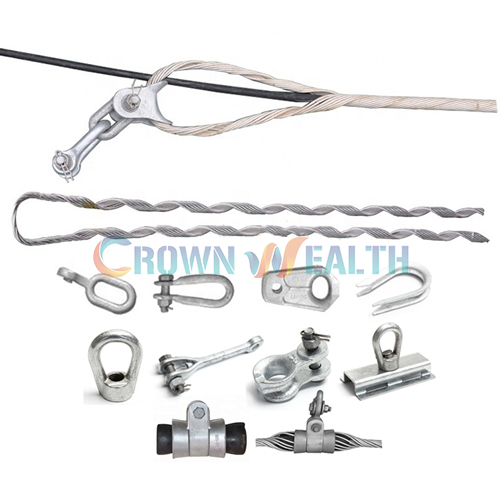
Anchor clamps do not operate in isolation; they are part of a larger anchoring assembly that includes brackets and fasteners tailored to the installation environment.
|
Support Type |
Recommended Hardware |
Description |
|---|---|---|
|
Wooden Poles / Logs |
Screw Hooks |
Corrosion-resistant steel hooks screwed directly into the timber for a secure hold. |
|
Concrete Poles / Walls |
CA1500, CA2000, SO253 Brackets |
High-strength aluminum alloy brackets resistant to climatic stress. Fixed using M14 or M16 bolts. |
|
General Pole Attachment |
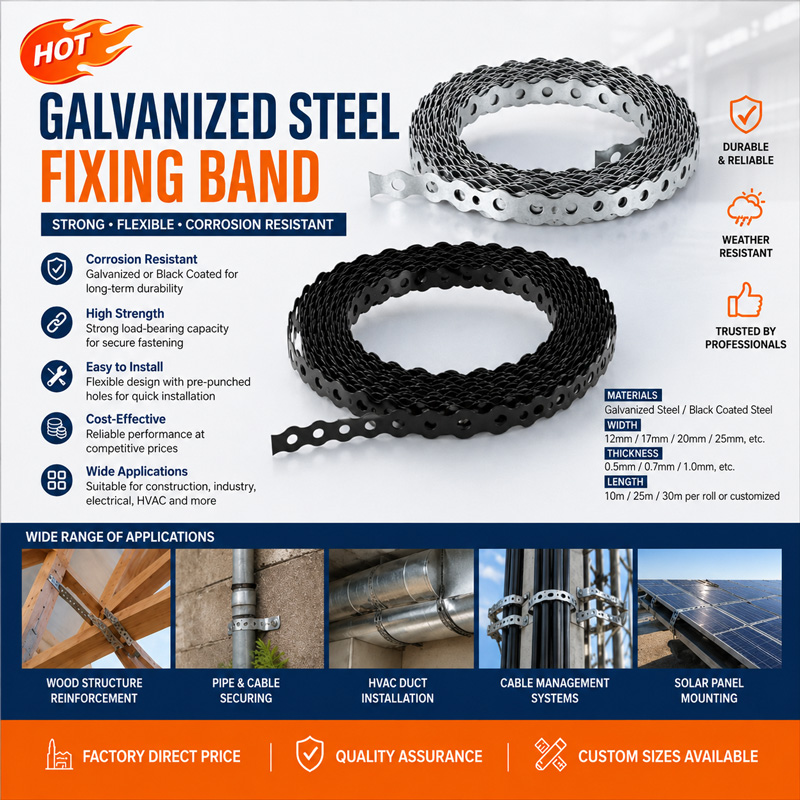
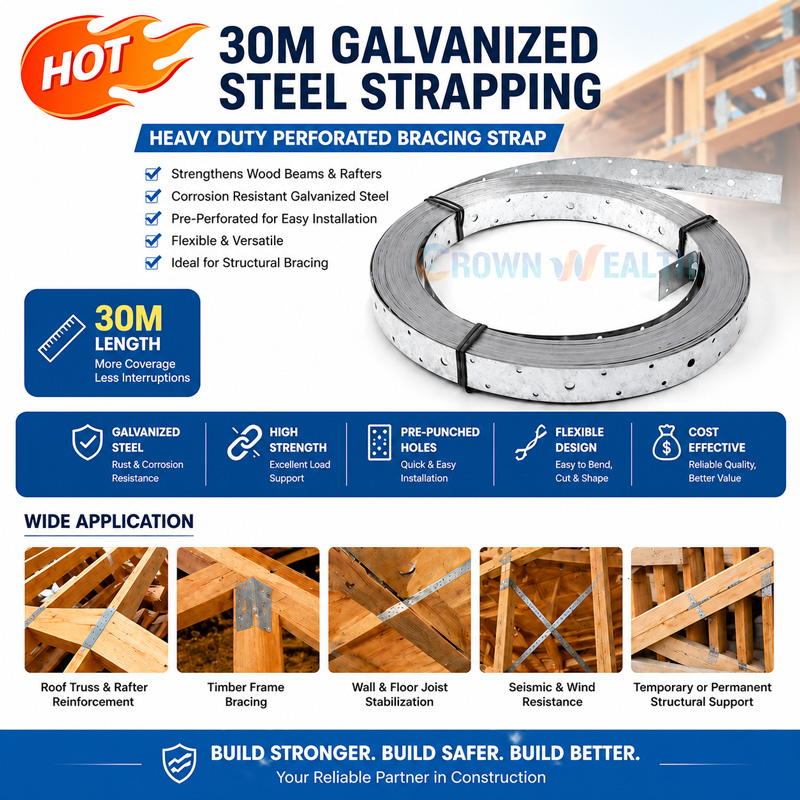
Metal Straps (20mm width) |
Steel bands wrapped around the pole structure. |
Pro Tip: For securing metal strapping around poles, always use a dedicated banding tool (e.g., type CVF). This ensures consistent tension, proper locking with reinforced cleats, and allows for clean cutting of excess strap length.
Key Advantages of Modern Anchor Clamps
Adhering to strict industry standards, modern anchor clamps offer several distinct benefits over traditional methods:
-
Reliability: Provides a secure, slip-free grip that maintains tension under dynamic environmental loads (wind, ice).
-
Simplicity & Speed: The intuitive design allows for rapid installation without the need for complex tools or specialized heavy machinery.
-
Cost-Effectiveness: The straightforward manufacturing process results in a relatively low price point compared to more complex tensioning systems.
-
Versatility: Universally applicable across spans of varying lengths and suitable for different conductor sizes.
-
Safety: Preserves cable insulation during installation, reducing the risk of short circuits and electrical faults.
By combining robust performance with ease of use, anchor clamps remain a cornerstone technology for efficient and safe overhead power distribution.