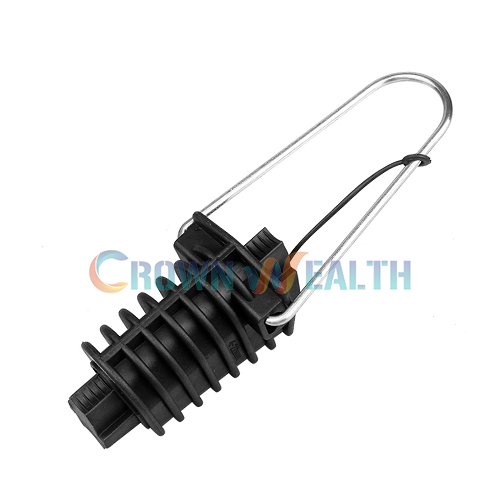
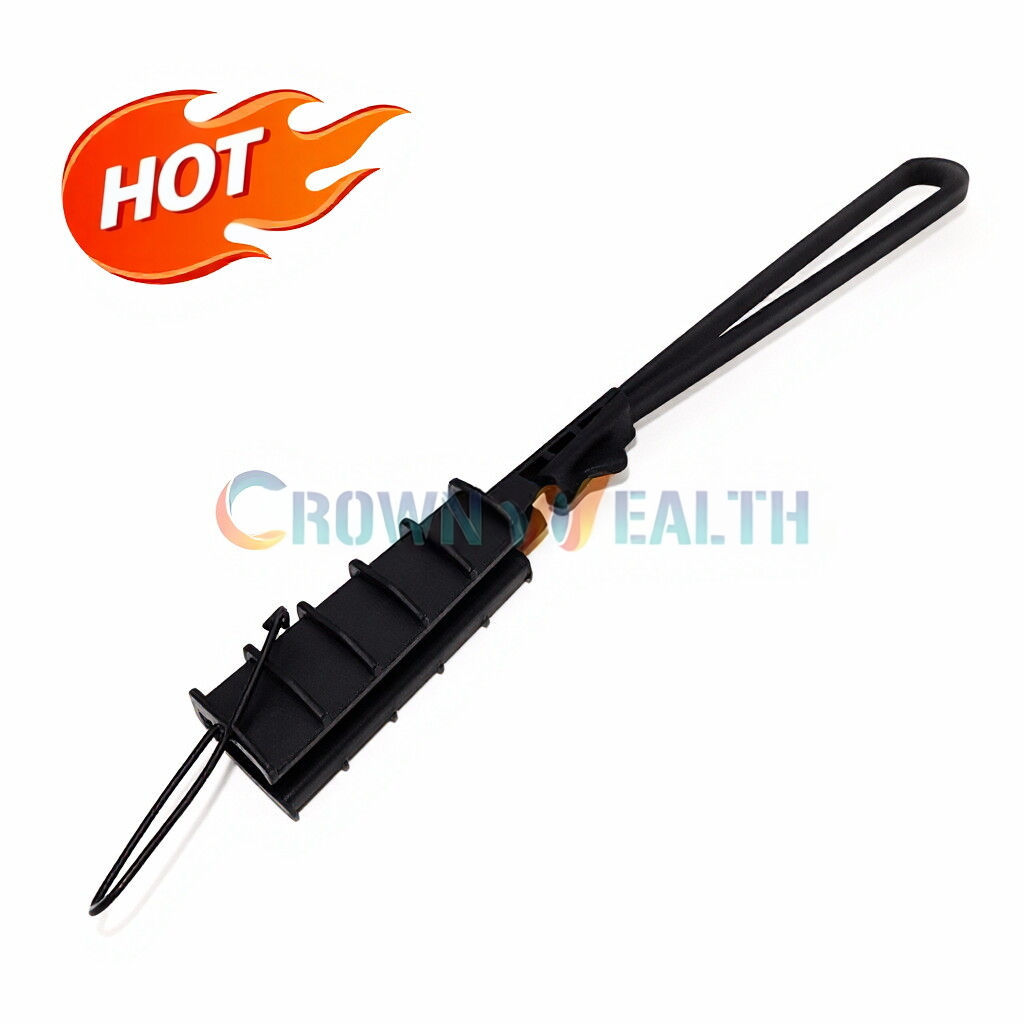
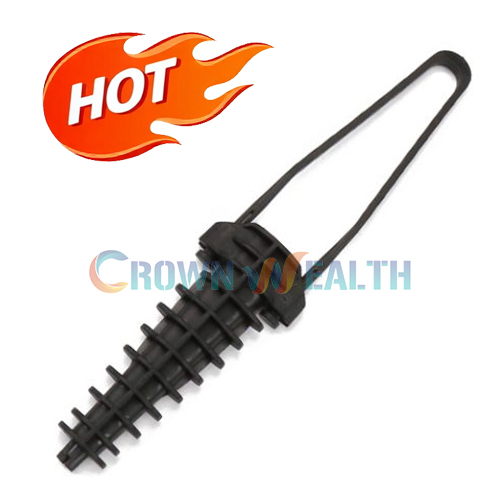
Wedge-type cable tension clamps are designed with a user-friendly structure that is simple and intuitive for any operator. The most popular models feature a conical body, a steel suspension loop, and a pair of high-quality plastic wedges. These components work together to form a reliable clamping mechanism. The operating principle of these devices is straightforward: they utilize self-tightening wedges to securely grip the cable.
The production, sale, and application of these tension clamps significantly reduce both the time and physical labor required during the installation of cable lines of varying complexity. This robust and durable cable accessory offers several significant advantages:
-
No Stripping Required: Installation does not require the removal of cable insulation or exposure of the conductor.
-
Easy Installation: The simple design drastically reduces the probability of installation errors.
-
No Special Training: Workers do not need additional or specialized training to install this device.
-
Tool-Free Assembly: Installation requires no supplementary or special tools.
-
Cable Protection: A specially designed housing eliminates the risk of damaging the cable's integrity.
-
Environmental Resistance: The clamps are resistant to aggressive environmental factors and mechanical damage, including UV radiation, extreme temperatures, frost, and corrosion.
-
Extended Lifespan: The product is designed for a long operational life.
At the same time, wedge-type cable tension clamps come in various designs and price points. Therefore, it is important to consider the following differences before purchasing:
-
Maximum Tensile Strength
-
Housing Material (Thermoplastic or Aluminum Alloy)
-
Material of the Suspension Loop
-
Overall Dimensions
-
Cable Opening Diameter (formed by the retaining wedges)
The primary criterion for selecting these devices is the diameter of the cable insulation. Our clamps are available for cables with diameters ranging from 2 to 16 mm. Proper use of these structures helps extend the lifespan of cables and communication lines by protecting them from strong winds and vibrations. Furthermore, their installation leads to cost savings by reducing the consumption of materials and tools, as well as lowering expenses related to employee training and warranty service.