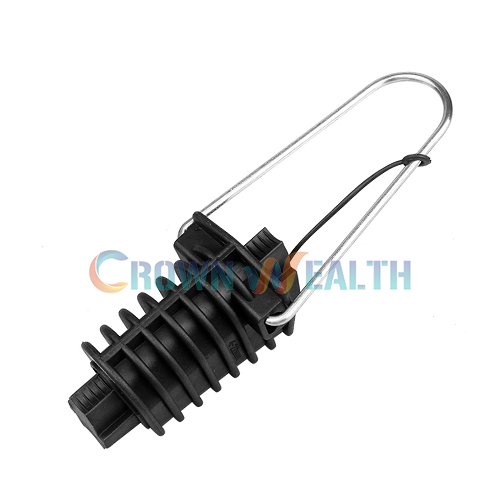
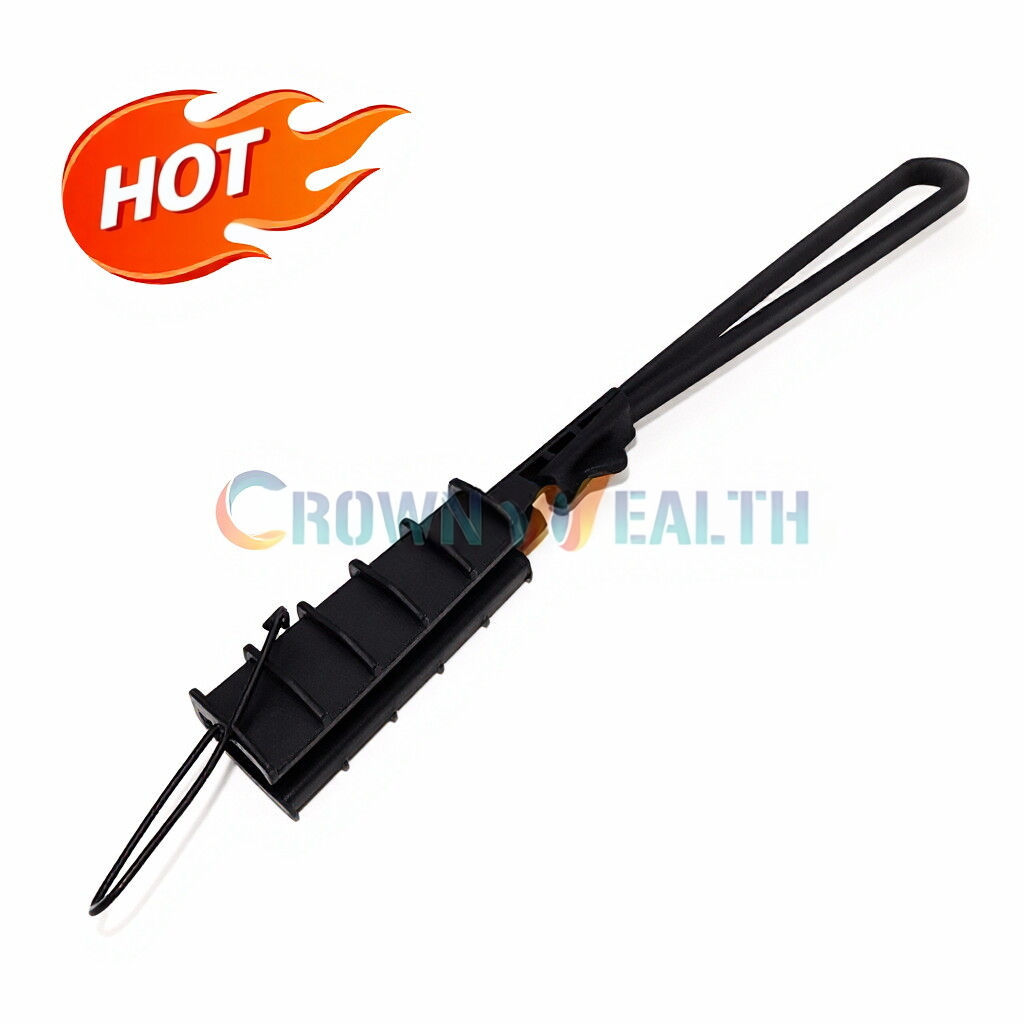
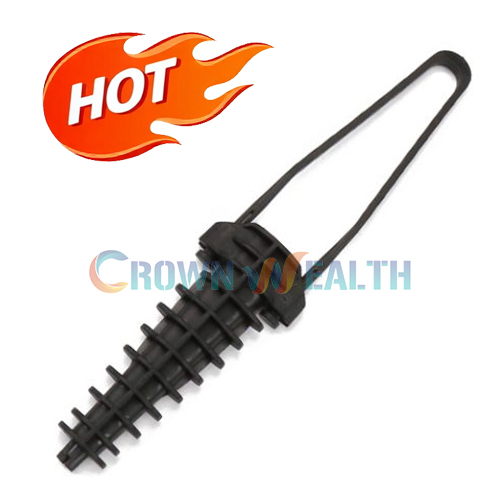
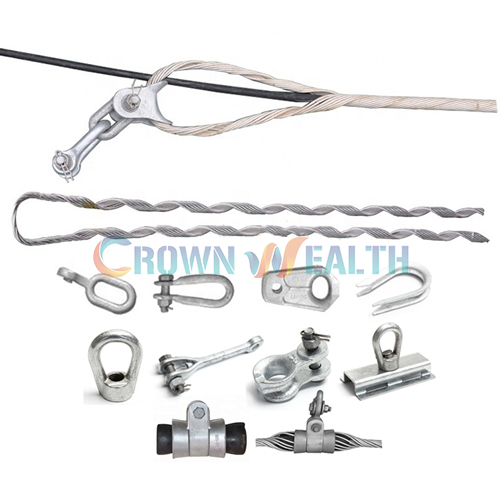
Anchor clamps are essential components in overhead line construction, specifically engineered to maintain proper tension in conductors. While regulations typically mandate a maximum distance of 50 meters to the nearest support structure, the specific placement is determined by the tensile load, which varies based on the conductor’s cross-sectional area. These clamps are mounted directly onto utility poles or building facades using dedicated brackets or anchoring hardware.
As a core element of line fittings, anchor clamps are indispensable for securing all types of self-supporting insulated conductors (LV-ABC).
Primary Applications
Anchor clamps are utilized to terminate and secure overhead lines at critical points where structural integrity is paramount:
-
Line Termination: Securing wires at the beginning and end of cable routes.
-
Directional Changes: Anchoring lines during sharp turns or sudden changes in direction.
-
Elevation Differences: Compensating for significant height variations between poles.
-
Support Transitions: Connecting lines between utility poles, buildings, and other structures.
Typical Installation Scenarios:
-
Fastening cables for medium and high-voltage transmission lines.
-
Installing overhead CIP (Covered Insulated Cable) between multi-story buildings for subscriber connections.
-
Supplying power to administrative, commercial, and industrial facilities.
A key safety feature of these devices is their "support-sparing" failure mode: in the event of extreme overloads exceeding permissible limits, the clamp is designed to fail before the supporting structure is compromised.
Operating Principle
Designed for self-supporting insulated wires, anchor clamps function without the need for additional messenger cables. The mechanism relies on a wedge-shaped plastic insert housed within the clamp body.
When tension is applied to the LV-ABC wire, it is automatically wedged between the internal teeth of the insert and the high-strength conical clamp body. This creates a secure, slip-free grip. Crucially, the design ensures that the clamping force fixes the cable firmly without damaging or stripping the insulation, preserving the integrity of the outer sheath during installation and operation.
Pole Top and Building Mounting
Anchor clamps operate in conjunction with anchor brackets. A staple or bolted connection attaches the clamp assembly to a frame that is rigidly fixed to a concrete pole, brick wall, or wooden structure.
Brackets vary by material, size, and form factor depending on the installation environment:
-
Wooden Poles/Logs: Corrosion-resistant steel screw hooks are standard.
-
Concrete Supports & Building Walls: Brackets such as CA1500, CA2000, and SO253—typically made from high-strength aluminum alloys resistant to climatic stress—are employed.
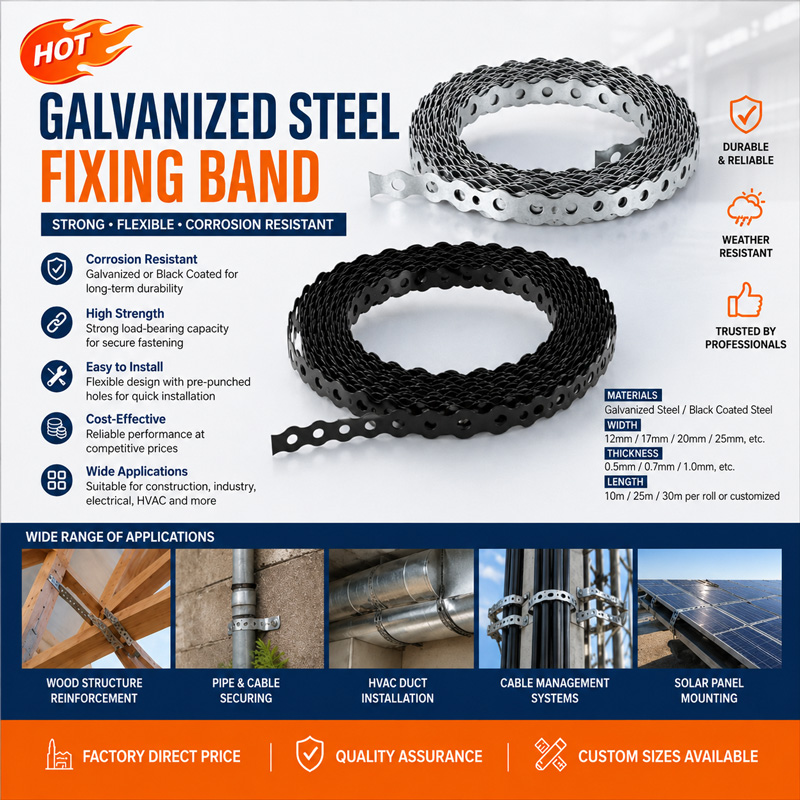
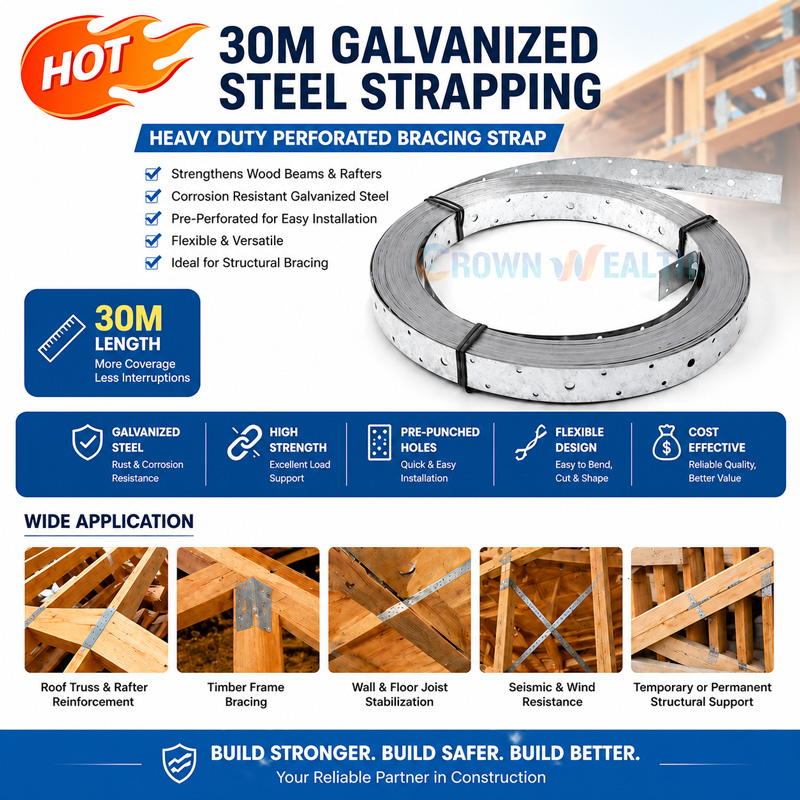
For secure fastening, metal bands (20 mm wide) or M14/M16 mounting bolts are used. When installing with metal bands, it is recommended to use a specialized banding tool (e.g., type CVF). This involves wrapping a steel band around the pole, tensioning it with the tool, securing it with reinforced cleats, and trimming any excess.
Key Advantages
Compliant with current industry standards, anchor clamps offer the following benefits:
-
Reliable Fastening: Provides a secure, slip-free strain on conductors.
-
Simple Design: Robust yet straightforward mechanical structure.
-
Cost-Effective: Offers a relatively low price point compared to complex anchoring systems.
-
Quick Installation: Requires no complicated tools, allowing for rapid deployment.
-
Versatility: Suitable for use on spans of varying lengths and configurations.