When constructing overhead power distribution networks in urban and suburban environments—such as between residential buildings, industrial complexes, and administrative facilities—self-supporting insulated conductors are the preferred choice. To ensure the integrity and longevity of these networks, anchor clamps are essential components used for securing the conductors under tension.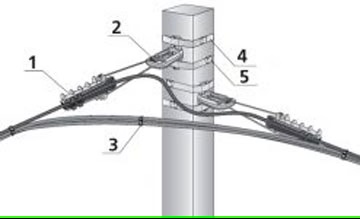
Primary Function and Operational Context
The fundamental purpose of anchor clamps is to provide a robust termination point for self-supporting insulated wires. They are designed to withstand the mechanical stress exerted when cables are pulled tight between supporting structures, such as utility poles, building facades, or dedicated steel towers. These clamps enable the rapid deployment of cable lines while ensuring that the tensile load is safely transferred from the conductor to the support structure.
Anchor clamps are strategically deployed at critical points along the transmission path:
-
Terminal Points: At the very beginning (start) and end of a power line run.
-
Directional Changes: Where the overhead line makes a sharp turn or angle.
-
Elevation Differences: In sections where there is a significant variance in height between adjacent supports.
In these scenarios, the clamps are vital for maintaining the geometric profile of the line and preventing mechanical failure due to vector forces acting on the conductors.
Design Features and Mechanical Action
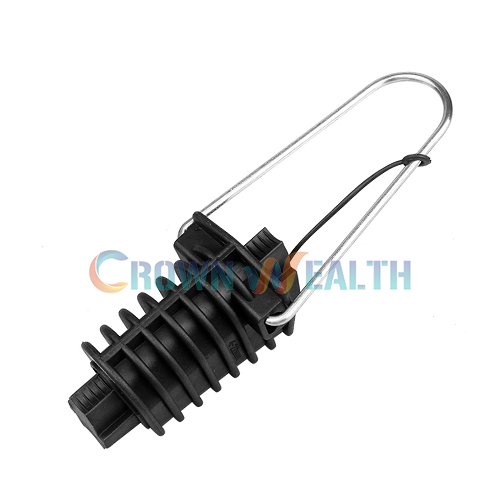
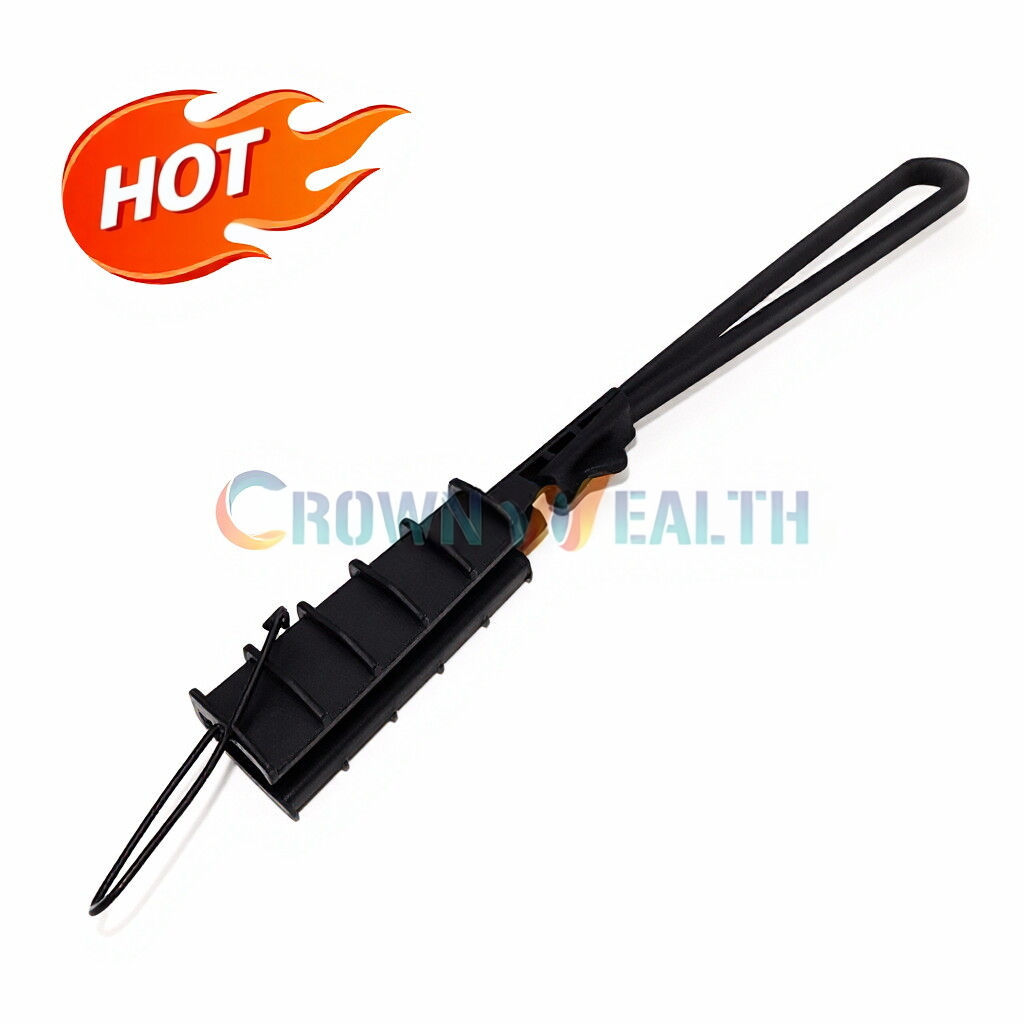
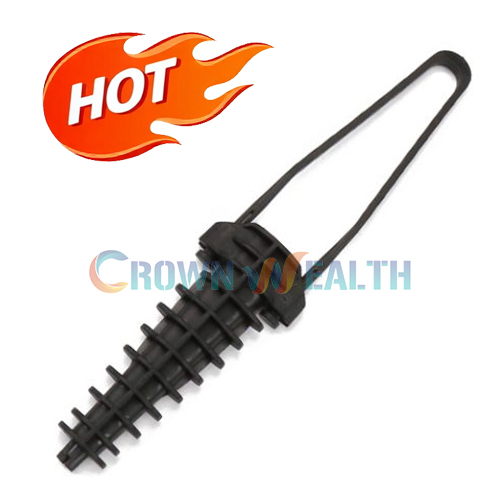
A key characteristic of modern anchor clamps is their ability to secure cables without damaging the insulation. This is achieved through precision engineering that applies uniform pressure around the conductor's circumference. A prominent subtype is the wedge-type anchor clamp, which operates on a self-tightening principle.
During installation, the conductor is inserted into the clamp body, which contains a specially shaped wedge insert. As tension is applied to the cable, the wedge is drawn into the narrowest part of the clamp. The internal teeth or grooves on the wedge engage the conductor jacket, creating a powerful frictional lock. This mechanism ensures that the harder the cable is pulled, the tighter the grip becomes, effectively counteracting external forces like gravity, wind load, and ice accumulation.
Material Science and Environmental Resistance
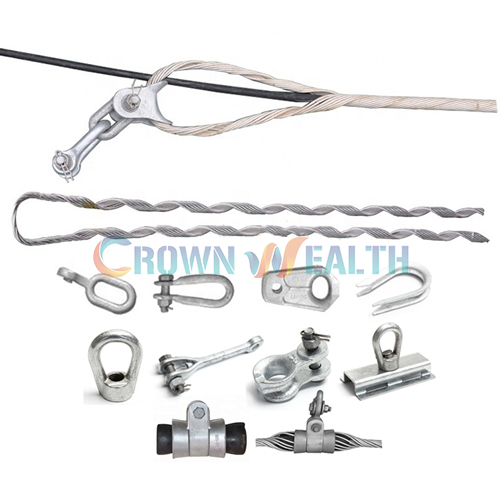
Given that these devices are installed outdoors and must endure harsh environmental conditions for decades, material selection is paramount. Anchor clamps are typically manufactured from high-performance polymers (engineering plastics), galvanized steel, or lightweight aluminum alloys.
These materials are selected specifically for their resistance to:
-
Corrosion: Preventing rust and degradation in humid or coastal environments.
-
Ultraviolet Radiation: Withstanding constant exposure to sunlight without becoming brittle.
-
Thermal Cycling: Maintaining structural integrity across extreme high and low temperatures, as well as resistance to moisture and precipitation.
Conclusion
In summary, anchor clamps are indispensable hardware for the safe and efficient installation of overhead insulated cable systems. By combining intelligent mechanical design with durable, weather-resistant materials, these devices ensure that power lines remain securely fixed, properly tensioned, and fully operational even under challenging environmental stresses.