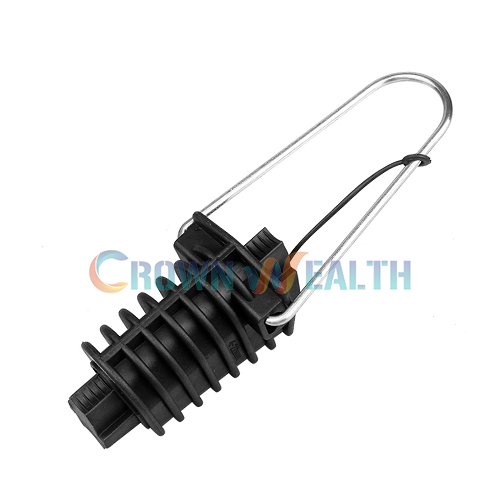
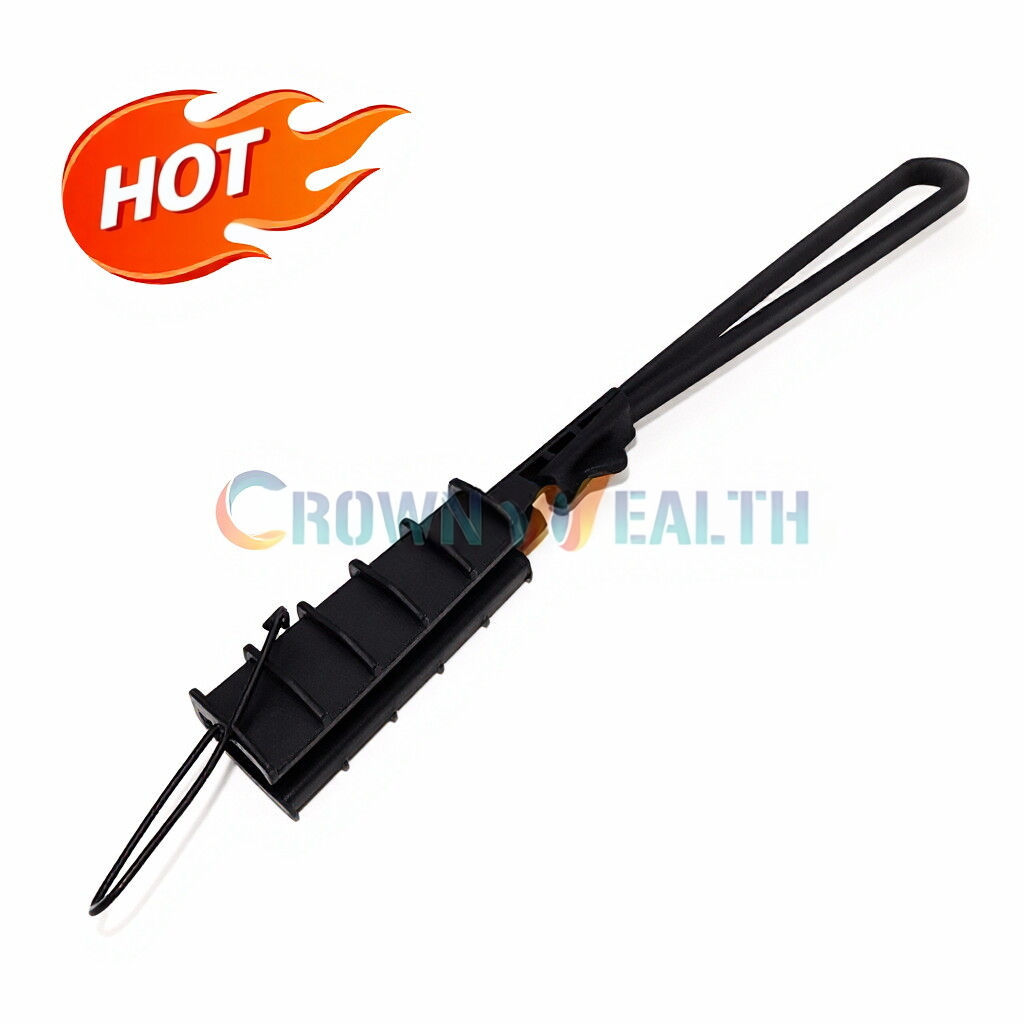
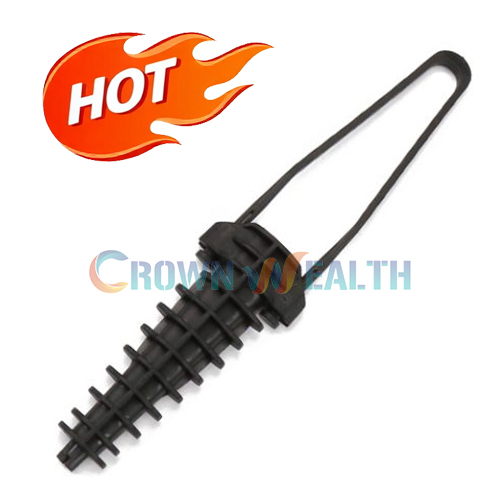
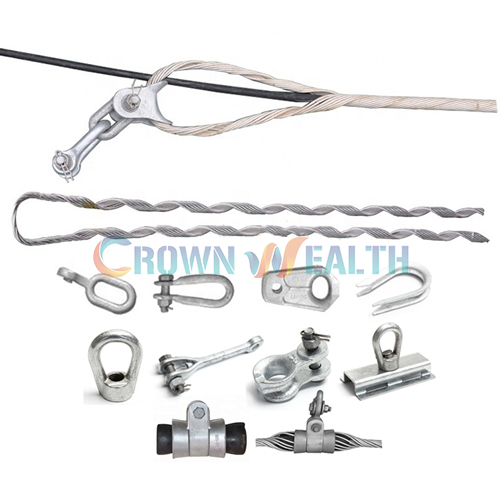
In the structural hierarchy of overhead power lines, the suspension clamp functions as the pivotal interface between a dynamic conductor and a static support structure. Unlike dead-end clamps designed for tensile termination, suspension clamps are engineered to support the vertical weight of the conductor while permitting axial movement. This guide provides an in-depth analysis of the mechanical engineering, material specifications, and manufacturing standards required to ensure grid reliability and longevity.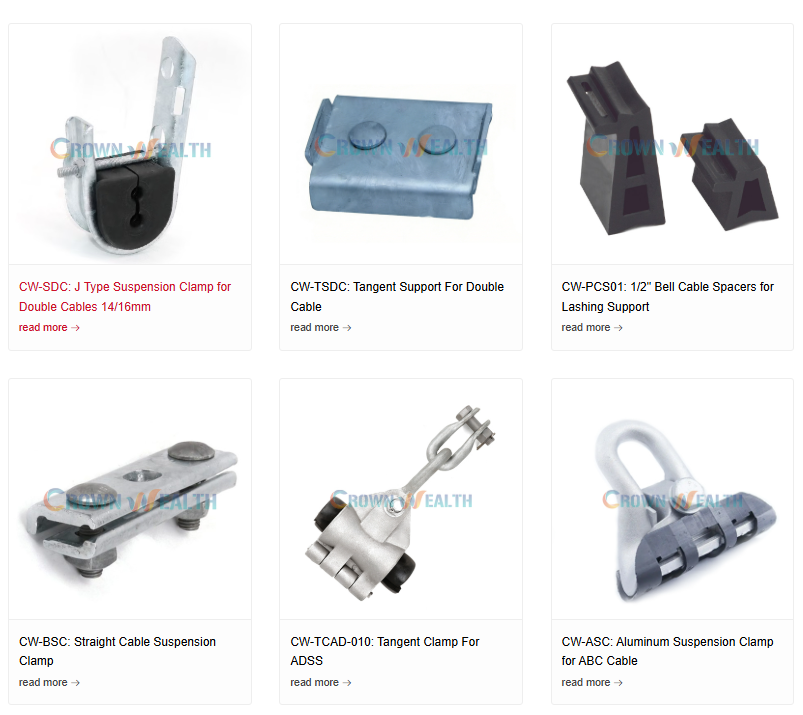
1. Mechanical Functionality: Balancing Static and Dynamic Loads
A suspension clamp is not merely a "hanger"; it is a precision component that manages complex forces. Its primary objectives are:
-
Vertical Load Bearing: Supporting the cumulative weight of the conductor, ice accretion, and wind pressure.
-
Thermal Expansion Compensation: Allowing the conductor to elongate and contract without inducing excessive stress at the support point.
-
Vibration Damping: Mitigating Aeolian vibration (low-frequency, high-cycle oscillations caused by wind) to prevent conductor fatigue and strand breakage.
The design must achieve a critical balance: gripping the conductor firmly enough to prevent slippage, yet smoothly enough to avoid abrasive wear.
2. Material Science: The Foundation of Reliability
The performance of a suspension clamp is dictated by its metallurgical composition. Substandard materials lead to deformation, cracking, and premature failure.
Body Construction: ASTM A36 Structural Steel
Our clamps are forged from ASTM A36 low-carbon steel, a standard that guarantees:
-
Minimum Yield Strength: 250 MPa (36,000 psi), ensuring the clamp does not deform under heavy static loads.
-
Chemical Consistency: Controlled levels of Carbon (0.26% max), Manganese, and Silicon for optimal hardness and weldability.
-
Impact Resistance: Proven performance in extreme temperature fluctuations.
Fasteners: High-Tensile Bolts
All bolts and nuts conform to Grade 8.8 / ASTM A325 specifications, providing high shear strength and resistance to vibrational loosening.
3. Anti-Corrosion Protocol: Hot-Dip Galvanizing per ISO 1461
Environmental degradation is the primary cause of hardware failure. To combat this, we employ a uniform Hot-Dip Galvanizing (HDG) process, which differs significantly from electroplating or painting.
|
Feature |
Hot-Dip Galvanizing (HDG) |
Electro-Galvanizing |
|---|---|---|
|
Coating Thickness |
85 – 100 µm (microns) |
5 – 25 µm |
|
Bond Type |
Metallurgical Alloy Bond |
Electrostatic Adhesion |
|
Sacrificial Protection |
Excellent (Zinc corrodes first) |
Poor |
|
Service Life (C4 Env.) |
30+ Years |
2 – 5 Years |
Process Compliance: All galvanization strictly follows ISO 1461 and ASTM A123 standards, ensuring a uniform, spangle-free finish that resists flaking and provides long-term cathodic protection.
4. Product Variations for Specialized Applications
Different conductor types impose unique mechanical constraints. A one-size-fits-all approach is insufficient for modern grid designs.
A. Suspension Clamps for ACSR & AAAC Conductors
Designed for high-tension transmission lines, these clamps feature a deep, radiused saddle that matches the conductor's outer diameter to distribute pressure evenly and prevent "bird-caging" (strand splaying).
B. Fiber Optic & ADSS Cable Clamps
When suspending dielectric cables, preventing micro-bending is critical to avoiding optical attenuation. These clamps utilize:
-
Anodized Aluminum Bodies: To eliminate magnetic hysteresis losses.
-
Elastomeric Inserts: To cushion the cable and absorb high-frequency vibrations.
C. ABC (Aerial Bundled Conductor) Clamps
Engineered to support insulated phase conductors without penetrating the sheath, thereby eliminating the risk of electrical tracking and short circuits.
5. Custom Engineering & Manufacturing
Off-the-shelf solutions often fail to meet the demands of new infrastructure or retrofit projects. As a direct manufacturer, Hbcrownwealth offers bespoke fabrication services.
We specialize in:
-
Reverse engineering from physical samples.
-
Production based on client CAD drawings (DWG/DXF formats).
-
Modification of standard designs to meet specific span lengths or loading requirements (NESC Heavy, Medium, or Light).
Conclusion: Procurement for Performance
Selecting the correct suspension clamp involves more than comparing unit prices. It requires an understanding of material science, corrosion resistance, and mechanical dynamics. By specifying clamps manufactured from ASTM A36 steel with ISO 1461 galvanization, utilities can minimize lifecycle costs and ensure uninterrupted service.
Ready to verify quality? Contact our engineering team for a competitive quotation or request free samples for third-party testing.