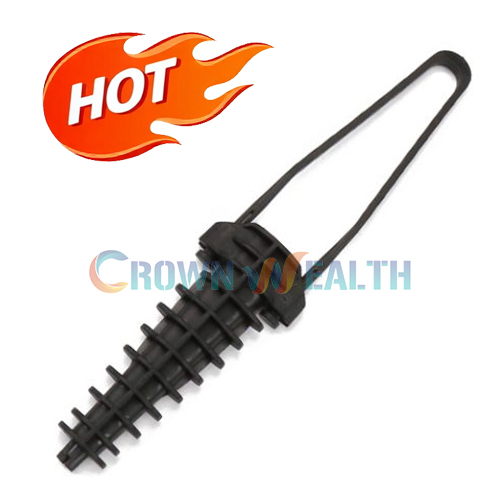
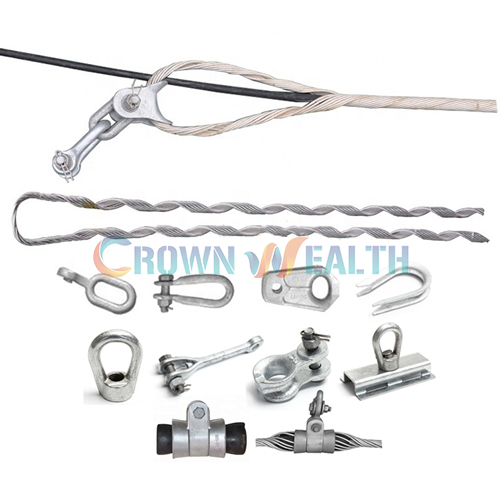
In the world of fiber optics, especially with All-Dielectric Self-Supporting (ADSS) cables, the termination point is often the most vulnerable link. A poor connection can lead to signal degradation, physical damage, and costly network downtime. This is where the ADSS Cable Guy Grip comes in—a specialized hardware component engineered not just to hold, but to protect.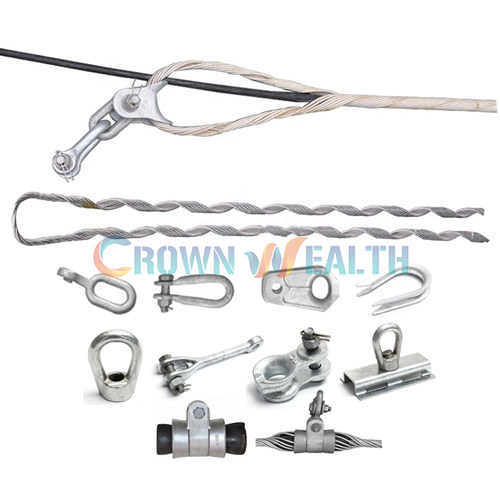
This guide explores how modern formed-wire guy grips work, why they are superior to traditional methods for ADSS applications, and what to consider when selecting the right one for your project.
What is an ADSS Cable Guy Grip?
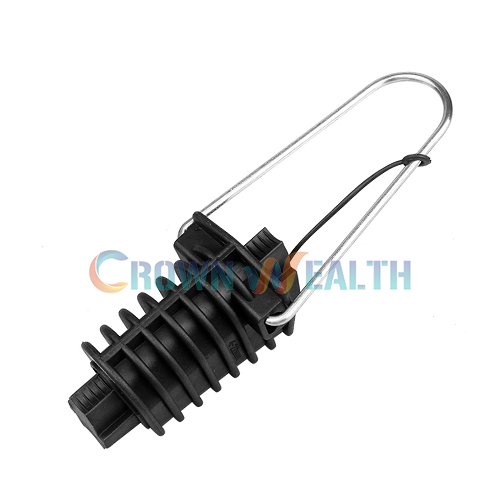
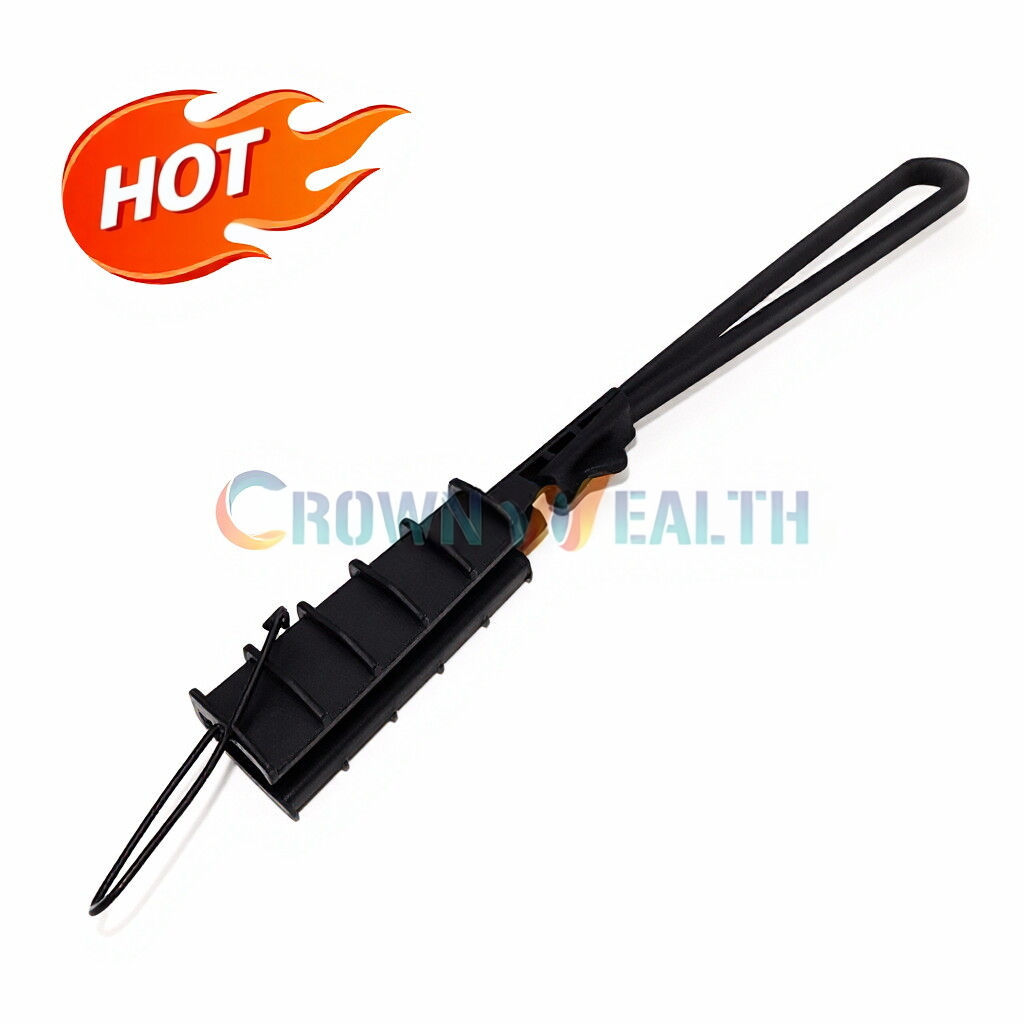
An ADSS Cable Guy Grip is a preformed, helical wire assembly designed to securely terminate or anchor the end of an ADSS fiber optic cable. Classified under the "formed wire design" category, its primary function is to transfer the tensile load (axial force) from the cable to a supporting structure—such as a pole, tower, or messenger strand—without compromising the cable’s internal components.
Unlike rigid clamps, these grips are flexible and conform to the shape of the cable, making them ideal for the soft, pliable jackets of drop cables and distribution cables.
Formed Wire vs. Wedge-Type: Why Design Matters
One of the most critical distinctions in the industry is between wedge-type dead-ends and formed wire dead-ends. While both serve the purpose of anchoring, their mechanisms are fundamentally different.
|
Feature |
Wedge-Type Dead-End |
Formed Wire Guy Grip |
|---|---|---|
|
Mechanism |
Uses a sliding wedge to create friction and grip. |
Uses helical legs that wrap around the cable. |
|
Force Transfer |
Creates high, localized stress concentration. |
Distributes force evenly along its length. |
|
Impact on Cable |
High risk of crushing or deforming the cable jacket. |
Applies low, uniform radial compression. |
|
Signal Integrity |
Potential for micro-bending and signal attenuation. |
Attenuation-free design preserves signal quality. |
The Science Behind the Grip
The genius of the formed wire design lies in its stress transition. Instead of applying brute force at a single point, the grip legs are shaped to gradually transfer the axial load away from the cable core and into a compressive force around the cable’s circumference. This minimizes pressure on the delicate glass fibers inside, ensuring your network maintains optimal optical performance.
Key Features & Benefits for Network Engineers
When specifying hardware for an ADSS deployment, these grips offer several distinct advantages:
-
Zero Signal Attenuation: The smooth, non-invasive clamping action prevents kinking and crushing, which are common causes of insertion loss.
-
Superior Holding Strength: Despite being gentle on the cable, these grips provide robust security for short spans and low-tension applications in low-voltage environments.
-
Full Dielectric Compatibility: When manufactured from non-metallic materials (or specified alloys), the grip maintains the electrical isolation properties of the ADSS cable, preventing grounding issues or lightning induction.
-
Versatile Application: Ideal for use on transmission lines, antenna systems, communication networks, and any guyed structure requiring a reliable dielectric termination point.
Material Selection: Matching the Environment
Selecting the correct material is crucial for the longevity and performance of the guy grip. Since these components are often exposed to harsh weather, UV radiation, and industrial pollutants, manufacturers offer a range of high-quality alloys.
Common material specifications include:
-
Stainless Steel (Type 302 / 316): Best for corrosive marine environments or areas with high pollution.
-
Hot-dip Galvanized Steel: A cost-effective standard for general-purpose use.
-
Mischmetal Alloy: Offers high strength combined with galvanic protection.
-
Aluminum-Clad Steel: Provides excellent conductivity and corrosion resistance.
-
Copperweld: Used in specific scenarios requiring electrical continuity.
Pro Tip: Always match the grip material to the strand or messenger it will be attached to, or consult the manufacturer’s compatibility chart to prevent galvanic corrosion.
How to Choose the Right Guy Grip
While specific part numbers vary by manufacturer, selecting the correct grip follows a simple formula:
-
Measure Cable Diameter: The most critical parameter. Measure the outer diameter of your ADSS cable jacket.
-
Determine Length & Strength: For heavier cables or longer spans, opt for extended-length grips which distribute stress over a larger surface area.
-
Assess Environmental Conditions: Is the installation coastal? Industrial? Underground? Choose your material accordingly.
(Refer to typical product tables where applicable cable diameters range from ~9.0 mm to over 19.0 mm, with lengths varying from 500 mm to over 1150 mm for heavy-duty applications.)
Conclusion
For telecom engineers and installers working with ADSS fiber, the choice of termination hardware is not trivial. The ADSS Cable Guy Grip represents a smart evolution in design—moving away from high-pressure wedges toward a more elegant, stress-distributing solution. By prioritizing uniform radial compression, these grips ensure that your network termination is not a point of failure, but a point of strength.
Looking for reliable ADSS termination solutions?
Ensure your next installation is secure, durable, and attenuation-free. Always consult with your supplier to match the grip specifications to your exact cable diameter and environmental needs.