When it comes to ensuring the safety and efficiency of rigging and lifting operations, U shackles are a staple in the industry. As a dedicated U shackle supplier, I've witnessed firsthand the critical role these components play in dynamic loading scenarios. Dynamic loading refers to the forces that act on a structure or component when it's in motion, such as those experienced during lifting, towing, or in applications where there are sudden impacts or vibrations. Understanding the factors that affect the performance of U shackles under dynamic loading is essential for providing top - quality products and ensuring the safety of end - users.
Material Quality
The material from which U shackles are made is perhaps the most fundamental factor influencing their performance under dynamic loading. High - strength alloy steels are commonly used due to their excellent combination of strength, toughness, and ductility. For instance, AISI 4140 alloy steel is well - known for its ability to withstand high stress levels. When under dynamic loads, the material's grain structure and homogeneity become crucial. A well - formed, uniform grain structure can resist the propagation of cracks and prevent sudden failure.
Impurities in the material can create weak points. Even small amounts of sulfur or phosphorus can reduce the steel's toughness and increase its susceptibility to brittle fracture. As a responsible supplier, I ensure that the U shackles are made from high - purity materials that meet strict industry standards. This not only enhances the shackles' performance but also extends their service life under dynamic conditions.
Design and Geometry
The design and geometry of U shackles can significantly affect their performance under dynamic loading. The shape of the U - bend, the dimensions of the pin, and the overall proportions of the shackle all play important roles. A properly designed U - bend should distribute the load evenly across the cross - section of the shackle. If the bend radius is too small, it can cause stress concentrations, which are points where the stress levels are much higher than the average. These stress concentrations can lead to premature fatigue cracking, especially under cyclic dynamic loading.
The pin of the U shackle is another critical design element. It must be strong enough to withstand the shear and tensile forces exerted during dynamic loading. A well - fitting pin ensures that the shackle can operate smoothly without any looseness that could cause additional stress on the components. Additionally, the pin's threading and locking mechanism should be designed to prevent it from coming loose under vibration, which is common in dynamic applications.
Surface Finish
The surface finish of U shackles is often overlooked but can have a profound impact on their performance under dynamic loading. A smooth surface finish reduces the risk of corrosion, which can weaken the material over time. Corrosion can create pits and crevices on the surface of the shackle, acting as stress concentrators and accelerating the fatigue process.


Moreover, a good surface finish can also reduce friction between the shackle and the connected components. In dynamic loading situations, excessive friction can cause wear and tear on the shackle, leading to changes in its dimensions and ultimately affecting its load - bearing capacity. As a supplier, I ensure that all U shackles undergo a high - quality surface treatment process, such as galvanizing or powder coating, to protect them from corrosion and reduce friction.
Fatigue Resistance
Dynamic loading typically involves cyclic forces, which can lead to fatigue failure in U shackles if they are not properly designed or made. Fatigue occurs when a material is subjected to repeated stress cycles below its ultimate tensile strength. Over time, small cracks can initiate and grow, eventually leading to the failure of the shackle.
The fatigue resistance of U shackles depends on several factors, including the material properties, the design, and the manufacturing process. For example, heat treatment can improve the fatigue resistance of the steel by altering its microstructure. A fine - grained microstructure is generally more resistant to fatigue crack initiation and propagation. As a supplier, I work closely with manufacturers to ensure that the U shackles are heat - treated to the optimal specifications for maximum fatigue resistance.
Application - Specific Requirements
Different applications have different dynamic loading profiles, and U shackles need to be tailored to meet these specific requirements. For example, in the marine industry, U shackles are often subjected to harsh environmental conditions in addition to dynamic loading. Saltwater corrosion is a major concern, so the shackles need to have excellent corrosion - resistant properties.
In the construction industry, U shackles may be used for lifting heavy loads with sudden starts and stops, which can generate high - impact forces. In such cases, the shackles need to have high shock - absorbing capabilities. As a supplier, I take the time to understand the specific needs of each customer and recommend the most appropriate U shackles for their applications.
Compatibility with Other Components
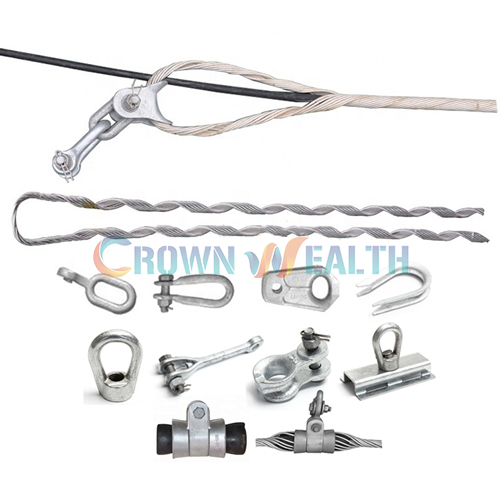
U shackles are rarely used in isolation; they are usually part of a larger rigging or lifting system. Their performance under dynamic loading can be affected by the compatibility with other components in the system. For example, if a U shackle is connected to a Preformed Ground Wire Tension Set Clamp, the clamp's design and mechanical properties need to be considered.
Incompatible components can cause uneven load distribution, leading to increased stress on the U shackle. Similarly, when using U shackles in combination with Square Yoke Plates or YL Type Extension Rod, it's crucial to ensure that all components can work together harmoniously under dynamic loading conditions.
Quality Control During Manufacturing
The manufacturing process of U shackles is a critical factor in determining their performance under dynamic loading. Strict quality control measures need to be in place at every stage of production. This includes raw material inspection, dimensional control, and non - destructive testing.
For example, ultrasonic testing can be used to detect internal flaws in the shackles, such as cracks or inclusions. These flaws can significantly reduce the shackles' strength and performance under dynamic loading. As a supplier, I partner with manufacturers who have a robust quality control system in place to ensure that every U shackle meets or exceeds the required standards.
Importance of Installation
Proper installation of U shackles is essential for their performance under dynamic loading. Incorrect installation, such as improper tightening of the pin or using the shackle in a configuration that it's not designed for, can lead to premature failure.
For example, if the pin is not tightened enough, it can loosen during dynamic loading, causing the shackle to shift and creating uneven stress distribution. On the other hand, over - tightening the pin can damage the threading and reduce the shackle's load - bearing capacity. I provide detailed installation instructions to my customers and offer support to ensure that the U shackles are installed correctly.
Conclusion
As a U shackle supplier, I understand the importance of delivering high - performance products that can withstand the rigors of dynamic loading. The factors discussed above - material quality, design and geometry, surface finish, fatigue resistance, application - specific requirements, compatibility with other components, quality control during manufacturing, and installation - all play crucial roles in determining the performance of U shackles.
If you are in need of high - quality U shackles for your dynamic loading applications, I am here to help. I can provide expert advice on the best shackles for your specific needs and ensure that you receive products that meet the highest standards of quality and safety. Let's start a conversation today about your U shackle requirements, and we can work together to find the perfect solution for your project.
References
- ASME B30.26 - Slings. American Society of Mechanical Engineers.
- Crosby Group Technical Manual. The Crosby Group.
- ASTM standards related to steel for rigging components. American Society for Testing and Materials.