Hey there! As a supplier of Aluminum Joint Boxes, I often get asked about the maximum current capacity of these boxes. It's a crucial question, especially for those in the electrical and telecommunications industries. So, let's dive right in and explore this topic.
First off, what exactly is an Aluminum Joint Box? Well, it's a box made of aluminum that's used to connect and protect electrical or fiber - optic cables. You can learn more about it on our website: Aluminum Joint Box. These boxes are known for their durability, corrosion resistance, and lightweight nature, which makes them a popular choice in various applications.
Now, to understand the maximum current capacity of an Aluminum Joint Box, we need to look at several factors. One of the most important factors is the material properties of aluminum itself. Aluminum has good electrical conductivity, but it's not as conductive as copper. The conductivity of aluminum is about 61% of that of copper. However, it has a lower density and is more cost - effective, which is why it's still widely used.
The cross - sectional area of the conductors inside the joint box plays a huge role in determining the current capacity. The larger the cross - sectional area, the more current the conductors can carry. This is because a larger area provides more space for the electrons to flow, reducing the resistance and thus allowing a higher current. For example, if you have a thick aluminum conductor inside the joint box, it can handle more current compared to a thin one.
Another factor is the temperature rise. When current flows through a conductor, it generates heat due to the resistance. If the temperature of the conductor rises too much, it can damage the insulation and even cause a fire hazard. So, the maximum current capacity is also limited by the ability of the joint box to dissipate heat. Aluminum is a good heat conductor, which helps in dissipating the heat generated by the current. But still, we need to make sure that the temperature doesn't exceed the safe limits.


The design of the joint box also matters. A well - designed joint box will have proper ventilation to allow heat to escape. It will also have good connections between the conductors to minimize resistance. For instance, if the connections are loose, it can increase the resistance and cause more heat to be generated, reducing the overall current - carrying capacity.
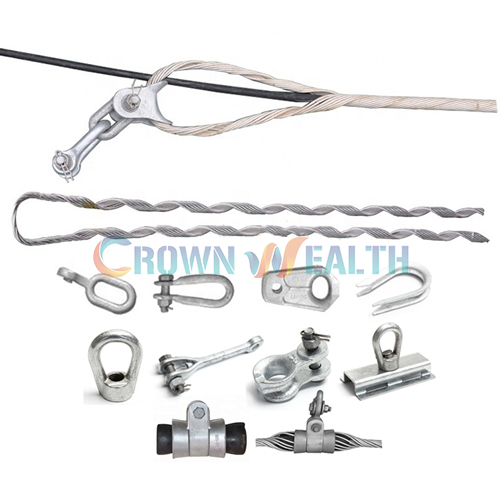
Let's talk about some real - world scenarios. In a typical low - voltage electrical installation, an Aluminum Joint Box might be able to handle currents in the range of a few amperes to several tens of amperes. But in high - voltage power transmission or large - scale telecommunications networks, the requirements are much higher. In these cases, we might use larger and more robust Aluminum Joint Boxes, sometimes even in combination with other components like Double Suspension Clamp for OPGW to ensure the stability and safety of the system.
There are also different types of Aluminum Joint Boxes, such as Aluminum Alloy Joint Box. The addition of other metals in the alloy can change the properties of the box, including its current - carrying capacity. Some alloys might have better conductivity or heat - dissipation properties, which can increase the maximum current that the box can handle.
To accurately determine the maximum current capacity of an Aluminum Joint Box, we usually rely on industry standards and testing. There are specific tests that measure the temperature rise, resistance, and other parameters under different current loads. Based on these test results, we can provide a more precise rating for the current capacity of our products.
It's important to note that overloading an Aluminum Joint Box can have serious consequences. It can lead to equipment failure, power outages, and even pose a safety risk. So, it's crucial to choose the right joint box with the appropriate current - carrying capacity for your application.
If you're in the market for an Aluminum Joint Box, it's always a good idea to consult with us. We have a team of experts who can help you select the right product based on your specific requirements. Whether you need a box for a small residential project or a large - scale industrial installation, we've got you covered.
We understand that every project is unique, and we're committed to providing high - quality products that meet your needs. Our Aluminum Joint Boxes are manufactured using the latest technology and strict quality control measures to ensure their reliability and performance.
So, if you're interested in our Aluminum Joint Boxes or have any questions about their current capacity or other features, don't hesitate to reach out. We're here to help you make the right choice for your project. Whether you're an electrician, an engineer, or a project manager, we can provide you with the information and support you need.
In conclusion, the maximum current capacity of an Aluminum Joint Box depends on multiple factors such as the material properties of aluminum, cross - sectional area of conductors, temperature rise, and the design of the box. By understanding these factors and working with a reliable supplier like us, you can ensure that you get a joint box that can safely and efficiently handle the current requirements of your application.
If you're ready to start your project or need more information, just get in touch with us. We're looking forward to working with you and helping you achieve your goals.
References
- Electrical Engineering Handbook, CRC Press
- Aluminum Association Technical Papers
- Industry Standards for Electrical Enclosures