In the realm of engineering and machinery, vibration dampers play a crucial role in maintaining the stability and longevity of various systems. As a trusted vibration damper supplier, I've witnessed firsthand the significance of understanding key parameters like the damping ratio. In this blog post, we'll delve into what the damping ratio of a vibration damper is and why it holds such importance.
What is the Damping Ratio?
To grasp the concept of the damping ratio, we first need to understand the nature of vibrations. When a system is disturbed from its equilibrium position, it tends to oscillate. These oscillations can be either free (where the system vibrates on its own after an initial disturbance) or forced (where an external force continuously acts on the system).
A vibration damper is designed to reduce these oscillations. The damping ratio, denoted by the Greek letter ζ (zeta), is a dimensionless quantity that describes how oscillations in a system decay after a disturbance. It is defined as the ratio of the actual damping coefficient (c) of the system to the critical damping coefficient (c₀).
Mathematically, the damping ratio is expressed as:
ζ = c / c₀
The critical damping coefficient (c₀) is the minimum amount of damping required to prevent the system from oscillating after a disturbance. When ζ = 1, the system is said to be critically damped. In this case, the system returns to its equilibrium position in the shortest possible time without oscillating. When ζ > 1, the system is overdamped, and it takes longer to return to equilibrium without oscillating. When ζ < 1, the system is underdamped, and it will oscillate with a decaying amplitude over time.


Types of Damping Based on the Damping Ratio
Underdamped Systems (ζ < 1)
Underdamped systems exhibit oscillatory behavior after a disturbance. The amplitude of the oscillations gradually decreases over time due to the presence of damping. This type of damping is commonly found in many mechanical and electrical systems. For example, in a car's suspension system, a certain degree of underdamping is desirable to provide a smooth ride by allowing the wheels to follow the contours of the road while still reducing excessive vibrations.
Critically Damped Systems (ζ = 1)
Critically damped systems return to their equilibrium position in the shortest possible time without oscillating. This is often the goal in applications where rapid response and minimal overshoot are required. For instance, in some precision measuring instruments, critical damping ensures that the instrument settles quickly to its correct reading after a measurement is taken.
Overdamped Systems (ζ > 1)
Overdamped systems take longer to return to their equilibrium position compared to critically damped systems. While they do not oscillate, the slow response can be a drawback in some applications. However, in situations where oscillations must be completely eliminated, such as in some industrial machinery, overdamping may be necessary.
Why is the Damping Ratio Important?
System Stability
One of the primary reasons the damping ratio is important is its impact on system stability. In an underdamped system, excessive oscillations can lead to instability, which may cause damage to the system or affect its performance. For example, in a tall building, wind-induced vibrations can cause the building to sway. If the damping ratio of the building's structural system is too low, the oscillations can become large enough to pose a safety risk. By adjusting the damping ratio, engineers can ensure that the system remains stable under various operating conditions.
Vibration Reduction
The main purpose of a vibration damper is to reduce vibrations. The damping ratio determines how effectively the damper can achieve this goal. A higher damping ratio generally means more effective vibration reduction. For example, in a power transmission line, vibrations caused by wind or other factors can lead to fatigue and failure of the line components. By using vibration dampers with an appropriate damping ratio, these vibrations can be significantly reduced, increasing the lifespan of the line.
Energy Dissipation
Vibrations in a system represent a form of energy. The damping ratio affects how quickly this energy is dissipated. In an underdamped system, the energy is dissipated slowly through the oscillatory motion. In a critically or overdamped system, the energy is dissipated more quickly, reducing the time the system spends in a vibrating state. This energy dissipation is important not only for reducing wear and tear on the system but also for improving its overall efficiency.
Response Time
The damping ratio also influences the response time of a system. A critically damped system has the fastest response time without oscillating, while an overdamped system has a slower response time. In applications where quick response is crucial, such as in control systems, the damping ratio must be carefully selected to balance the need for rapid response with the desire to avoid oscillations.
Applications of Vibration Dampers and the Role of the Damping Ratio
Power Transmission Lines
In power transmission lines, vibration dampers are used to reduce the vibrations caused by wind-induced galloping and aeolian vibrations. These vibrations can cause fatigue and damage to the conductors, insulators, and other components of the line. By using vibration dampers with an appropriate damping ratio, the vibrations can be minimized, increasing the reliability and lifespan of the power transmission system. For example, the Square Spacer Damper is designed to provide effective vibration damping in power transmission lines.
Automotive Industry
In the automotive industry, vibration dampers are used in the suspension system to provide a smooth ride and improve handling. The damping ratio of the suspension system affects how the car responds to bumps and uneven road surfaces. A well-designed damping ratio can reduce body roll, improve traction, and enhance overall driving comfort.
Aerospace Industry
In aerospace applications, vibration dampers are used to reduce the vibrations in aircraft structures, engines, and control systems. These vibrations can be caused by aerodynamic forces, engine vibrations, and other factors. By controlling the damping ratio, engineers can ensure the safety and performance of the aircraft.
Industrial Machinery
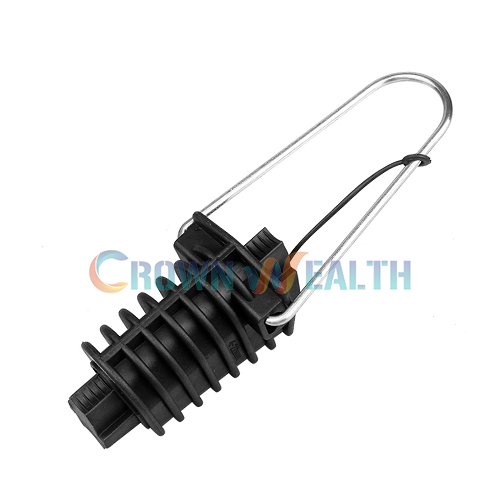
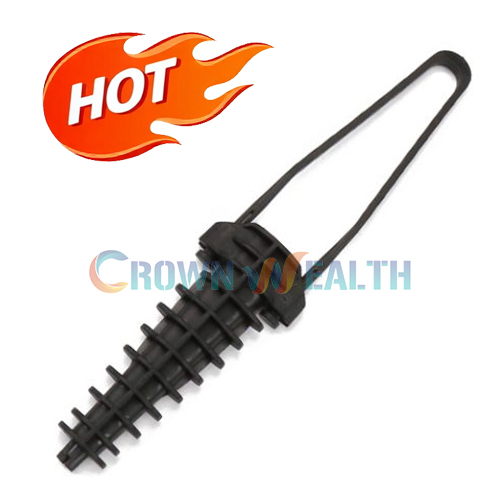
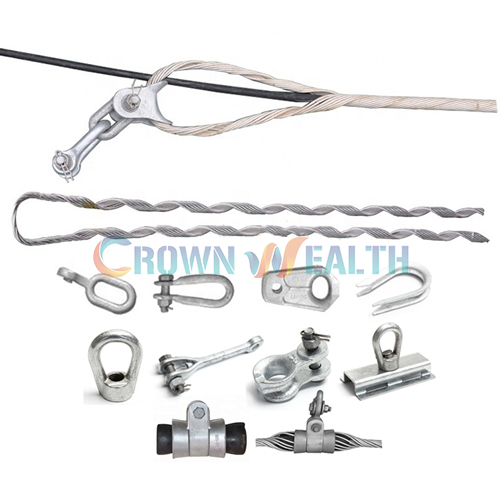
In industrial machinery, vibration dampers are used to reduce the vibrations caused by rotating equipment, such as motors and pumps. These vibrations can lead to noise, wear and tear, and reduced efficiency. By using vibration dampers with an appropriate damping ratio, the vibrations can be minimized, improving the reliability and productivity of the machinery. For example, the Helical Guy Grips and Overhead Line Accessories Preformed Dead End Clamp Guy Grip for Cable are used in industrial settings to provide stability and reduce vibrations.
Selecting the Right Damping Ratio for Your Application
Selecting the right damping ratio for a particular application requires a thorough understanding of the system's requirements. Factors such as the type of vibrations, the operating environment, and the desired performance must be considered. In some cases, the damping ratio may need to be adjusted during the design and testing phases to optimize the system's performance.
As a vibration damper supplier, we have the expertise and experience to help you select the right vibration damper with the appropriate damping ratio for your specific application. Our team of engineers can work with you to analyze your system's requirements and recommend the best solution.
Conclusion
In conclusion, the damping ratio of a vibration damper is a critical parameter that affects the stability, vibration reduction, energy dissipation, and response time of a system. Understanding the concept of the damping ratio and its importance is essential for engineers and designers in various industries. Whether you're working on power transmission lines, automotive systems, aerospace applications, or industrial machinery, selecting the right vibration damper with an appropriate damping ratio can significantly improve the performance and reliability of your system.
If you're in the market for high-quality vibration dampers, we invite you to contact us for a personalized consultation. Our team is ready to assist you in finding the perfect solution for your needs. Let's work together to ensure the success of your projects.
References
- Meirovitch, L. (1986). Elements of Vibration Analysis. McGraw-Hill.
- Inman, D. J. (2014). Engineering Vibration. Prentice Hall.
- Rao, S. S. (2011). Mechanical Vibrations. Pearson.