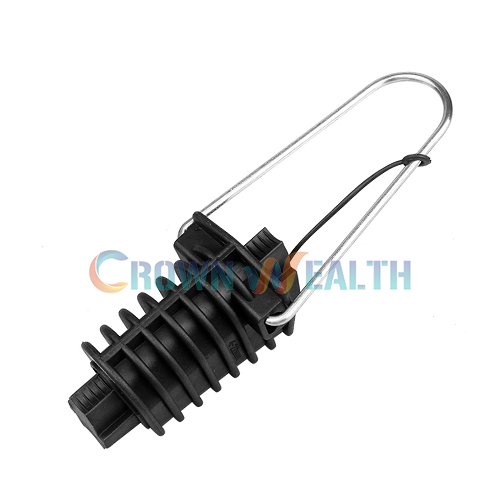
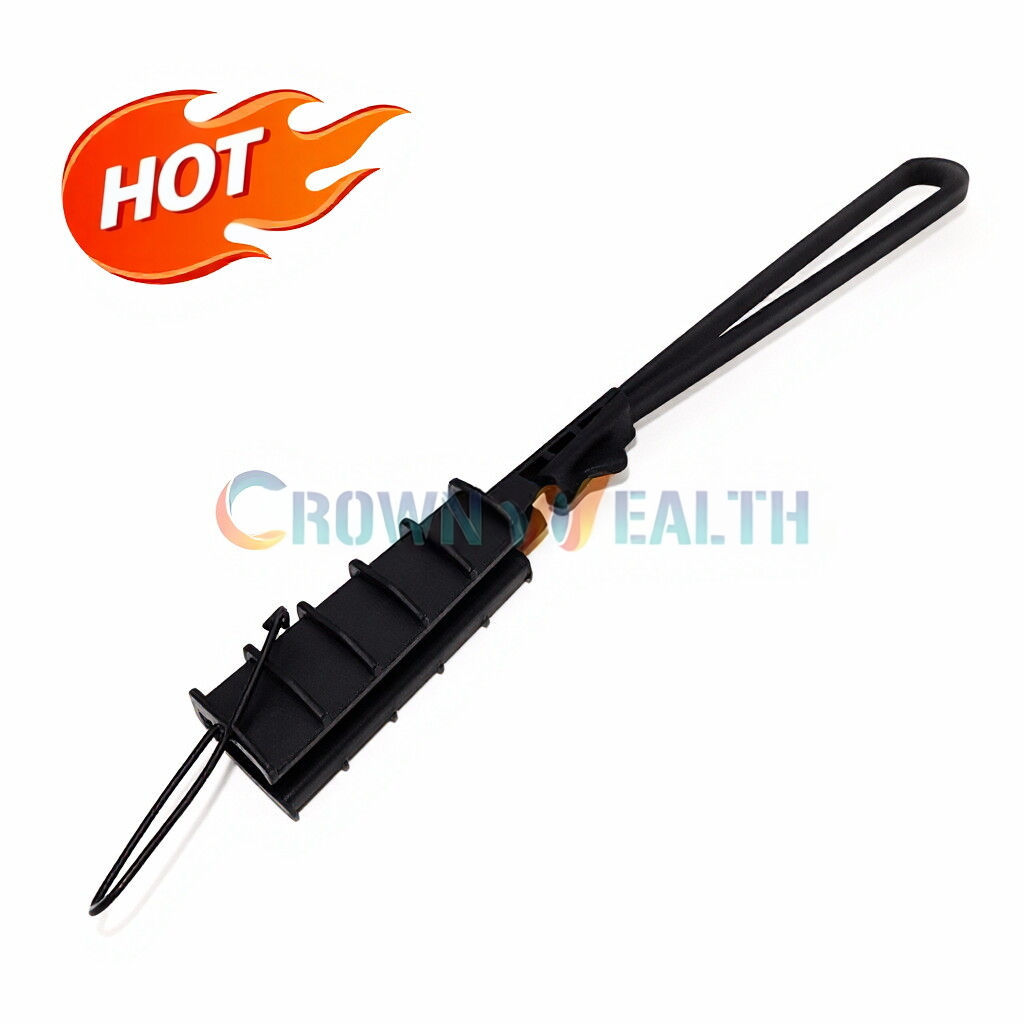
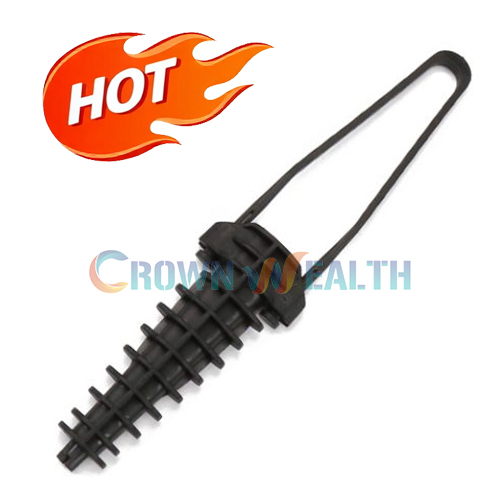
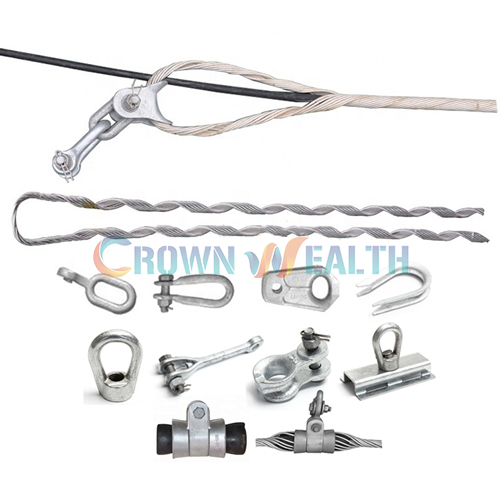
As a seasoned OPGW Strain Clamp supplier, I've witnessed firsthand the critical role these components play in the reliable operation of overhead power lines integrated with optical fiber cables. OPGW, or Optical Power Ground Wire, combines the functions of a traditional ground wire and an optical communication cable, and strain clamps are essential for securely anchoring these cables at terminal points, corners, and dead - ends. In this blog, I'll delve into the materials used to make OPGW Strain Clamps, their properties, and why they are chosen for this specific application.
Aluminum Alloy
One of the most commonly used materials in the manufacturing of OPGW Strain Clamps is aluminum alloy. Aluminum alloy offers a unique combination of properties that make it ideal for this application. Firstly, it has a relatively low density, which means that the clamps made from it are lightweight. This is crucial as it reduces the overall weight load on the OPGW cable and the supporting structures. For overhead power lines, minimizing weight is essential to prevent excessive stress on poles and towers, especially in areas prone to high winds or heavy snowfall.
Secondly, aluminum alloy has excellent corrosion resistance. When exposed to the elements, the clamps are subject to various environmental factors such as moisture, oxygen, and pollutants. Aluminum forms a thin oxide layer on its surface when in contact with air, which acts as a protective barrier against corrosion. This ensures the long - term durability of the OPGW Strain Clamps, reducing the need for frequent replacements and maintenance.
Moreover, aluminum alloy is highly malleable and can be easily formed into the complex shapes required for strain clamps. It can be cast, forged, or extruded to create components with precise dimensions, ensuring a proper fit with the OPGW cable. This precision is vital for maintaining the integrity of the connection and preventing any slippage or damage to the cable.
Stainless Steel
Stainless steel is another material frequently utilized in OPGW Strain Clamps, particularly in parts that require high strength and enhanced corrosion resistance. There are different grades of stainless steel, but austenitic stainless steels such as 304 and 316 are commonly chosen.
The high strength of stainless steel makes it suitable for components that bear significant mechanical stress. For example, the bolts, nuts, and some of the structural elements of the strain clamps are often made of stainless steel. These parts need to withstand the tension forces exerted by the OPGW cable, especially during installation and under extreme weather conditions.
In addition to its strength, stainless steel has outstanding corrosion resistance, even in harsh environments. It contains chromium, which forms a passive oxide layer on the surface, protecting the metal from rust and other forms of corrosion. This is particularly important for OPGW Strain Clamps installed in coastal areas or industrial regions where the air may be polluted with salt or chemicals.
Stainless steel also has good heat resistance, which is beneficial in areas where the temperature can vary significantly. It can maintain its mechanical properties over a wide range of temperatures, ensuring the stability and reliability of the strain clamps in different climates.
Composite Materials
In recent years, composite materials have emerged as an alternative for making OPGW Strain Clamps. Composites are made by combining two or more different materials to achieve specific properties. For OPGW Strain Clamps, fiber - reinforced composites are often used.
Fiber - reinforced composites typically consist of a matrix material, such as epoxy resin, and reinforcing fibers, such as glass fibers or carbon fibers. These composites offer several advantages. Firstly, they have a high strength - to - weight ratio. Compared to traditional materials like aluminum alloy or stainless steel, composites can provide the same level of strength with less weight. This is a significant advantage for overhead power lines, as it further reduces the load on the supporting structures.
Secondly, composites have excellent electrical insulation properties. Since OPGW cables carry both electrical and optical signals, it is important to ensure that the strain clamps do not interfere with the electrical performance of the system. The electrical insulation of composites helps to prevent any electrical leakage or short - circuits, enhancing the safety and reliability of the power line.


Composites are also resistant to environmental degradation. They are not affected by factors such as moisture, UV radiation, or chemical exposure, which can cause deterioration in other materials. This means that OPGW Strain Clamps made from composites have a longer service life and require less maintenance.
Rubber and Elastomers
Rubber and elastomers are used in OPGW Strain Clamps mainly for their cushioning and sealing properties. They are often used as gaskets or liners within the clamps.
The cushioning effect of rubber and elastomers helps to protect the OPGW cable from damage caused by mechanical stress. When the cable is clamped, the rubber or elastomer material absorbs the shock and vibration, preventing any abrasion or deformation of the cable. This is crucial for maintaining the integrity of the optical fibers within the OPGW cable, as any damage to the fibers can lead to signal loss or interruption.
Rubber and elastomers also provide a good seal, preventing moisture and dust from entering the clamp and reaching the cable. Moisture can cause corrosion of the cable and its components, while dust can accumulate and interfere with the electrical and optical performance. By creating a tight seal, rubber and elastomers help to ensure the long - term reliability of the OPGW system.
Conclusion
In conclusion, the materials used to make OPGW Strain Clamps are carefully selected based on their properties and the specific requirements of the application. Aluminum alloy offers lightweight and corrosion - resistant solutions, stainless steel provides high strength and enhanced corrosion protection, composite materials bring a high strength - to - weight ratio and electrical insulation, and rubber and elastomers offer cushioning and sealing functions.
As a supplier of OPGW Strain Clamps, I understand the importance of using high - quality materials to ensure the performance and durability of our products. We also offer a range of related products such as OPGW Performed Suspension Clamp, Double Suspension Clamp for OPGW, and Tension Clamp for Overhead Line.
If you are in the market for reliable OPGW Strain Clamps or any of our other products, I encourage you to reach out to us for a detailed discussion about your specific needs. Our team of experts is ready to assist you in finding the best solutions for your overhead power line projects.
References
- "Handbook of Materials for Power Transmission and Distribution", CRC Press
- "Materials Science and Engineering: An Introduction", John Wiley & Sons
- Industry reports on OPGW components and materials