Vibration is a common and potentially damaging phenomenon in various engineering applications, especially in overhead power lines and other structures exposed to dynamic forces. To mitigate the adverse effects of vibration, different types of vibration dampers have been developed over the years. As a leading supplier of Spiral Vibration Dampers, I am often asked how our product compares with other types of vibration dampers. In this blog post, I will delve into the characteristics of Spiral Vibration Dampers and contrast them with other popular vibration - damping solutions.
Understanding Vibration Dampers
Before we start the comparison, it's essential to understand the basic function of vibration dampers. Vibration in structures, such as power lines, can be caused by wind, machinery operation, or other external forces. If left unaddressed, these vibrations can lead to fatigue failure, reduced service life, and increased maintenance costs. Vibration dampers work by dissipating the energy of the vibration, thus reducing the amplitude of the vibration and protecting the structure.
Types of Vibration Dampers
There are several types of vibration dampers commonly used in the industry, including Stockbridge dampers, tuned mass dampers, and our specialty, Spiral Vibration Dampers.
Stockbridge Dampers
Stockbridge dampers are one of the most well - known types of vibration dampers. They consist of two weights attached to a cable or rod at specific distances from the attachment point on the main structure (usually a power line). The weights oscillate out of phase with the vibration of the line, absorbing and dissipating the vibration energy.
One of the advantages of Stockbridge dampers is their simplicity and wide acceptance in the industry. They are relatively easy to install and have a proven track record in reducing vibration in power lines. However, they have some limitations. Stockbridge dampers are designed for a specific frequency range. If the vibration frequency of the structure changes, their effectiveness can be significantly reduced. Also, they can be relatively large and heavy, which may pose challenges in some installation scenarios.
Tuned Mass Dampers
Tuned mass dampers are another type of vibration - damping device. They work on the principle of resonance. A tuned mass damper consists of a mass, a spring, and a damper. The mass is tuned to the natural frequency of the structure so that when the structure vibrates, the mass oscillates in the opposite direction, counteracting the vibration.


Tuned mass dampers are highly effective in reducing vibration in structures with well - defined natural frequencies. They can be customized for specific applications, making them suitable for a wide range of structures, from tall buildings to bridges. However, they are often complex and expensive to design and install. They also require regular maintenance to ensure that the tuning remains accurate.
Spiral Vibration Dampers
Spiral Vibration Dampers, such as our Helical Spiral Vibration Damper, have unique characteristics that set them apart from other types of vibration dampers.
Design and Working Principle
Spiral Vibration Dampers are typically made of a helical or spiral - shaped wire or cable. When installed on a structure, the spiral shape allows the damper to interact with the vibration in a unique way. As the structure vibrates, the spiral damper deforms and twists, converting the kinetic energy of the vibration into heat energy through internal friction.
Advantages
- Wide Frequency Range: One of the significant advantages of Spiral Vibration Dampers is their ability to work effectively over a wide range of vibration frequencies. Unlike Stockbridge dampers, which are tuned to a specific frequency, Spiral Vibration Dampers can adapt to different vibration frequencies, making them more versatile in various operating conditions.
- Lightweight and Compact: Spiral Vibration Dampers are generally lightweight and compact compared to other types of dampers. This makes them easier to install, especially in situations where space is limited or where additional weight on the structure needs to be minimized. For example, in overhead power lines, the lightweight nature of Spiral Vibration Dampers reduces the additional load on the line, which can be beneficial for the overall stability of the system.
- Low Maintenance: These dampers have a simple design with no moving parts other than the deformation of the spiral itself. This means they require minimal maintenance compared to tuned mass dampers, which need regular tuning and inspection. Over the long term, this can result in significant cost savings for the end - user.
Application in Conjunction with Other Protective Fittings
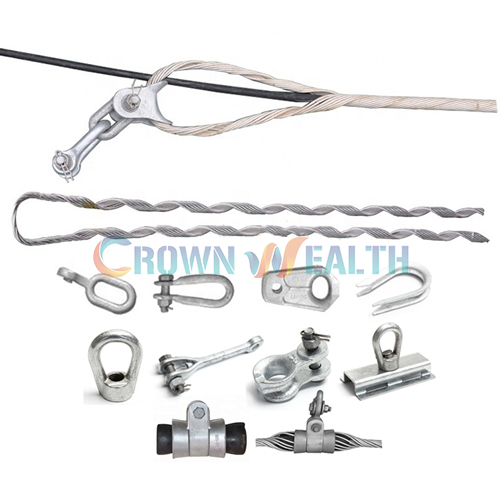
Spiral Vibration Dampers can also be used in conjunction with other protective fittings, such as Preformed Armor Rods and Preformed Armor Rods for Conductor Repair. Preformed Armor Rods are used to protect the conductor from mechanical damage, while Spiral Vibration Dampers reduce the vibration - induced stress. When used together, they provide comprehensive protection for overhead power lines, ensuring their long - term reliability.
Comparison in Different Applications
Let's take a look at how Spiral Vibration Dampers compare with other types of dampers in different applications.
Power Lines
In power lines, where vibration is a common issue due to wind and electrical forces, Spiral Vibration Dampers offer several advantages. Their wide frequency range makes them suitable for power lines in different geographical locations and weather conditions, where the vibration frequency can vary. The lightweight design also reduces the stress on the line supports, which is crucial for the long - term integrity of the power grid. In contrast, Stockbridge dampers may need to be carefully selected and installed for specific power line sections to ensure optimal performance, and tuned mass dampers may be too complex and expensive for large - scale power line applications.
Industrial Machinery
For industrial machinery, vibration can cause wear and tear on components, leading to reduced efficiency and increased maintenance costs. Spiral Vibration Dampers can be easily installed on machinery parts to reduce vibration. Their compact size allows them to be integrated into existing machinery without significant modifications. Tuned mass dampers may be overkill for some industrial machinery applications, and Stockbridge dampers may not be as effective in handling the complex vibration patterns often found in industrial settings.
Conclusion
In conclusion, Spiral Vibration Dampers offer a unique and effective solution for vibration control in various applications. Their wide frequency range, lightweight design, and low - maintenance requirements make them a competitive alternative to other types of vibration dampers such as Stockbridge dampers and tuned mass dampers. Whether used alone or in conjunction with other protective fittings like Preformed Armor Rods, Spiral Vibration Dampers can provide reliable protection for structures and machinery.
If you are looking for a high - quality vibration - damping solution, we invite you to contact us for a detailed discussion about your specific needs. Our team of experts is ready to assist you in selecting the most suitable Spiral Vibration Damper for your application. We can provide you with technical support, installation guidance, and competitive pricing. Let's work together to ensure the long - term reliability and performance of your structures and machinery.
References
- Clough, Ray W., and Joseph Penzien. Dynamics of Structures. McGraw - Hill, 1993.
- Den Hartog, J. P. Mechanical Vibrations. Dover Publications, 1985.
- Thompson, W. T. Theory of Vibration with Applications. Prentice - Hall, 1981.