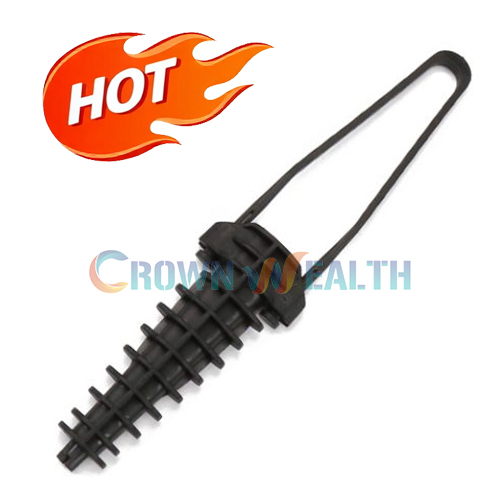
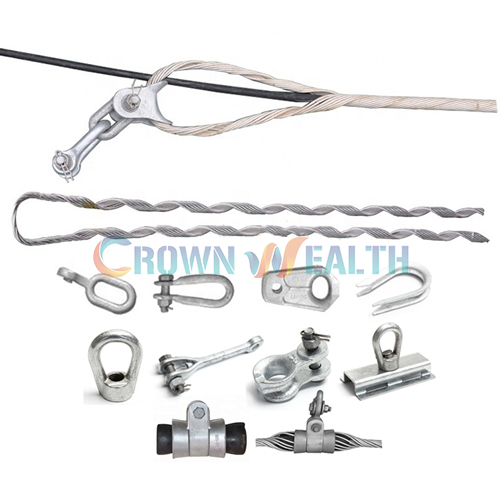
Hey there! As a supplier of Armor Rods, I often get asked about the weight of these nifty little things. So, I thought I'd sit down and write a blog post to clear up any confusion.
First off, let's talk about what Armor Rods are. Armor Rods are basically protective fittings used in the electrical power industry. They're wrapped around conductors to protect them from various forms of damage, like abrasion, vibration, and corona discharge. They're made from high - strength materials, usually aluminum alloy, which gives them both durability and flexibility.
Now, to the question at hand: What is the weight of Armor Rods? Well, the weight of Armor Rods can vary quite a bit, and there are several factors that come into play.
Factors Affecting the Weight of Armor Rods
1. Size and Dimensions
The most obvious factor is the size of the Armor Rods. Just like any other product, bigger Armor Rods are going to weigh more than smaller ones. The length and diameter of the rods are crucial here. Longer rods will naturally have more material, and thus, more weight. Similarly, rods with a larger diameter will also be heavier. For example, if you have a set of Armor Rods designed for a large - scale high - voltage transmission line, they'll be much bigger and heavier compared to those used for a small - scale distribution line.
2. Material Composition
As I mentioned earlier, Armor Rods are typically made from aluminum alloy. However, the exact composition of this alloy can vary. Different alloys have different densities, which directly affects the weight of the Armor Rods. Some alloys might be designed to be more lightweight while still maintaining strength, while others could be more heavy - duty and thus heavier. The purity of the aluminum and the presence of other elements in the alloy play a significant role in determining its density and, consequently, the weight of the Armor Rods.
3. Design and Configuration
The way the Armor Rods are designed also impacts their weight. Some Armor Rods have a simple, straightforward design, while others might have a more complex configuration. For instance, some rods might be pre - formed in a way that allows for better wrapping around the conductor, which could involve additional bends or twists. These additional features might add a bit of extra weight to the rods.
Calculating the Weight of Armor Rods
So, how do you actually calculate the weight of Armor Rods? Well, it's not an exact science, but there are some general methods.
If you know the volume of the Armor Rods and the density of the material they're made from, you can use the basic formula: Mass = Density x Volume. To find the volume, you'll need to know the dimensions of the rods. For a cylindrical Armor Rod (which is a common shape), the volume formula is V = πr²h, where r is the radius and h is the height (or length) of the rod.
Let's say you have an Armor Rod made from an aluminum alloy with a density of about 2.7 g/cm³. If the rod has a radius of 1 cm and a length of 100 cm, the volume would be V = π(1)²(100) = 100π cm³. Using the mass formula, the mass would be m = 2.7 g/cm³ x 100π cm³ ≈ 848.23 g.
But in real - world scenarios, things are a bit more complicated. Manufacturers usually have their own specifications and data sheets that provide the weight of their Armor Rods based on different sizes and models. These data sheets are the most reliable source of information when it comes to knowing the exact weight of a particular set of Armor Rods.
Why Does the Weight Matter?
You might be wondering why the weight of Armor Rods is even important. Well, there are a few reasons.
1. Installation
The weight of the Armor Rods can affect the installation process. Heavier rods might require more manpower or specialized equipment to install. For example, if you're working on a high - voltage transmission tower, installing heavy Armor Rods can be a challenging task. It might take more time and effort to lift and position them correctly, which can increase the overall installation cost.
2. Structural Integrity
The weight of the Armor Rods also has an impact on the structural integrity of the conductor system. The conductor has to support the weight of the Armor Rods in addition to its own weight and the weight of other components. If the Armor Rods are too heavy, it could put additional stress on the conductor, potentially leading to sagging or even breakage over time.
3. Transportation
Transporting Armor Rods is another aspect where weight matters. Heavier rods will require more fuel and larger vehicles for transportation. This can increase the transportation cost and also have an impact on the carbon footprint.
Other Related Products
As a supplier, we also offer other protective fittings related to the electrical power industry. For example, Preormed Armor is another type of protective fitting that works in a similar way to Armor Rods. It provides additional protection to the conductor and comes in different sizes and designs.
We also have Square Spacer Damper. These are used to keep multiple conductors spaced apart and dampen vibrations. They're an important part of the overall electrical power system and come with their own set of specifications, including weight.
And then there are Preformed End Guy Grips. These grips are used to secure guy wires, which are essential for providing stability to transmission towers. Just like Armor Rods, the weight of these grips can vary depending on their size and material.


Conclusion
In conclusion, the weight of Armor Rods is a complex topic that depends on several factors such as size, material composition, and design. Knowing the weight is important for installation, structural integrity, and transportation purposes. If you're in the market for Armor Rods or any of our other protective fittings, I encourage you to reach out to us for more information. We can provide you with detailed specifications and help you choose the right products for your needs. Whether you're working on a small - scale distribution project or a large - scale transmission line, we've got the expertise and the products to support you. So, don't hesitate to contact us for a purchase and let's start a great business relationship!
References
- Electrical Power Transmission and Distribution Handbook
- Manufacturer's Data Sheets on Armor Rods and Related Products