As a leading supplier of Armor Rods, I've witnessed firsthand the crucial role these components play in safeguarding electrical cables and transmission lines from various threats, especially impact. In this blog, I'll delve into the science behind how Armor Rods protect against impact, exploring their design, functionality, and real - world applications.
The Design and Structure of Armor Rods
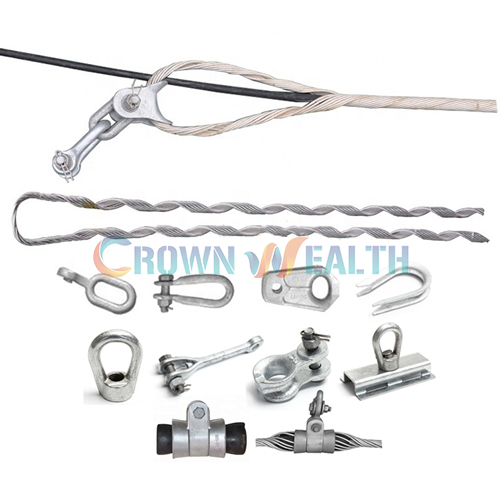
Armor Rods are typically made from high - strength materials such as aluminum alloy or steel. Their preformed helical shape is a key design feature. This shape allows them to be easily wrapped around the power cables. The pre - formed nature means that they are manufactured to fit snugly around the cable, conforming to its curvature.


The helical structure of Armor Rods distributes the impact force over a larger area. When an external object strikes the cable, instead of the force being concentrated at a single point, it spreads out along the length of the Armor Rods. This dispersion of force significantly reduces the stress on the cable itself. For example, if a falling branch hits a cable with Armor Rods, the helical shape of the rods ensures that the impact energy is dissipated over a wide section of the cable, rather than causing a sharp, localized impact that could damage the cable's insulation or conductors.
Absorbing and Dissipating Impact Energy
One of the primary ways Armor Rods protect against impact is by absorbing and dissipating the energy from the impact. When an object collides with the cable, the Armor Rods deform slightly. This deformation is a crucial mechanism for energy absorption. The high - strength materials used in Armor Rods are designed to undergo elastic and plastic deformation without breaking.
During the elastic deformation phase, the Armor Rods store the impact energy and then release it back. This is similar to a spring that compresses when a force is applied and then returns to its original shape, releasing the stored energy. In the plastic deformation phase, the Armor Rods permanently change shape, but in doing so, they absorb a significant amount of the impact energy. This energy absorption prevents the energy from being transferred directly to the cable, protecting it from damage.
Shielding the Cable from Direct Contact
Armor Rods act as a physical barrier between the cable and the source of impact. They are the first line of defense when an external object approaches the cable. For instance, in areas prone to bird strikes or flying debris, the Armor Rods take the brunt of the impact. By preventing direct contact between the cable and the impacting object, they protect the cable's sensitive components, such as the insulation and conductors.
The outer surface of the Armor Rods can also be designed to reduce the severity of the impact. Some Armor Rods have a smooth finish, which can cause an impacting object to glance off rather than sticking to the surface and causing more damage. Additionally, the material properties of the Armor Rods can be adjusted to provide a certain level of cushioning effect, further reducing the impact force on the cable.
Real - World Applications and Success Stories
In the power transmission industry, Armor Rods have been used for decades to protect overhead power lines. In regions with harsh weather conditions, such as areas prone to ice storms or high - wind events, Armor Rods have proven their worth. Ice accumulation on power lines can cause the lines to become heavier, increasing the risk of breakage. Armor Rods help distribute the weight of the ice more evenly along the cable, reducing the stress on any single point.
In areas with a high density of wildlife, such as forests or near wetlands, Armor Rods protect cables from animal - related impacts. Birds may collide with power lines, and small mammals may chew on the cables. Armor Rods prevent such damage, ensuring the continuous operation of the power grid.
Complementary Products for Enhanced Protection
While Armor Rods are highly effective on their own, they can be used in conjunction with other protective fittings to provide even greater protection against impact and other threats. For example, Preformed End Guy Grips are used to secure the cables at the end points. They work in tandem with Armor Rods to ensure that the entire cable system is stable and protected.
Preformed Armor Rods are another important product. They are specifically designed to be pre - formed to fit different cable sizes and shapes, providing a customized and reliable protection solution.
Tuning Fork Vibration Damper can also be used alongside Armor Rods. These dampers reduce the vibrations caused by wind or other external forces. By minimizing vibrations, they prevent fatigue damage to the cable and the Armor Rods, extending the lifespan of the entire system.
Contact for Purchase and Consultation
If you're interested in learning more about Armor Rods and how they can protect your power cables from impact, or if you're looking to purchase these products, please feel free to reach out. Our team of experts is ready to provide you with detailed information, customized solutions, and competitive pricing. Whether you're involved in a small - scale electrical project or a large - scale power transmission network, we have the products and expertise to meet your needs.
References
- Electrical Transmission Line Design Handbook, various editions
- Journal of Power and Energy Engineering, multiple issues on cable protection
- Industry reports on power grid infrastructure and protection technologies