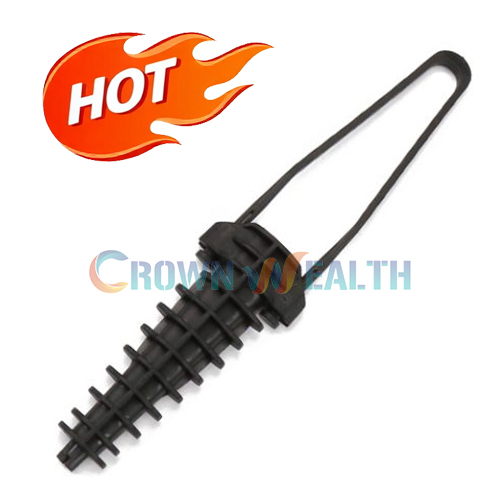
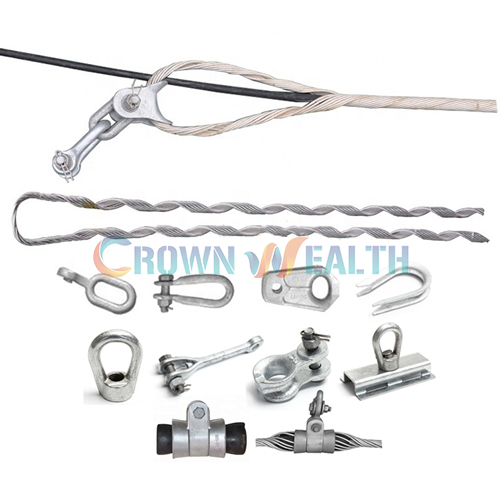
As a trusted supplier of Armor Rods, I often receive inquiries about the fatigue strength of these essential components. In this blog, I will delve into the concept of fatigue strength, its significance for Armor Rods, and how it impacts their performance in various applications.
Understanding Fatigue Strength
Fatigue strength refers to the maximum stress that a material can withstand for a given number of cycles without failing. In the context of Armor Rods, which are used to protect overhead power lines and other cables from mechanical stress, fatigue strength is a crucial property. These rods are subjected to repeated loading and unloading due to factors such as wind-induced vibrations, ice accretion, and thermal expansion and contraction. Over time, these cyclic loads can lead to the initiation and propagation of cracks, ultimately resulting in failure.
The fatigue strength of Armor Rods is influenced by several factors, including the material composition, manufacturing process, and the design of the rods. Let's take a closer look at each of these factors.
Material Composition
The choice of material plays a significant role in determining the fatigue strength of Armor Rods. Commonly used materials include aluminum alloy and steel. Aluminum alloy Armor Rods are lightweight, corrosion-resistant, and have good electrical conductivity. They are suitable for applications where weight is a concern, such as in high-voltage transmission lines. Steel Armor Rods, on the other hand, offer higher strength and are more suitable for applications where greater mechanical protection is required, such as in areas with high wind speeds or heavy ice loads.
The fatigue strength of a material is also affected by its microstructure. For example, a fine-grained microstructure generally provides better fatigue resistance compared to a coarse-grained microstructure. This is because fine grains can impede the propagation of cracks, making the material more resistant to fatigue failure.
Manufacturing Process
The manufacturing process of Armor Rods can also impact their fatigue strength. Proper manufacturing techniques ensure that the rods have a uniform microstructure and minimal defects, which are essential for good fatigue performance. For example, cold forming processes, such as rolling and drawing, can improve the fatigue strength of the material by introducing beneficial residual stresses and refining the microstructure.
Heat treatment is another important step in the manufacturing process. It can be used to improve the mechanical properties of the material, such as strength and hardness, and also to relieve residual stresses. However, improper heat treatment can lead to the formation of defects, such as cracks or voids, which can reduce the fatigue strength of the Armor Rods.
Design of Armor Rods
The design of Armor Rods is crucial for their fatigue performance. The shape and dimensions of the rods should be carefully selected to ensure that they can effectively distribute the mechanical stress along the cable. For example, a well-designed Armor Rod should have a smooth surface and a gradual transition between different sections to avoid stress concentrations.
In addition, the number and arrangement of the Armor Rods on the cable can also affect their fatigue strength. A proper installation pattern can ensure that the rods work together to provide uniform protection to the cable, reducing the risk of fatigue failure.
Importance of Fatigue Strength for Armor Rods
The fatigue strength of Armor Rods is of utmost importance for the reliability and safety of overhead power lines and other cable systems. A failure of the Armor Rods can lead to damage to the cable, which can result in power outages, equipment damage, and even safety hazards.
In high-voltage transmission lines, for example, the Armor Rods are used to protect the conductors from the mechanical stress caused by wind-induced vibrations. If the fatigue strength of the Armor Rods is insufficient, they may fail prematurely, leaving the conductors vulnerable to damage. This can lead to costly repairs and disruptions to the power supply.
In areas with heavy ice loads, the Armor Rods also play a crucial role in protecting the cables from the additional stress caused by the weight of the ice. A strong and fatigue-resistant Armor Rod can help to prevent the cables from breaking under the ice load, ensuring the continuous operation of the power grid.
Testing and Evaluation of Fatigue Strength
To ensure the quality and reliability of the Armor Rods, it is essential to conduct proper testing and evaluation of their fatigue strength. There are several standard test methods available for measuring the fatigue strength of materials, such as the rotating beam fatigue test and the axial fatigue test.
In the rotating beam fatigue test, a specimen of the Armor Rod material is subjected to a cyclic bending stress by rotating it around a fixed axis. The test is continued until the specimen fails, and the number of cycles to failure is recorded. This test can provide valuable information about the fatigue performance of the material under different stress levels.
The axial fatigue test, on the other hand, involves applying a cyclic axial load to the specimen. This test is more suitable for evaluating the fatigue strength of Armor Rods under tensile or compressive stress.
In addition to laboratory testing, field testing can also be conducted to evaluate the performance of the Armor Rods in real-world conditions. This can involve monitoring the behavior of the Armor Rods on actual power lines over an extended period of time and collecting data on factors such as stress levels, vibration frequencies, and temperature variations.
Our Commitment as an Armor Rods Supplier
As a leading supplier of Armor Rods, we are committed to providing our customers with high-quality products that meet or exceed the industry standards. We use advanced manufacturing techniques and strict quality control measures to ensure that our Armor Rods have excellent fatigue strength and reliability.
Our team of experts is constantly researching and developing new materials and designs to improve the performance of our Armor Rods. We also offer customized solutions to meet the specific needs of our customers, taking into account factors such as the application environment, cable type, and mechanical requirements.
In addition to Armor Rods, we also offer a wide range of other protective fittings, such as Preformed Guy Grips, Dead End Guy Grips, and Helical Spiral Vibration Damper. These products are designed to work together to provide comprehensive protection for overhead power lines and other cable systems.
Contact Us for Procurement and Consultation
If you are in need of high-quality Armor Rods or other protective fittings, we invite you to contact us for procurement and consultation. Our experienced sales team will be happy to assist you in selecting the right products for your specific application and providing you with detailed technical information and pricing.


We believe that our commitment to quality, innovation, and customer service makes us the ideal partner for your cable protection needs. Whether you are a utility company, a contractor, or an equipment manufacturer, we are confident that we can provide you with the products and solutions that you need to ensure the reliability and safety of your cable systems.
In conclusion, the fatigue strength of Armor Rods is a critical factor for their performance and reliability in overhead power lines and other cable systems. By understanding the factors that affect the fatigue strength and taking appropriate measures to ensure its quality, we can provide our customers with high-quality products that meet their needs and expectations.
References
- ASME Boiler and Pressure Vessel Code, Section VIII, Division 2: Alternative Rules for Construction of Pressure Vessels
- ASTM E466 - 15: Standard Practice for Conducting Force - Controlled Constant - Amplitude Axial Fatigue Tests of Metallic Materials
- IEC 61280 - 2 - 3: Optical fibre cables - Part 2 - 3: Indoor cables - Sectional specification for optical fibre indoor cables for use in buildings