Hey there! As a supplier of protective fittings, I've seen firsthand how these little wonders can keep all sorts of equipment safe from corrosion. Corrosion is like a silent enemy that can eat away at metal structures, cables, and all kinds of industrial components. But don't worry, protective fittings are here to save the day!


Let's start by understanding what corrosion actually is. Corrosion happens when metal reacts with its environment, usually oxygen and moisture. This reaction forms metal oxides, which we commonly know as rust. It can weaken structures, reduce their lifespan, and even lead to safety hazards. That's where our protective fittings come in.
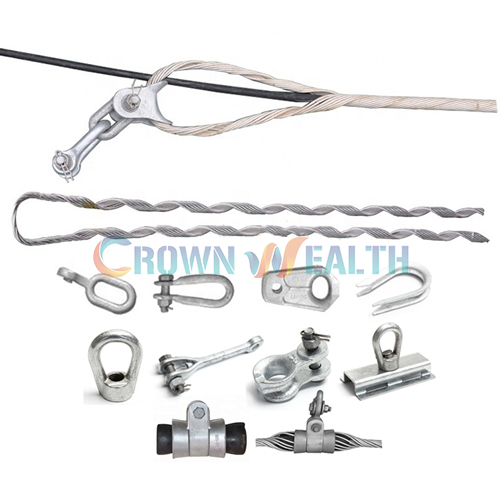
One of the most common types of protective fittings we offer is the Preformed Armor Rods. These are pre - formed wires that are wrapped around cables, like power lines or guy wires. They work in a couple of ways to prevent corrosion.
First, they act as a physical barrier. By wrapping tightly around the cable, they prevent moisture and oxygen from reaching the metal surface of the cable. Moisture is a key ingredient in the corrosion process, and by keeping it away, we're already taking a big step in preventing rust. The armor rods are made of materials that are resistant to corrosion themselves, like galvanized steel or aluminum. Galvanized steel has a layer of zinc on it, which acts as a sacrificial anode. This means that the zinc will corrode first before the steel underneath does, giving the cable extra protection.
Another type of fitting that's great at preventing corrosion is the Tuning Fork Vibration Damper. Now, you might be wondering what vibrations have to do with corrosion. Well, vibrations can cause small cracks in the metal surface. These cracks are like open doors for moisture and oxygen to get in and start the corrosion process.
The tuning fork vibration damper is designed to absorb and dissipate the energy from vibrations. It's made up of two or more arms that are tuned to specific frequencies. When the cable vibrates, the damper moves in a way that counteracts the vibration. By reducing the vibrations, we're reducing the chances of cracks forming in the metal. And with fewer cracks, there's less opportunity for corrosion to take hold.
The materials used in these dampers are also carefully chosen to resist corrosion. They're often made of high - strength alloys that can withstand the harsh outdoor conditions. These alloys are treated with special coatings that further enhance their corrosion resistance.
Then we have the Helical Guy Grips. These are used to secure guy wires to structures, like towers or poles. They play a crucial role in preventing corrosion in a few different ways.
First, they provide a secure and stable connection. When a guy wire is loose, it can move around and cause friction against the structure it's attached to. This friction can wear away the protective coatings on the wire and the structure, exposing the metal to the elements. The helical design of the guy grips ensures a tight fit, reducing the movement and friction.
Second, the helical guy grips are made of corrosion - resistant materials. Similar to the preformed armor rods, they can be made of galvanized steel or other alloys with anti - corrosion properties. The shape of the helix also helps to shed water. Water is one of the main culprits in corrosion, and by allowing water to run off easily, we're keeping the metal dry and protected.
In addition to these specific fittings, the way we manufacture our protective fittings also plays a role in preventing corrosion. We use advanced manufacturing processes to ensure that the fittings are of high quality. For example, we make sure that all the edges are smooth and free of burrs. Burrs can be a starting point for corrosion because they can trap moisture and debris.
We also apply high - quality coatings to our fittings. These coatings act as an extra layer of protection against the elements. There are different types of coatings available, such as epoxy coatings, which are very durable and can withstand a lot of wear and tear.
When it comes to installation, proper installation is key to the effectiveness of our protective fittings. If the fittings are not installed correctly, they may not provide the full protection against corrosion. That's why we offer installation guides and support to our customers. We want to make sure that every fitting is installed in the best possible way to prevent corrosion.
We also offer custom - made protective fittings. Every project is different, and sometimes standard fittings may not be the best solution. Our team of experts can work with you to design and manufacture custom - made fittings that are tailored to your specific needs. This ensures that your equipment gets the maximum protection against corrosion.
So, if you're looking to protect your equipment from corrosion, our protective fittings are the way to go. Whether you're in the power industry, telecommunications, or any other field that uses metal structures and cables, we've got the right fitting for you. Our products are reliable, cost - effective, and will help you extend the lifespan of your equipment.
If you're interested in learning more about our protective fittings or have any questions about corrosion prevention, don't hesitate to get in touch. We're always happy to have a chat and help you find the best solution for your needs. Let's work together to keep your equipment safe from the silent threat of corrosion.
References
- ASM Handbook Volume 13A: Corrosion: Fundamentals, Testing, and Protection. ASM International.
- Corrosion Basics: An Introduction. National Association of Corrosion Engineers (NACE).