Hey there! As a supplier of Double Yoke Plates, I often get asked about the coefficient of friction of these nifty components. So, I thought I'd sit down and write this blog to share what I know and hopefully clear up any confusion you might have.
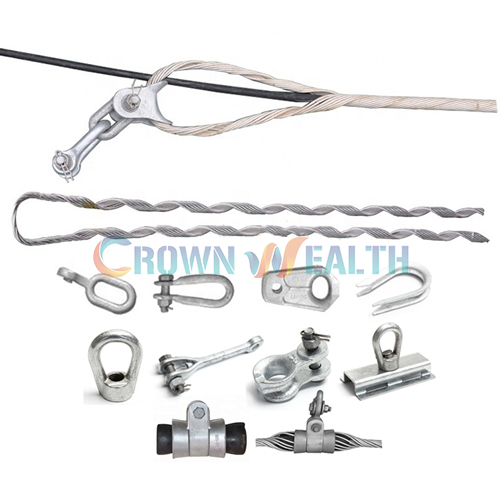
First off, let's quickly go over what Double Yoke Plates are. They're essential parts in many mechanical and electrical systems, especially in power transmission and distribution. They're used to connect different parts, like insulators and conductors, providing a secure and reliable link. You can learn more about Yoke Plates on our website.
Now, the coefficient of friction. It's a measure of how much two surfaces resist sliding against each other. In the case of Double Yoke Plates, this is super important because it affects how well they hold things together. A higher coefficient of friction means the plates are less likely to slip when they're under stress, which is crucial for maintaining the integrity of the whole system.
There are two main types of coefficients of friction: static and kinetic. The static coefficient of friction comes into play when the plates are at rest and you're trying to get them to start moving. It's usually higher than the kinetic coefficient, which applies when the plates are already in motion.
The value of the coefficient of friction for Double Yoke Plates can vary depending on a few factors. One of the biggest factors is the material the plates are made of. For example, if they're made of a rough - textured metal, the coefficient of friction is likely to be higher compared to a smooth - finished one. Another factor is the surface condition. If the plates are dirty, have rust, or some kind of coating, it can change the coefficient.


Let's talk about how we measure the coefficient of friction for our Double Yoke Plates. We use some pretty cool testing equipment. First, we take a sample of the plate and place it against another surface that it's likely to come into contact with in real - world applications. Then, we gradually apply a force to try and make the plate slide. By measuring the force required to start the movement (for static friction) and to keep it moving (for kinetic friction), we can calculate the coefficient.
In our experience, the coefficient of friction for our Double Yoke Plates typically falls within a certain range. But it's not a one - size - fits - all number. Different designs and applications may require different coefficients. For instance, in a high - vibration environment, you might need a higher coefficient of friction to prevent the plates from loosening over time.
Now, you might be wondering how the coefficient of friction relates to other products in the same category. Well, take Aluminum Parallel Clamp for example. These clamps also rely on friction to hold conductors in place. The coefficient of friction for Aluminum Parallel Clamps can be different from that of Double Yoke Plates because of their different shapes, materials, and functions.
Similarly, UB - Type Clevis is another related product. It's used for making connections in various mechanical systems. The coefficient of friction for UB - Type Clevises is important for ensuring a stable connection, but again, it can vary based on the specific design and application.
As a supplier, we always strive to provide the best - quality Double Yoke Plates with the right coefficient of friction for your needs. We understand that each project is unique, and we're more than happy to work with you to determine the most suitable product. Whether you're working on a small - scale electrical project or a large - scale power grid installation, we've got the expertise to help you make the right choice.
If you're in the market for Double Yoke Plates or any of our other products like Aluminum Parallel Clamps or UB - Type Clevises, don't hesitate to reach out. We're here to answer all your questions, provide detailed product information, and even offer samples if needed. We believe in building long - term relationships with our customers, and we're confident that our products will meet your expectations.
So, if you're interested in discussing your requirements or getting a quote, just drop us a message. We're looking forward to working with you and helping you find the perfect solution for your project.
References
- Engineering Mechanics: Statics and Dynamics textbooks
- Industry standards and guidelines for mechanical and electrical components