Hey there! As a supplier of vibration dampers, I've seen firsthand how these nifty little devices interact with other machine components. It's a pretty fascinating topic, and I'm stoked to share some insights with you.


Understanding Vibration Dampers
First off, let's quickly go over what a vibration damper is. Simply put, it's a device designed to reduce or eliminate vibrations in a machine or structure. Vibrations can cause all sorts of problems, like wear and tear on components, noise, and even structural damage over time. A good vibration damper can help prevent these issues and keep your machines running smoothly.
There are different types of vibration dampers out there, but one popular type is the Helical Spiral Vibration Damper. This type of damper uses a helical spiral design to absorb and dissipate vibration energy. It's commonly used in power lines, where it helps reduce the vibrations caused by wind and other environmental factors.
Interaction with Bearings
One of the key machine components that a vibration damper interacts with is the bearing. Bearings are used to support rotating shafts and reduce friction. However, vibrations can put extra stress on bearings, leading to premature wear and failure.
A vibration damper can help alleviate this stress by absorbing the vibrations before they reach the bearing. By reducing the amplitude of the vibrations, the damper can extend the lifespan of the bearing and improve its performance. For example, in a high - speed motor, the constant vibrations can cause the bearing to heat up and wear out quickly. A well - placed vibration damper can reduce these vibrations, keeping the bearing cooler and functioning properly for longer.
Interaction with Shafts
Shafts are another important component in many machines. They transmit power from one part of the machine to another. Vibrations can cause shafts to bend or crack, which can lead to serious problems in the machine.
When a vibration damper is installed near a shaft, it acts as a buffer. It absorbs the vibrations that would otherwise be transferred to the shaft. This helps maintain the straightness and integrity of the shaft. For instance, in a manufacturing machine, a vibrating shaft can cause misalignment of cutting tools or other components. By using a vibration damper, the vibrations are minimized, and the shaft can operate more accurately.
Interaction with Gears
Gears are used to transfer power and change the speed or direction of rotation in a machine. Vibrations can cause uneven wear on gears, leading to noise, reduced efficiency, and eventually gear failure.
A vibration damper can work in harmony with gears by reducing the vibrations that are generated during gear meshing. When the gears engage and disengage, they create vibrations. The damper absorbs these vibrations, ensuring a smoother and quieter operation. In an automotive transmission, for example, a vibration damper can help reduce the noise and vibration that is felt by the driver, providing a more comfortable driving experience.
Interaction with Structural Components
Vibrations can also affect the structural components of a machine. These components provide the framework and support for the entire machine. Excessive vibrations can cause fatigue in the structural members, leading to cracks and failures.
A vibration damper can be installed on the structural components to reduce the vibrations. By doing so, it helps maintain the integrity of the structure. In a large industrial machine, the vibrations can cause the frame to shake and move. A vibration damper can be attached to the frame to absorb these vibrations, preventing damage to the structure and ensuring the stability of the machine.
Interaction with Electrical Components
In machines that have electrical components, vibrations can be a real problem. Electrical connections can become loose, and sensitive electronic parts can be damaged due to vibrations.
A vibration damper can help protect these electrical components. By reducing the vibrations in the machine, it prevents the electrical connections from coming loose. In a control panel of a machine, for example, the vibrations can cause the circuit boards to shake, potentially leading to short - circuits or other electrical failures. A vibration damper can be used to isolate the control panel from the vibrations, keeping the electrical components safe.
Importance of Compatibility
It's important to note that for a vibration damper to work effectively with other machine components, it needs to be compatible. The damper should be selected based on the type of vibrations, the frequency range, and the specific requirements of the machine.
If the damper is not properly matched to the machine, it may not be able to absorb the vibrations effectively. For example, if a damper is designed for low - frequency vibrations but is used in a machine with high - frequency vibrations, it won't be very effective in reducing the vibrations. So, it's crucial to do a thorough analysis of the machine's vibration characteristics before selecting a vibration damper.
Other Protective Fittings
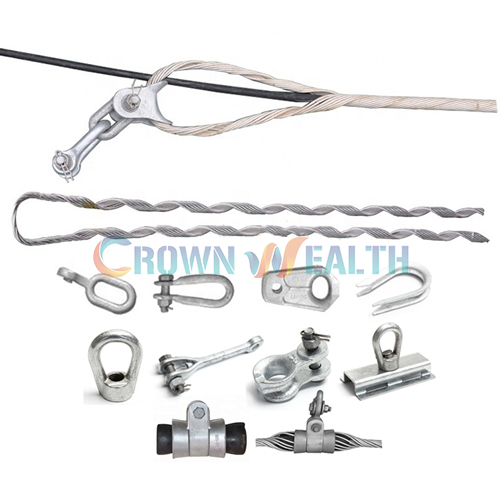
In addition to vibration dampers, there are other protective fittings that can work in conjunction with them. For example, Preformed Armor Rods for Conductor Repair can be used to protect conductors in power lines. These rods can help prevent damage to the conductors caused by vibrations and other environmental factors.
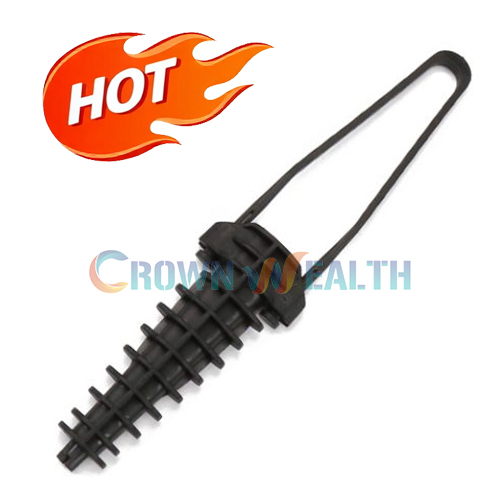
Another useful fitting is the Preformed Dead End Guy Grips. These grips are used to secure guy wires in place. They can help reduce the vibrations in the guy wires and ensure the stability of the structure they are supporting.
Conclusion
So, as you can see, a vibration damper plays a crucial role in interacting with other machine components. It helps protect bearings, shafts, gears, structural components, and electrical components from the harmful effects of vibrations. By working in harmony with these components, a vibration damper can improve the performance, reliability, and lifespan of a machine.
If you're in the market for a vibration damper or other protective fittings, I'd love to help. Whether you have questions about compatibility, installation, or just want to learn more about how these products can benefit your machines, feel free to reach out. Let's work together to find the best solutions for your specific needs.
References
- Harris, C. M., & Crede, C. E. (Eds.). (1976). Shock and Vibration Handbook. McGraw - Hill.
- Meirovitch, L. (2001). Fundamentals of Vibrations. McGraw - Hill.