Preformed armor rods are essential components in the field of cable protection, widely used in various industries to safeguard cables from a multitude of potential threats. While their primary functions typically revolve around mechanical protection, such as preventing abrasion, vibration - induced fatigue, and mechanical stress, a question that might arise is whether they can protect cables from high - energy particle radiation. In this blog, we will delve into this topic and explore the possible mechanisms and implications, as a trusted preformed armor rods supplier.
Understanding Preformed Armor Rods
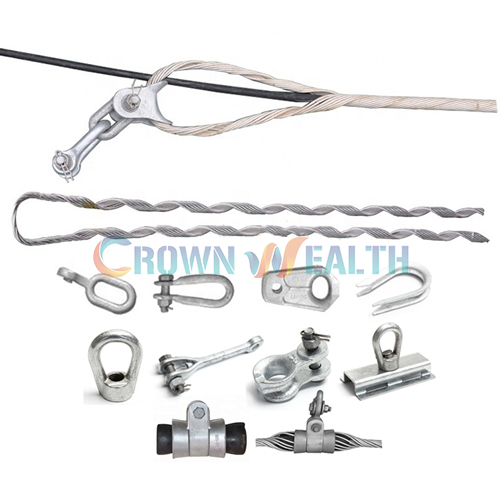
Preformed armor rods are helically wound rods that are designed to be installed around cables. They are usually made from materials like aluminum alloy or steel, chosen for their strength, flexibility, and corrosion resistance. These rods are pre - formed to fit snugly around the cable, providing a protective layer. The design allows for easy installation without the need for special tools in most cases.
The main applications of preformed armor rods include protecting overhead power transmission lines, communication cables, and guy wires. They can distribute mechanical loads evenly along the cable, reducing stress concentrations that could lead to cable failure. For example, when a cable is subjected to wind - induced vibrations, the preformed armor rods act as a buffer, absorbing and dissipating the energy of the vibrations, thereby extending the cable's lifespan.
High - Energy Particle Radiation: A Threat to Cables
High - energy particle radiation consists of particles such as protons, neutrons, and high - energy electrons, which can be found in various environments. In space, for instance, satellites and space probes are constantly exposed to cosmic radiation, which contains high - energy particles. On Earth, radiation can also be present in nuclear power plants, particle accelerators, and certain industrial applications.
When cables are exposed to high - energy particle radiation, several detrimental effects can occur. The radiation can ionize the materials within the cable, causing chemical changes in the insulation and conductor materials. This ionization can lead to the degradation of the insulation properties, increasing the risk of electrical breakdown. Moreover, the high - energy particles can cause physical damage to the cable structure, such as breaking chemical bonds in the polymer insulation, which can lead to cracking and loss of mechanical integrity.
Can Preformed Armor Rods Protect Cables from High - Energy Particle Radiation?
To answer this question, we need to consider the properties of the materials used in preformed armor rods and the nature of high - energy particle radiation.
Material Considerations
As mentioned earlier, preformed armor rods are commonly made from aluminum alloy or steel. Aluminum has a relatively low atomic number (Z = 13), and steel, which is mainly composed of iron (Z = 26), has a higher atomic number. High - energy particle radiation interacts with matter through a process called ionization and nuclear reactions.
When a high - energy particle passes through a material, it can ionize the atoms in the material by knocking out electrons. The probability of ionization depends on the atomic number of the material and the energy of the particle. Materials with higher atomic numbers are generally more effective at stopping high - energy particles because they have a greater number of electrons per unit volume, providing more opportunities for the particles to interact and lose their energy.
In the case of preformed armor rods made from steel, the relatively high atomic number of iron can potentially provide some shielding against high - energy particle radiation. The steel armor rods can act as a barrier, absorbing and scattering the high - energy particles before they reach the cable. However, the effectiveness of this shielding depends on the thickness and density of the steel rods.
On the other hand, aluminum alloy armor rods, with their lower atomic number, are less effective at shielding high - energy particle radiation compared to steel. But they still have some degree of interaction with the radiation. The aluminum atoms can absorb some of the energy of the particles through ionization processes, although the overall shielding ability is limited.
Physical Structure
The helical structure of preformed armor rods can also play a role in radiation protection. The helical shape can increase the path length that the high - energy particles need to travel through the armor rods. As the particles travel along the helical path, they have more opportunities to interact with the atoms in the armor rod material, increasing the probability of energy loss.
However, it's important to note that preformed armor rods are not designed primarily for radiation shielding. Their main purpose is mechanical protection. So, while they may provide some limited protection against high - energy particle radiation, they are not a substitute for dedicated radiation shielding materials.
Other Protective Fittings in Comparison
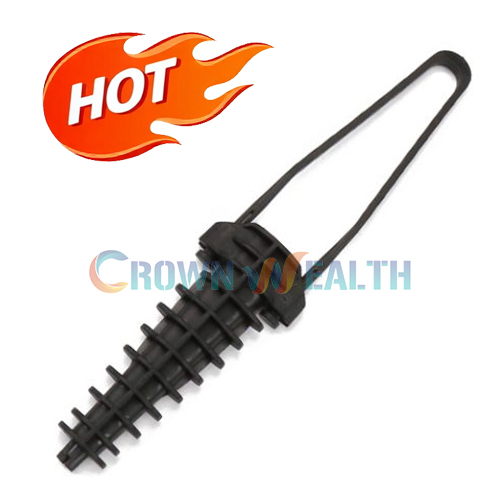
In addition to preformed armor rods, there are other protective fittings that can be used in cable systems. For example, Helical Guy Grips are used to secure guy wires and provide mechanical support. While they are not designed for radiation shielding, they can help maintain the overall integrity of the cable system, which is crucial in radiation - exposed environments.
Spiral Vibration Dampers are another type of protective fitting. They are mainly used to reduce wind - induced vibrations in cables. Although they do not directly protect against radiation, by minimizing vibration - related damage, they can indirectly contribute to the cable's ability to withstand the additional stress caused by radiation exposure.
The Preformed Conductor Tension Set is used to adjust and maintain the tension in conductors. In a radiation - exposed environment, proper tension in the cables is important for their mechanical stability. If the cables are not properly tensioned, they may be more susceptible to damage from radiation - induced degradation.
Practical Applications and Limitations
In some specific applications, preformed armor rods may offer a certain level of radiation protection. For example, in nuclear power plants, where cables are installed in areas with relatively low - level radiation, the preformed armor rods can provide an additional layer of protection. The steel armor rods can act as a first line of defense, reducing the amount of radiation that reaches the cable.
However, in high - radiation environments such as space or near a particle accelerator, the protection provided by preformed armor rods alone is insufficient. In these cases, dedicated radiation shielding materials such as lead or special composite materials need to be used in conjunction with the preformed armor rods. The preformed armor rods can still play a role in protecting the cable from mechanical damage, which is also a concern in these harsh environments.
Conclusion and Call to Action
In conclusion, while preformed armor rods are not specifically designed to protect cables from high - energy particle radiation, they can offer some limited protection depending on the material and structure. The steel preformed armor rods, with their relatively high atomic number, can provide better shielding compared to aluminum alloy rods. However, in high - radiation environments, additional shielding measures are necessary.


As a leading preformed armor rods supplier, we understand the importance of cable protection in various environments. Our preformed armor rods are of high quality, designed to provide excellent mechanical protection for cables. Whether you are in the power transmission, communication, or other industries, our products can help you extend the lifespan of your cables and reduce maintenance costs.
If you are interested in learning more about our preformed armor rods or have specific requirements for cable protection, we invite you to contact us for a detailed discussion. Our team of experts is ready to assist you in finding the best solutions for your cable protection needs.
References
- "Radiation Effects on Polymers and Composites" by John W. Connell and Charles E. Slinkard.
- "Cable Engineering Handbook" by E. E. Dickson.
- "Spacecraft Systems Engineering" by Peter Fortescue, John Stark, and Graham Swinerd.