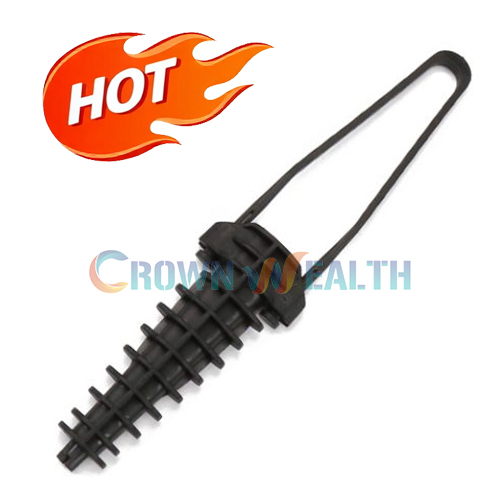
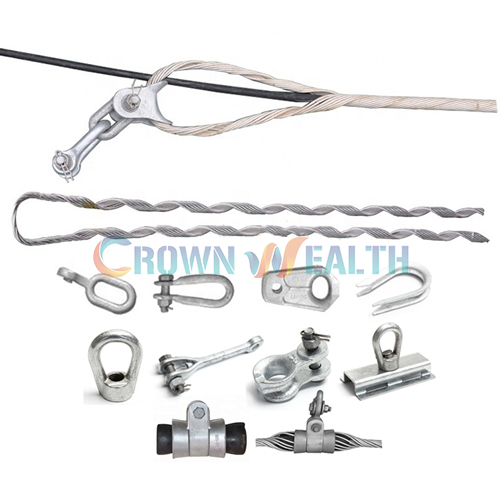
Creep is a phenomenon where a material undergoes slow and progressive deformation under a constant load over an extended period. In the context of overhead power lines, the components used need to have excellent creep resistance to ensure long - term stability and safety. As a supplier of [Preformed Armor Rods]( /protective - fitting/preformed - armor - rods.html), understanding the creep resistance of these products is of utmost importance.
The Basics of Creep in Materials
Creep is a time - dependent deformation process that occurs in materials when they are subjected to a constant stress at elevated temperatures. Although in the case of preformed armor rods, the “elevated temperature” can be the normal operating temperature of power lines under certain environmental conditions or due to the heat generated by current flow.
The creep process typically consists of three stages: primary creep, secondary creep, and tertiary creep. In the primary creep stage, the deformation rate is relatively high at the beginning and then gradually decreases. This is because the material is undergoing initial structural adjustments. The secondary creep stage is characterized by a relatively constant deformation rate, which is often the most important stage to consider for long - term performance. Tertiary creep is the final stage where the deformation rate increases rapidly until failure occurs.

Creep Resistance of Preformed Armor Rods
Preformed armor rods are used to protect overhead conductors from mechanical damage, such as abrasion, vibration, and bending. Their ability to resist creep is crucial for maintaining the integrity of the power line system over time.

Material Selection
The choice of material for preformed armor rods plays a significant role in their creep resistance. Commonly, aluminum alloy is used due to its good combination of strength, conductivity, and corrosion resistance. Aluminum alloys can be heat - treated to enhance their mechanical properties, including creep resistance. For example, some high - strength aluminum alloys with specific alloying elements such as magnesium and silicon can form fine - grained microstructures that impede the movement of dislocations, which is one of the main mechanisms responsible for creep deformation.
Design and Manufacturing
The design and manufacturing process of preformed armor rods also affect their creep resistance. The pre - forming process ensures that the rods have a specific shape that can fit tightly around the conductor. This tight fit distributes the stress evenly along the length of the conductor and the armor rods. If the fit is loose, the stress concentration may occur, which can accelerate creep deformation.
During the manufacturing process, proper heat treatment and cold working can improve the internal structure of the armor rods. Cold working can introduce dislocations into the material, which can interact with each other and impede further dislocation movement, thereby enhancing creep resistance. Heat treatment can relieve internal stresses and optimize the grain structure, which is beneficial for long - term performance.

Importance of Creep Resistance in Power Line Applications
Long - Term Reliability
Power lines are expected to operate for decades without significant failures. The creep resistance of preformed armor rods ensures that they can maintain their mechanical properties and protective function over a long period. If the armor rods creep excessively, they may loosen from the conductor, reducing their ability to protect the conductor from external damage. This can lead to increased wear and tear on the conductor, potentially resulting in power outages or safety hazards.
Vibration and Fatigue Resistance
Power lines are often subjected to vibration caused by wind or electrical currents. Creep - resistant preformed armor rods can better withstand these vibrations. They can maintain their grip on the conductor, reducing the relative movement between the armor rods and the conductor. This helps to prevent fatigue damage, which can occur due to repeated stress cycles caused by vibration.
Comparison with Other Protective Fittings
Tuning Fork Vibration Damper
[The Tuning Fork Vibration Damper]( /protective - fitting/tuning - fork - vibration - damper.html) is another important component in power line systems. While its main function is to reduce vibration, it also needs to have a certain degree of creep resistance. Compared to preformed armor rods, the tuning fork vibration damper is mainly designed to absorb and dissipate vibration energy. However, if it creeps significantly, its vibration - damping performance may be affected. Preformed armor rods, on the other hand, focus more on protecting the conductor from mechanical damage, and their creep resistance is crucial for maintaining the physical integrity of the protection system.

Preformed Dead End Guy Grips
[Preformed Dead End Guy Grips]( /protective - fitting/preformed - dead - end - guy - grips.html) are used to anchor the conductors at the end of the power line. Similar to preformed armor rods, they need to have good creep resistance. Dead end guy grips are subjected to high tensile forces, and any creep deformation can lead to loosening of the grip, which can be extremely dangerous. Preformed armor rods and dead end guy grips work together to ensure the stability and safety of the power line system, and both require high - quality materials and proper design to achieve good creep resistance.
Testing and Evaluation of Creep Resistance
To ensure the creep resistance of preformed armor rods, various testing methods are used. One common method is the creep test, where a sample of the armor rod is subjected to a constant load at a specific temperature for a long time. The deformation of the sample is measured at regular intervals, and the creep rate can be calculated.
Another important test is the stress - relaxation test. In this test, the sample is deformed to a certain strain level, and the stress required to maintain this strain is measured over time. A material with good creep resistance will show a relatively slow decrease in stress over time.
Conclusion
As a supplier of preformed armor rods, we understand the critical role that creep resistance plays in the performance and reliability of power line systems. Our products are carefully designed and manufactured using high - quality materials to ensure excellent creep resistance.
We are committed to providing our customers with the best - quality preformed armor rods that can withstand the harsh operating conditions of power lines. Whether you are involved in the construction, maintenance, or upgrade of power line systems, our preformed armor rods can offer reliable protection for your conductors.
If you are interested in our preformed armor rods or have any questions about their performance, including creep resistance, we encourage you to contact us for further discussion and procurement negotiation. We look forward to working with you to ensure the long - term stability and safety of your power line projects.
References
- “Materials Science and Engineering: An Introduction” by William D. Callister Jr. and David G. Rethwisch.
- “Overhead Transmission Line Engineering” by John P. Harrington.
- Industry standards and guidelines related to power line components and materials.