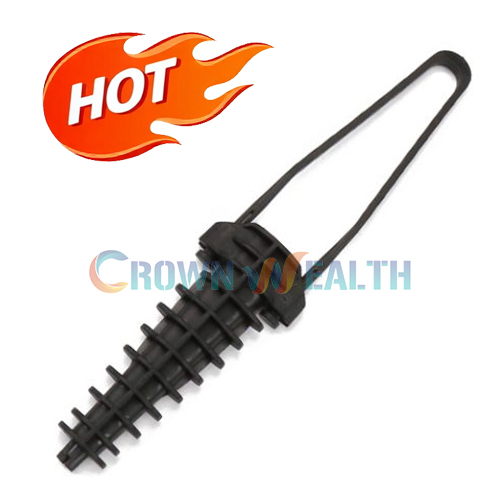
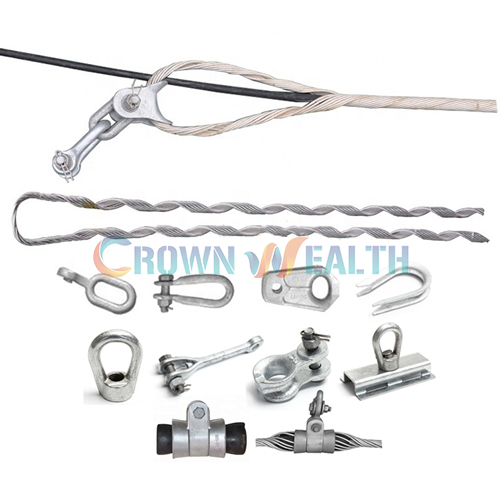
In the construction of overhead cable networks, specialized clamps and fixtures are essential for providing the necessary grip and support. These components are strategically installed at critical points along the cable route: at the start and end points, around bends, and approximately every five to six support spans (depending on the distance between poles). In sections with significant elevation changes, anchor points utilize wedge-shaped plastic bodies paired with self-tightening steel wedges to secure the cable.
Modern manufacturers produce these clamps using UV-resistant plastics to prevent degradation from sun exposure. The design typically involves the cable passing through a molded body where internal wedges lock it firmly in place. This mechanism ensures the cable can withstand sufficient tensile force to resist its own weight and environmental loads.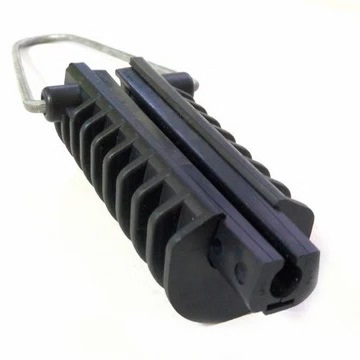
Common Types of Cable Clamps
While specific model numbers vary, the most commonly used categories of clamps are defined by their application:
-
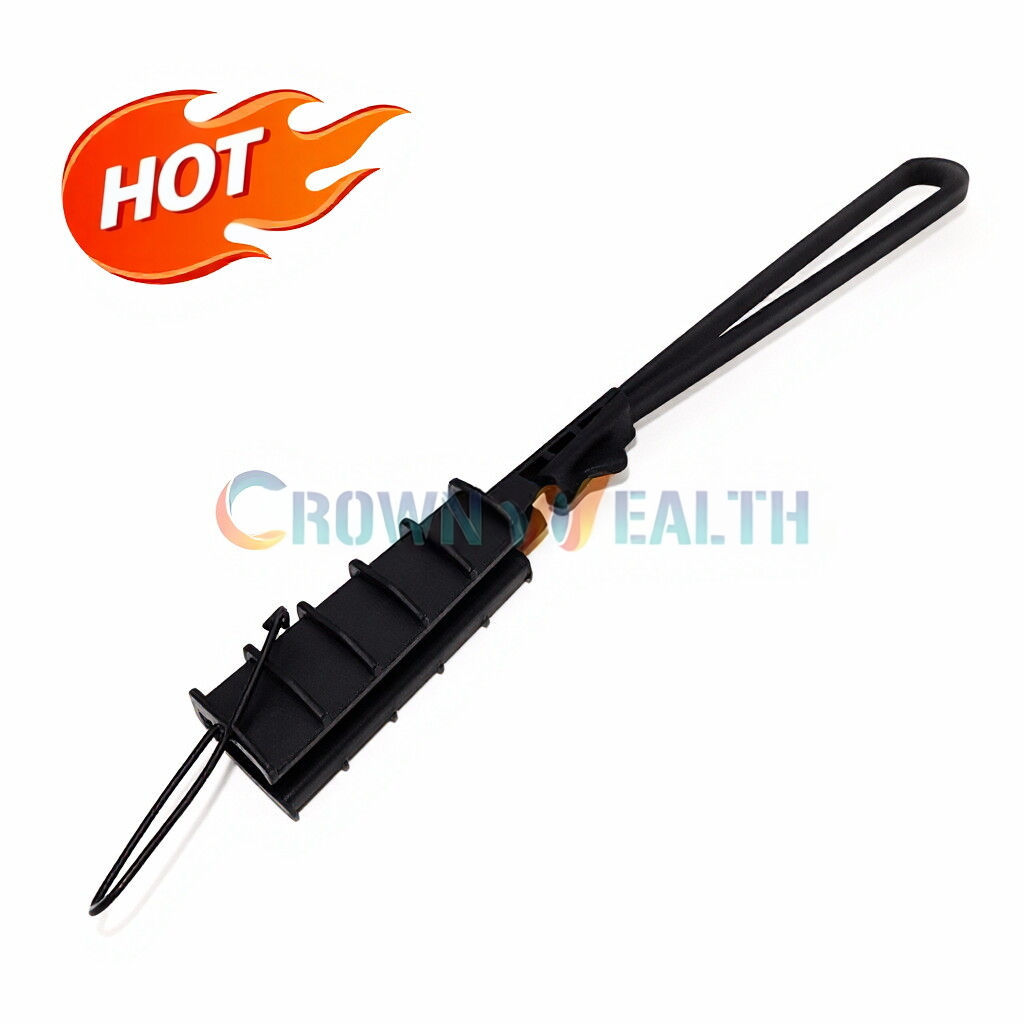
Round Self-Supporting Clamps: Designed for fixing round, self-supporting dielectric cables.
-
Elliptical/Drop Cable Clamps: Used for connecting oval or flat insulated drop cables, often for FTTH (Fiber to the Home) interfaces or twisted pair lines.
-
Messenger Wire Clamps: Intended for fixing cables that feature an external messenger wire or vector.
Key Parameters and Variations
When selecting an anchor clamp, it is important to consider several basic parameters:
-
Cable Diameter Range: The specific size range the clamp is designed to grip.
-
Maximum Tensile Strength: The maximum pulling force the clamp can withstand.
-
Material Composition: Differences in the body material (typically UV-stabilized plastic), metal strap diameter, and overall dimensions.
Spotlight: A Popular Mid-Range Anchor Clamp
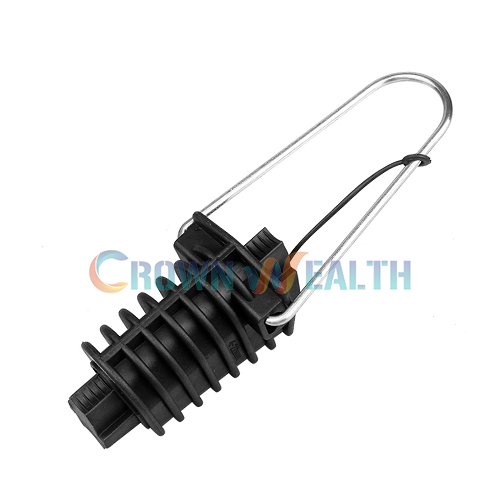
To illustrate a typical product, let's examine a popular mid-range wedge anchor clamp available on our website.
This type of clamp is specifically engineered for the fast and reliable fixing of round, self-supporting cables with a diameter ranging from 6 to 7 mm. While primarily designed for this range, it can accommodate slightly larger cables (up to 9 mm) by simply removing the internal wedges during the pouring/installation process.
Applications:
This terminal is predominantly used in the construction of overhead communication lines, including lightweight and power transmission lines where the span between installation points does not exceed 50 meters.
Design Features:
-
Durable Materials: Manufactured from UV and heat-resistant plastic to ensure longevity outdoors.
-
Adjustable Components: Features a detachable fixing strap made of 5mm thick galvanized steel wire, which simplifies installation.
-
Safety Mechanism: Includes a special locking feature to prevent the wedges from accidentally falling out during handling and installation.
Conclusion
Overhead line accessories are a vital component of any power supply or communication network installation and renovation project. You can find all the necessary construction materials on our website. We only supply high-quality fittings that fully comply with European standards. Before making a purchase, we recommend browsing our full product catalog. If you encounter any difficulties in selecting the appropriate cable accessories, please contact us—we are here to help.