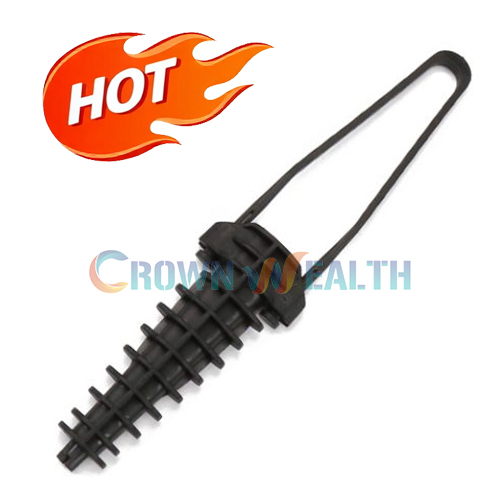
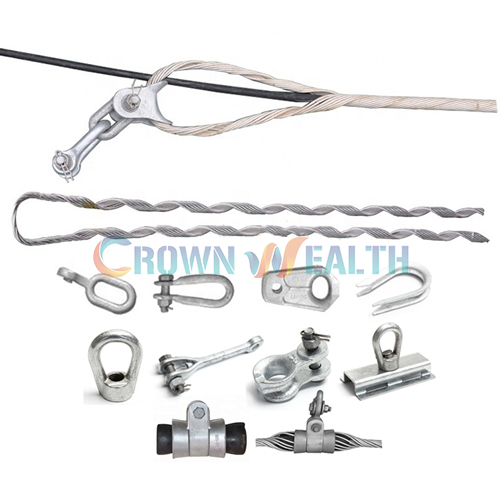
In the fast-evolving world of fiber-to-the-home (FTTH) deployments, the reliability of the last mile is paramount. While much attention is paid to the optical performance of fibers, the mechanical security of the drop cable itself is just as critical. This is where high-quality Fiber Optic Drop Clamps come into play. Specifically designed for 5mm to 10mm cable diameters, these components ensure that your aerial figure-8 cables remain secure, stable, and protected against environmental stress.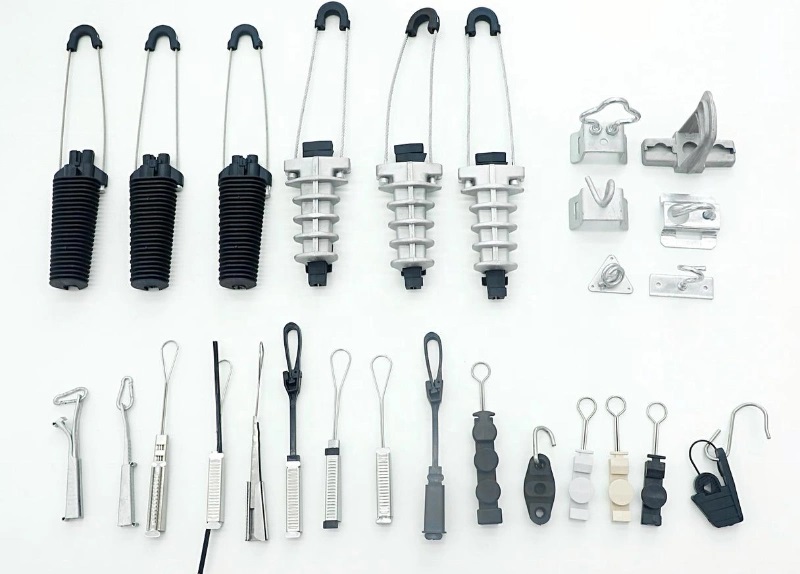
This guide explores the importance, types, and applications of aerial drop wire clamps and dead end tension grips, helping you choose the right hardware for your next project.
What Are Fiber Optic Drop Clamps?
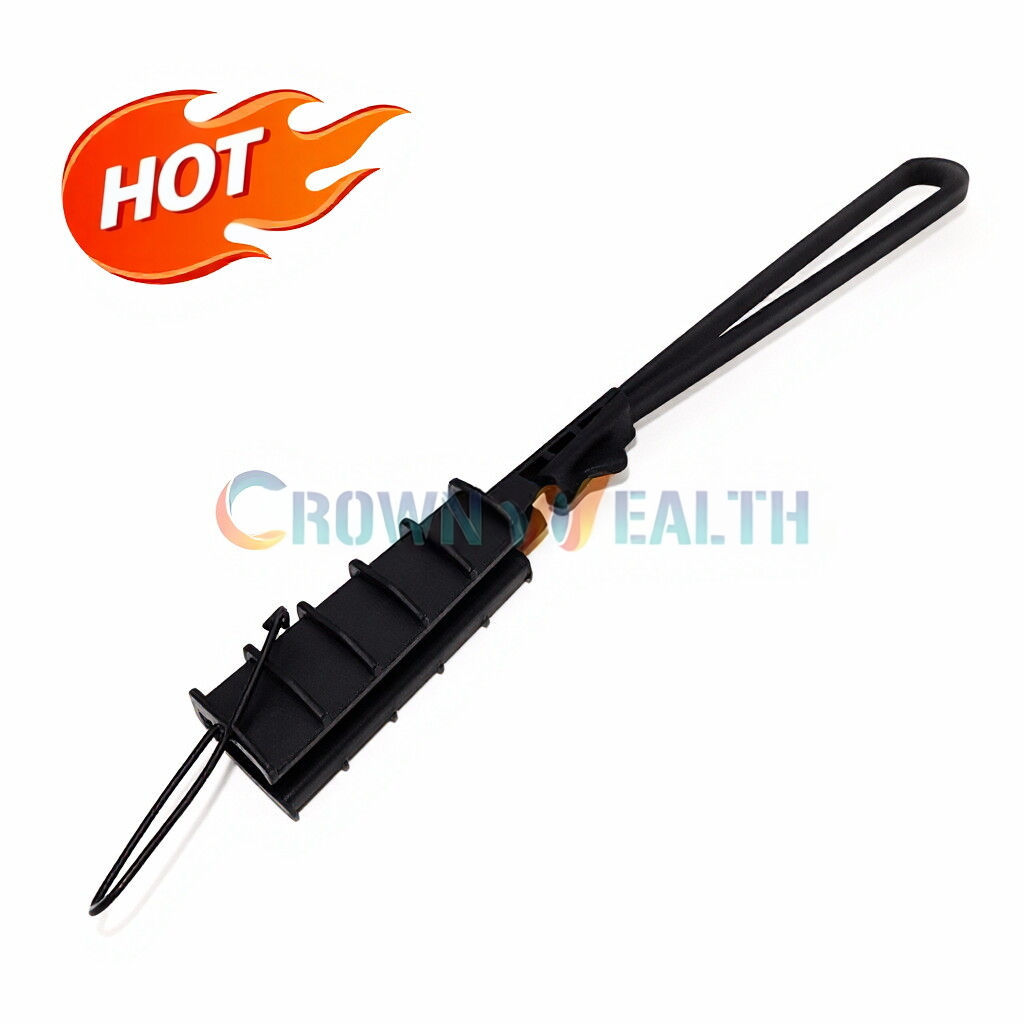
Fiber optic drop clamps (also known as drop wire clamps or aerial cable clamps) are specialized hardware used to attach and support fiber optic cables to poles, towers, or building facades. They are engineered to handle the specific characteristics of fiber cable—primarily its strength, flexibility, and sensitivity to bending.
Our focus here is on clamps designed for 5mm to 10mm diameter cables, which covers the vast majority of standard figure-8 self-supporting cables used in FTTH networks.
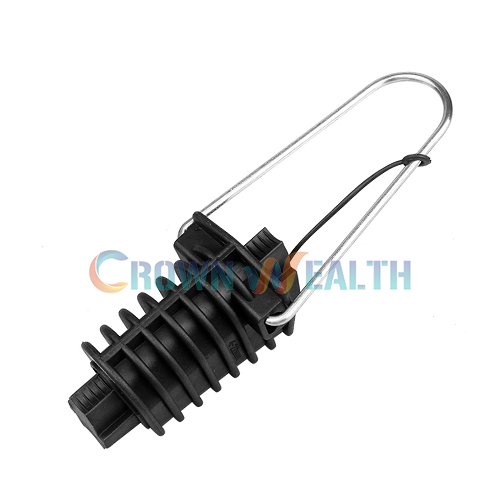
Key Components of a Typical Drop Clamp Assembly:
-
Clamp Body: Made from UV-resistant thermoplastic or die-cast metal to withstand outdoor conditions.
-
Bail (or Loop): The metal strap or hook that connects the clamp to the messenger wire or pole bracket.
-
Insert/Grip: The internal component that securely holds the cable jacket without damaging the fibers inside.
Why "Figure-8" Cable Compatibility Matters
A figure-8 cable features an integrated steel messenger wire that provides tensile strength, eliminating the need for a separate support strand in many aerial installations. However, this design requires a specific type of clamp.
Standard clamps are fully compatible with figure-8 self-supporting cables, meaning they can grip both the messenger wire and the fiber sheath simultaneously. This compatibility ensures:
-
Proper Load Distribution: The clamp transfers the tension load to the messenger wire, not the delicate fiber optic core.
-
Reduced Signal Loss: By preventing excessive bending or pulling on the fiber, these clamps help maintain optimal optical performance.
Types of Clamps for Aerial Installation
When installing drop cables, two primary types of grips are used: Dead End Tension Grips and Aerial Drop Wire Clamps.
1. Dead End Tension Grips (Preformed or Compression)
These are used at the termination points of a cable span—where the cable ends or transitions to another structure. Their primary function is to absorb the full tensile load of the cable.
|
Feature |
Benefit |
|---|---|
|
High Tensile Strength |
Prevents cable slippage under heavy tension (e.g., wind, ice loads). |
|
Full 360° Grip |
Distributes pressure evenly around the cable jacket, preventing deformation. |
|
Corrosion Resistance |
Typically made from stainless steel or galvanized steel for long-term durability. |
2. Aerial Drop Wire Clamps (Mid-Span or Support Clamps)
These clamps are used along the span (mid-span) to provide additional support or to change the direction of the cable run. They do not typically carry the full dead-end load but provide essential stability.
-
Function: To hold the cable against a pole or bracket without restricting the fiber's ability to move slightly with temperature changes.
-
Design: Often feature a "live hinge" design that allows for easy installation and adjustment.
Applications in FTTH Drop Cable Installation
The 5mm-10mm size range is the industry standard for most residential and commercial FTTH drops. These clamps are essential for several scenarios:
-
Aerial to Building Drops: Securely connecting the main aerial line to a customer's premises.
-
Pole Line Transitions: Attaching figure-8 cable to distribution poles using J-hooks or brackets.
-
Rural Broadband Projects: Providing robust, long-lasting support in areas with high winds or extreme weather.
-
Urban MDU (Multi-Dwelling Unit) Installations: Managing multiple drop cables neatly and securely on a single pole or riser.
Key Features to Look For in Quality Clamps
Not all clamps are created equal. When sourcing hardware for your network, look for products with the following specifications:
-
Precision Engineering: The clamp must fit snugly on 5mm–10mm cables. A loose fit causes slippage; an overly tight fit can crush the cable jacket.
-
UV and Weather Resistance: Outdoor components must resist degradation from sunlight, rain, and temperature fluctuations (-40°C to +65°C operating range is ideal).
-
Non-Slip Design: Internal teeth or textured grips should bite into the cable jacket securely without cutting through it.
-
Tool-Free Installation: Many modern clamps are designed for quick hand-installation, reducing labor time and costs.
Customization and Bulk Orders
Every network has unique requirements. While standard 5mm-10mm clamps suit most applications, some projects may require:
-
Custom Colors (e.g., orange for high-voltage caution).
-
Specialized Bracket Adapters.
-
Non-Standard Sizes for hybrid or specialty cables.
Reputable manufacturers accept custom sizes and bulk orders, ensuring that large-scale deployments (like municipal broadband initiatives or new housing developments) receive consistent, high-quality hardware on schedule.
Conclusion: Investing in Reliability
Choosing the right fiber optic drop clamps is not merely a matter of convenience; it is a fundamental aspect of network integrity. By selecting precision-engineered aerial drop wire clamps and dead end tension grips that are fully compatible with your 5mm to 10mm figure-8 cables, you are investing in the long-term success of your FTTH infrastructure.
Reliable hardware minimizes maintenance calls, reduces signal degradation caused by physical stress, and ensures your network stands strong against the elements for years to come.