In the fast-evolving world of fiber optic infrastructure, precision and reliability are non-negotiable. Whether you are a telecommunications contractor, a data center solutions provider, or a wholesale distributor, the quality of your hardware—right down to the smallest clamp—can define the success of an entire network. This is where Private Label Fiber Cable Clamps come into play.
This article provides a deep dive into what private label manufacturing means for fiber cable clamps, why it matters for your business, and how custom-engineered solutions can give you a competitive edge in the market.
What Are Private Label Fiber Cable Clamps?
Private Label Fiber Cable Clamps are cable management components manufactured by one company (the OEM/ODM manufacturer) but branded and sold under another company’s name and logo. Unlike generic, off-the-shelf clamps, these products are built to meet the specific requirements of your project or product line.
They serve a critical role in:
-
Securing fiber optic cables in aerial, duct, or underground installations.
-
Preventing excessive bending, tension, or abrasion.
-
Ensuring long-term network stability and performance.
The “private label” aspect allows you to control the design, materials, packaging, and branding—transforming a standard component into a seamless extension of your own product ecosystem.
Why Choose Custom-Manufactured Fiber Cable Clamps?
1. Precision Engineering for Diverse Applications
Fiber optic networks vary widely—from FTTH (Fiber to the Home) deployments to large-scale backbone installations. Off-the-shelf clamps may not fit every scenario. Custom manufacturing ensures:
-
Exact Dimensional Accuracy: Inner diameters, grip lengths, and bend radii tailored to your cable specifications.
-
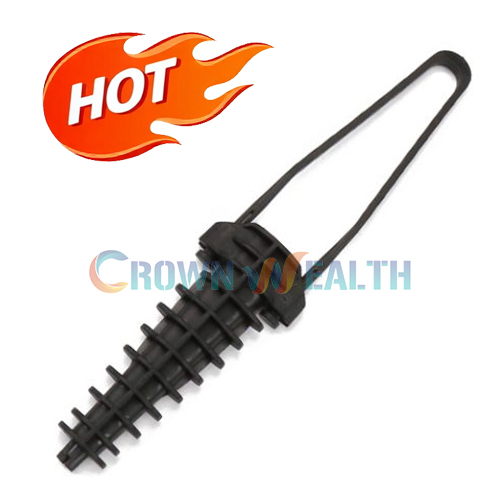
Application-Specific Designs: Aerial figure-8 clamps, drop wire clamps, ADSS cable clamps, or duct entry seals.
-
Environmental Adaptability: UV-resistant polymers for sunny regions, corrosion-resistant metals for coastal areas, or low-temperature elastomers for cold climates.
By matching the clamp design to the installation environment, you reduce field failures and warranty claims.
2. Material Selection: Strength Meets Safety
The choice of material directly impacts performance and safety. Custom manufacturing allows you to specify:
|
Material |
Advantages |
Typical Use Cases |
|---|---|---|
|
Stainless Steel |
High tensile strength, corrosion resistance |
Aerial and heavy-duty applications |
|
UV-Stabilized Nylon/ABS |
Lightweight, weatherproof, dielectric |
FTTH drop installations |
|
Zinc-Alloy Plated Steel |
Cost-effective, durable |
Duct and indoor cabling |
|
Rubber/Silicone Inserts |
Cable protection, anti-vibration |
Sensitive fiber bundles |
A well-designed clamp balances mechanical strength with gentle handling of delicate glass fibers—something only achievable through precise material engineering.
3. Brand Consistency and Market Positioning
Private labeling transforms functional hardware into a brand asset. By manufacturing clamps with your logo, colors, and packaging, you:
-
Reinforce brand recognition across every component.
-
Present a unified, professional image to clients and contractors.
-
Increase perceived value compared to generic parts.
For distributors and system integrators, this differentiation can be the deciding factor in winning large contracts.
The Manufacturing Process: From Specification to Delivery
Understanding the production workflow helps you appreciate the level of control and quality assurance involved.
Step 1: Requirement Analysis & Consultation
It begins with your technical drawings, cable samples, or performance criteria. Engineers assess:
-
Cable type and dimensions
-
Tensile strength requirements
-
Environmental exposure (temperature, UV, moisture)
-
Installation method (pre-installed vs. field-installable)
Step 2: Prototyping and Testing
A prototype batch is produced for validation. Tests typically include:
-
Tensile Load Testing: Ensuring clamps hold under specified pulling forces.
-
Thermal Aging Tests: Verifying performance after prolonged heat exposure.
-
Salt Spray Tests: Checking corrosion resistance for metal components.
-
Insertion Loss Checks: Confirming no signal degradation occurs due to stress.
Step 3: Mass Production & Quality Control
Once approved, mass production follows strict ISO-compliant processes. Each batch undergoes:
-
Dimensional inspection
-
Surface finish checks
-
Functional testing (e.g., snap-fit force, locking mechanism)
Step 4: Branding and Packaging
Your clamps are laser-marked or molded with your logo, then packed in custom boxes, blister packs, or bulk reels according to your distribution model.
Key Types of Customizable Fiber Cable Clamps
Depending on your market focus, you may require different styles of clamps:
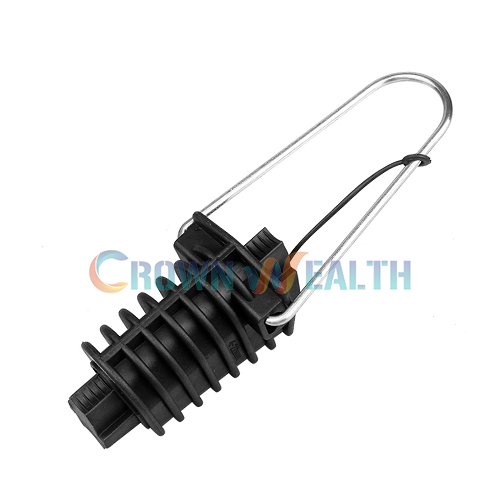
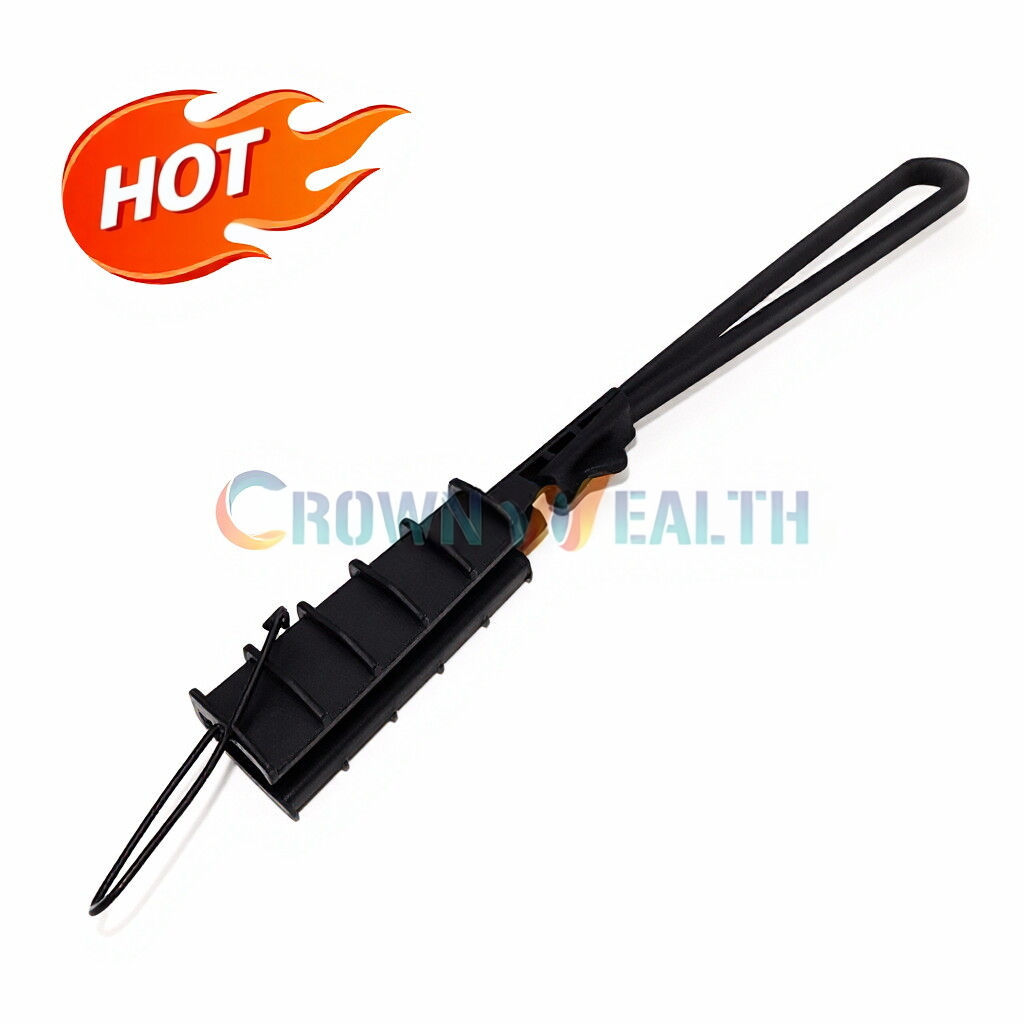
A. Aerial Fiber Clamps
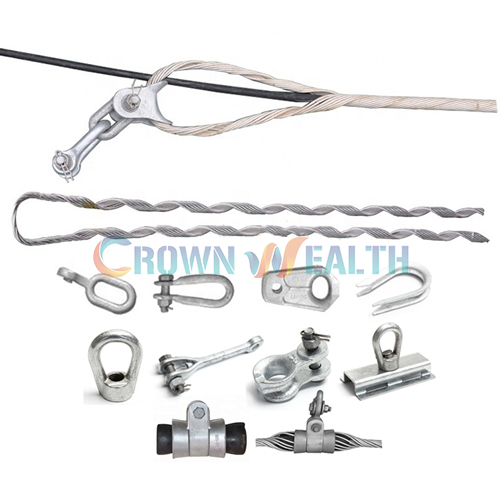
Designed for overhead lines, these clamps secure self-supporting or lashing wires without damaging the fiber. Custom options include:
-
Adjustable wedge grips
-
Integrated dead-end anchors
-
Corrosion-resistant galvanization levels
B. FTTH Drop Clamps
Used to terminate fiber drops at the customer premises. Custom features often involve:
-
Low-profile designs for aesthetic appeal
-
Tool-less installation mechanisms
-
Color-coded bodies for service identification
C. Duct and Pathway Clamps
Installed inside conduits or trays, these clamps prevent cable movement and abrasion. Customizations include:
-
Fire-retardant materials
-
Snap-lock vs. screw-fix designs
-
Compatibility with specific raceway systems
Benefits of Partnering with a Specialized Manufacturer
Choosing a partner who specializes in fiber optic hardware brings advantages beyond basic fabrication:
-
Faster Time-to-Market: Experienced manufacturers streamline tooling and sampling.
-
Cost Efficiency at Scale: Optimized molds and material sourcing reduce per-unit costs.
-
Technical Support: Direct access to engineers for troubleshooting and design tweaks.
-
Compliance Assurance: Products can be manufactured to meet Telcordia, IEC, or RoHS standards.
Conclusion: Elevate Your Fiber Solutions Through Customization
In an industry where reliability is measured in milliseconds and microns, Private Label Fiber Cable Clamps offer more than just physical support—they provide peace of mind. By investing in clamps that are engineered to your exact specifications, you ensure compatibility, enhance brand visibility, and minimize long-term maintenance risks.
Whether you need a small batch of specialty clamps or high-volume production for nationwide deployment, working with a dedicated manufacturer allows you to deliver a complete, cohesive fiber solution under your own trusted name.
Ready to start your custom project?
Contact our engineering team today to discuss your specifications, request samples, or receive a detailed quotation tailored to your requirements.