As the demand for high-speed connectivity continues to expand, fiber optic networks have become essential to modern communication systems. Ensuring the stability and durability of these networks requires dependable installation components, and plastic tension clamps have proven to be one of the most effective solutions for securing fiber optic cables in aerial deployments.
A plastic tension clamp is designed to anchor and support fiber optic cables under tension. Manufactured from high-quality engineering plastics such as UV-resistant nylon or reinforced polymer composites, these clamps offer excellent durability in outdoor environments. Unlike traditional metal fittings, they are resistant to corrosion, making them particularly suitable for use in humid, coastal, or industrial areas.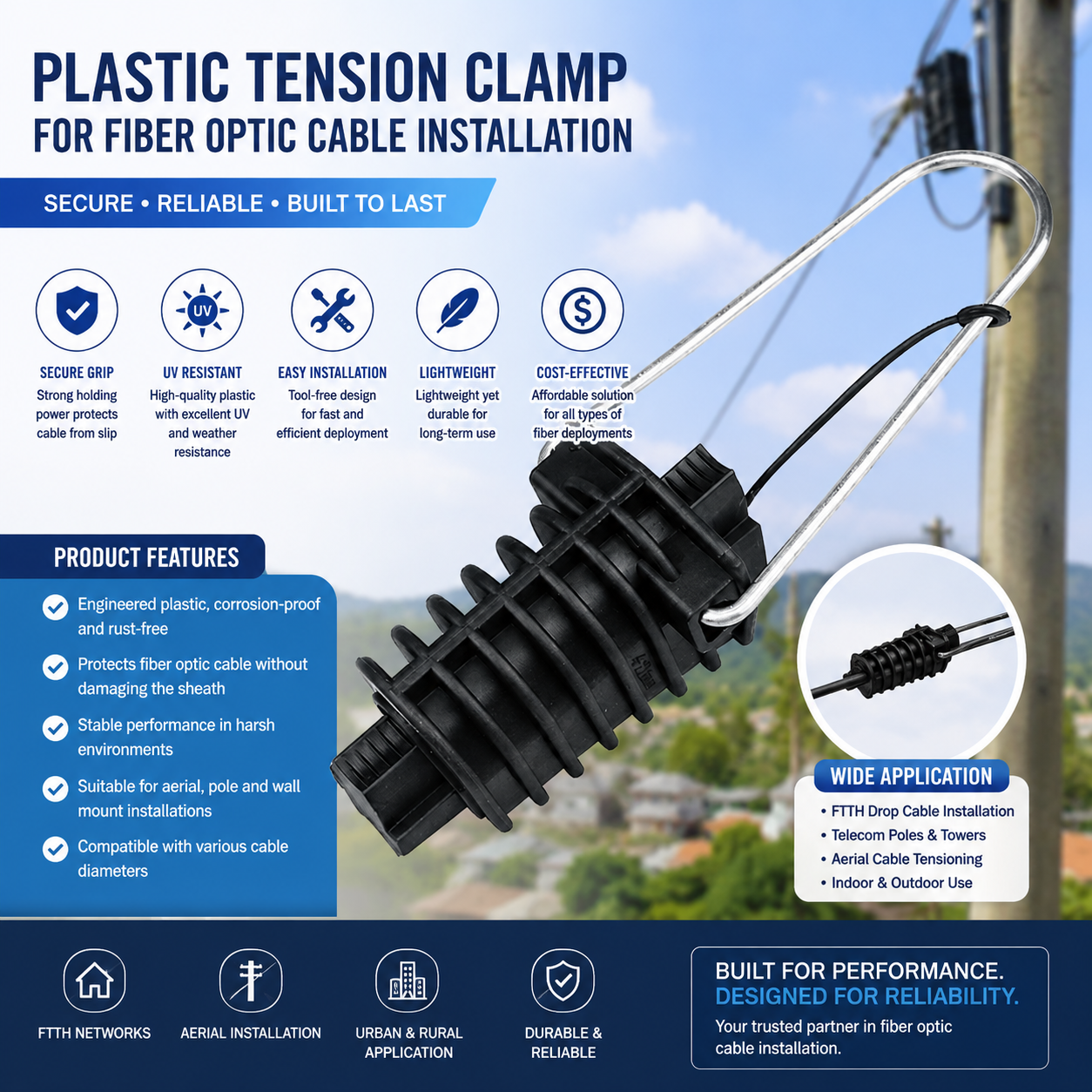
One of the main advantages of plastic tension clamps is their lightweight construction. This makes them easier to transport and handle during installation, improving overall efficiency on job sites. Despite their low weight, they provide strong mechanical performance, ensuring that cables remain securely in place under varying loads and environmental conditions.
Another key benefit is their resistance to weather and ultraviolet exposure. High-grade plastic materials are engineered to withstand long-term exposure to sunlight, rain, and temperature changes without becoming brittle or losing strength. This results in a longer service life and reduces the need for frequent replacements or maintenance.
Installation is simple and efficient. Most plastic tension clamps feature a user-friendly design that allows for quick deployment with minimal or no tools. The cable is inserted into the clamp, secured by an internal wedge or gripping mechanism, and then attached to a pole or bracket. This straightforward process helps reduce labor costs and speeds up large-scale network installations.
The clamp’s internal structure is designed to provide a firm and secure grip without damaging the cable sheath. This is critical for maintaining signal integrity and ensuring long-term performance of the fiber optic system. A well-secured cable is less likely to slip or become damaged, even in challenging weather conditions.
Plastic tension clamps are widely used in FTTH applications, where they secure drop cables from distribution points to homes and buildings. They are also commonly applied in aerial cable installations along telecom poles and towers, supporting both urban and rural network expansion. Their versatility makes them suitable for a variety of installation scenarios.
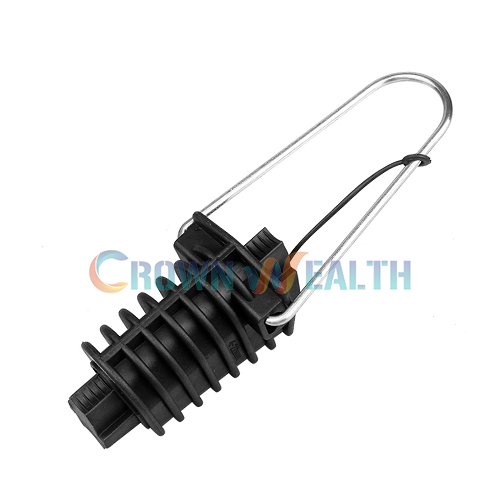
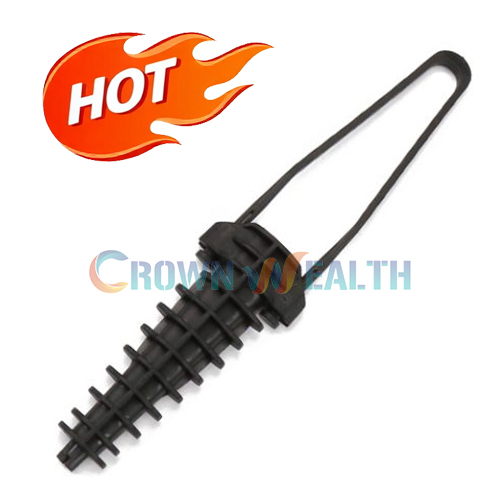
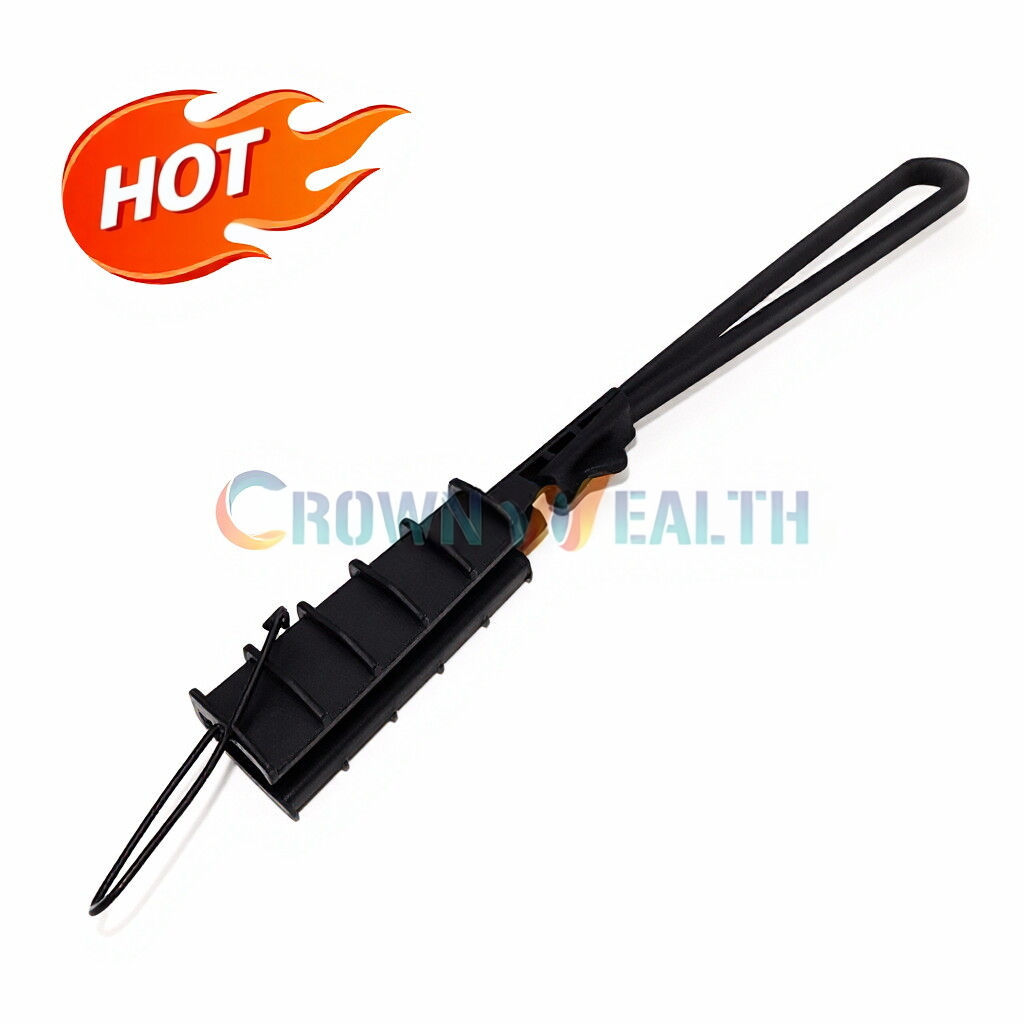
A typical plastic tension clamp consists of a reinforced body, a self-adjusting wedge mechanism, and a hook or bail for easy attachment. This simple yet effective design ensures reliable tension management while allowing flexibility in installation across different types of infrastructure.
When choosing a plastic tension clamp, it is important to consider cable size compatibility, load requirements, and environmental conditions. Selecting the right clamp ensures optimal performance and contributes to the overall safety and longevity of the network.
In conclusion, plastic tension clamps offer a practical, durable, and cost-effective solution for fiber optic cable installation. Their combination of strength, ease of use, and resistance to environmental factors makes them an essential component in modern telecommunications infrastructure.