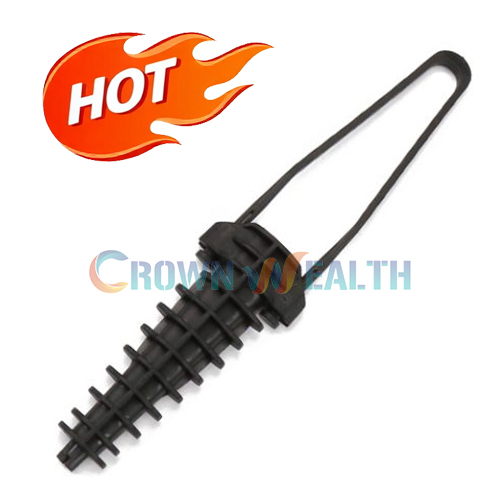
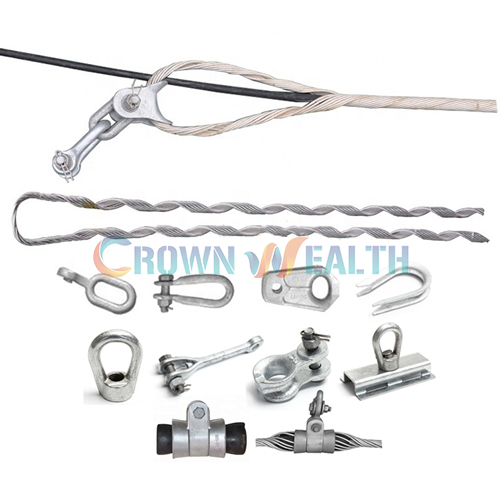
As a supplier of Dead End Guy Grips, I've had numerous inquiries regarding their acoustic performance. In this blog, I'll delve into the intricacies of the acoustic performance of Dead End Guy Grips, exploring the factors that influence it and its implications in various applications.
Understanding Dead End Guy Grips
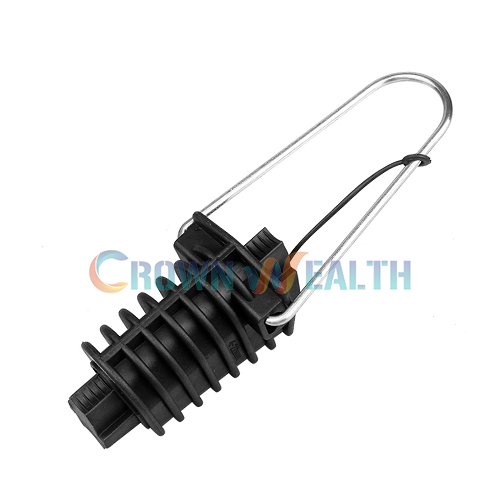
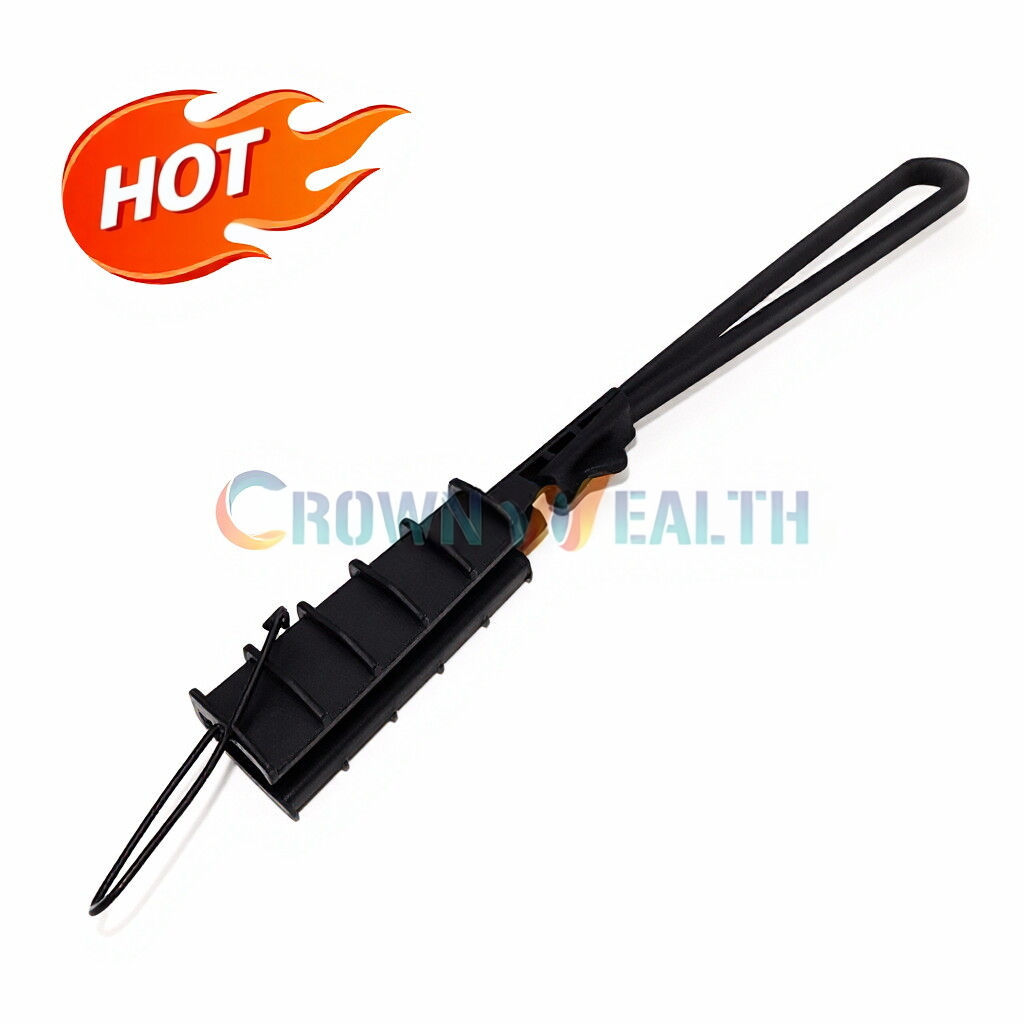
Dead End Guy Grips are essential components in overhead power lines, telecommunications networks, and other structures where cables need to be securely terminated. They are designed to provide a reliable connection between the cable and the support structure, ensuring the stability and safety of the entire system. There are different types of Dead End Guy Grips available in the market, such as Helical Guy Grips, Cable Guy Grips, and Preformed Dead End Guy Grips. Each type has its own unique features and advantages, but they all share the common goal of providing a strong and durable connection.
Acoustic Performance Basics
Acoustic performance refers to how an object interacts with sound waves. In the context of Dead End Guy Grips, it involves understanding how these grips generate, transmit, or absorb sound. Sound is essentially a mechanical wave that travels through a medium, such as air or a solid material. When a force is applied to an object, it can cause vibrations, which in turn generate sound waves.
The acoustic performance of Dead End Guy Grips is important for several reasons. Firstly, in urban and residential areas, excessive noise from power lines or other structures can be a nuisance to nearby residents. Dead End Guy Grips that produce less noise can help reduce the overall acoustic impact of these systems. Secondly, in industrial settings, noise can also affect the working environment and potentially lead to hearing damage for workers. Therefore, understanding and optimizing the acoustic performance of Dead End Guy Grips is crucial for both environmental and occupational health reasons.
Factors Affecting the Acoustic Performance of Dead End Guy Grips
Material Composition
The material used to manufacture Dead End Guy Grips plays a significant role in their acoustic performance. Different materials have different acoustic properties, such as density, elasticity, and damping characteristics. For example, materials with high damping properties can absorb more energy from vibrations, reducing the amount of sound generated.
Metallic materials, such as steel, are commonly used in Dead End Guy Grips due to their high strength and durability. However, steel can also be a good conductor of sound, which means that vibrations can easily travel through it and be radiated as sound. On the other hand, some non - metallic materials, like certain polymers, may have better damping properties and can help reduce noise.
Design and Geometry
The design and geometry of Dead End Guy Grips can also influence their acoustic performance. Grips with complex shapes or sharp edges may create turbulent air flow around them when wind passes through, which can generate aerodynamic noise. A smooth and streamlined design can help reduce this type of noise.
The way the grip is attached to the cable and the support structure also matters. If the connection is not secure or has loose parts, it can lead to rattling or vibrating, which will produce additional noise. A well - designed grip that provides a tight and stable connection can minimize these issues.
Installation Quality
Proper installation is crucial for the acoustic performance of Dead End Guy Grips. If the grips are not installed correctly, they may not function as intended and can generate excessive noise. For example, if the grip is not tightened to the appropriate torque, it may move or vibrate under normal operating conditions, causing noise.
During installation, it is also important to ensure that the surrounding environment is considered. For instance, if the grip is installed near a surface that can reflect sound, the noise level may be amplified.
Measuring the Acoustic Performance of Dead End Guy Grips
To accurately assess the acoustic performance of Dead End Guy Grips, several measurement techniques can be used. One common method is to use a sound level meter to measure the sound pressure level (SPL) generated by the grip under different operating conditions. This can be done in a laboratory setting, where the grip can be tested in a controlled environment, or in the field, where real - world conditions can be simulated.
Another approach is to use vibration sensors to measure the vibrations of the grip. Since sound is generated by vibrations, measuring the vibration characteristics can provide valuable insights into the acoustic performance. By analyzing the frequency and amplitude of the vibrations, it is possible to identify the sources of noise and develop strategies to reduce it.
Applications and the Importance of Acoustic Performance
Power Transmission Lines
In power transmission lines, Dead End Guy Grips are used to secure the cables at the end points. These lines often run through both rural and urban areas. In urban areas, the acoustic performance of the grips is particularly important to minimize the impact on nearby residents. Excessive noise from power lines can be a source of complaints and may even lead to regulatory issues.


By using Dead End Guy Grips with good acoustic performance, power companies can ensure that their operations are more environmentally friendly and compliant with noise regulations.
Telecommunications Networks
Telecommunications networks also rely on Dead End Guy Grips to support and terminate cables. In areas where these networks are installed close to residential or commercial buildings, noise reduction is crucial. Additionally, in data centers and other facilities where telecommunications equipment is housed, a quiet environment is necessary to prevent interference with sensitive electronic equipment.
Improving the Acoustic Performance of Dead End Guy Grips
Material Selection
As mentioned earlier, choosing the right material is key to improving the acoustic performance. Manufacturers can explore the use of materials with better damping properties, such as composite materials or polymers with added fillers. These materials can absorb more energy from vibrations and reduce the amount of sound generated.
Design Optimization
Designers can work on optimizing the shape and structure of Dead End Guy Grips to reduce noise. This may involve creating more streamlined shapes to minimize aerodynamic noise and ensuring that the internal structure of the grip is designed to dampen vibrations.
Installation Best Practices
Providing clear installation guidelines and training to installers is essential. This includes specifying the correct torque values for tightening the grips and ensuring that all components are properly aligned. Regular inspections after installation can also help identify and correct any issues that may affect the acoustic performance.
Conclusion
The acoustic performance of Dead End Guy Grips is an important aspect that should not be overlooked. It has implications for both environmental and occupational health, as well as for the overall functionality and compliance of power and telecommunications systems. By understanding the factors that affect acoustic performance, measuring it accurately, and implementing strategies to improve it, we can ensure that Dead End Guy Grips not only provide a reliable connection but also contribute to a quieter and more sustainable environment.
If you are interested in learning more about our Dead End Guy Grips and their acoustic performance, or if you are looking to purchase high - quality grips for your projects, we invite you to contact us for further discussions and potential procurement opportunities.
References
- Engineering Handbook on Overhead Power Lines, various editions
- Research papers on acoustic properties of materials used in electrical components
- Industry standards and guidelines related to noise reduction in power and telecommunications systems