Hey there! I'm a supplier of link fittings, and today I wanna chat about how tolerance levels can have a big impact on link fitting performance.
Let's start by understanding what tolerance levels are. In the world of manufacturing, tolerance is the acceptable amount of variation in a dimension or a characteristic of a part. For link fittings, this could mean the diameter of a hole, the thickness of a plate, or the angle of a bend. Every link fitting we make has a specified tolerance range, and staying within this range is crucial for how well the fitting will work.
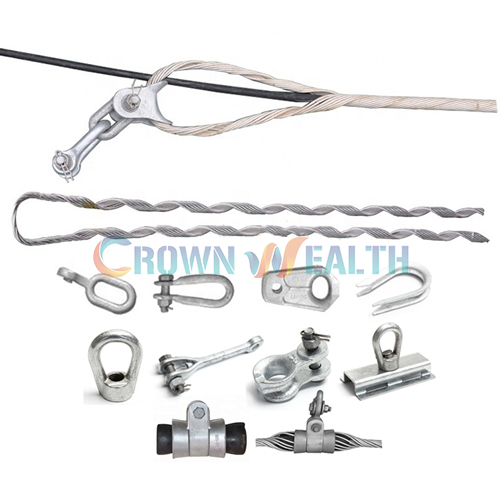
First off, let's talk about the importance of precision. When it comes to link fittings, precision is key. If the tolerance levels are too loose, the fitting might not fit properly with other components. For example, we have these Ring Monoblock Forging. These rings are designed to connect different parts of a system, and if the inner diameter has a tolerance that's too large, it won't grip the connected part tightly. This can lead to a loose connection, which might cause rattling, vibrations, or even disconnection over time.
On the flip side, if the tolerance levels are too tight, it can also cause problems. Take our Hot Dip Galvanized U Bolt for example. These bolts are used to secure pipes and other objects. If the diameter of the U-bolt is made with a tolerance that's too small, it might not fit around the object it's supposed to secure. This can lead to a lot of frustration for the end - user, who might have to spend extra time and effort trying to make it fit, or even end up having to replace the fitting altogether.
Now, let's dig deeper into how tolerance levels affect performance in different aspects.
Strength and Durability
The tolerance levels of a link fitting can directly impact its strength and durability. When a fitting is made within the proper tolerance range, it can distribute stress evenly across its structure. For instance, our HDG Parallel Groove Clamp is designed to hold electrical cables in place. If the clamp is made with the correct tolerances, it can apply the right amount of pressure on the cables without over - stressing them. This ensures that the clamp can withstand the mechanical forces and environmental factors it's exposed to over time.
However, if the tolerance is off, it can create weak points in the fitting. A fitting with a larger - than - specified hole might have a reduced cross - sectional area at that point, which can make it more prone to failure under stress. On the other hand, a fitting with a smaller - than - specified dimension might be over - stressed during installation, which can lead to cracks or fractures over time.
Functionality
The functionality of a link fitting is also highly dependent on tolerance levels. Consider a fitting that's used to connect two moving parts. If the tolerance is too loose, the parts might move more than intended, which can affect the overall performance of the system. For example, in a machinery setup, a loose - fitting link can cause misalignment between components, leading to decreased efficiency and increased wear and tear.
Conversely, a fitting with a too - tight tolerance can make it difficult to assemble or disassemble the parts. This can be a major issue in industries where quick maintenance and replacement are necessary. For example, in the automotive industry, mechanics need to be able to easily remove and replace link fittings during repairs. If the tolerances are too tight, it can slow down the repair process and increase labor costs.
Compatibility
Tolerance levels play a crucial role in ensuring compatibility between different link fittings and other components in a system. In a complex network of pipes, cables, or mechanical parts, each fitting needs to work seamlessly with the others. If a fitting has a tolerance that's outside the acceptable range, it might not be compatible with other parts.
For example, in an electrical system, if a connector fitting has a different tolerance than the cables it's supposed to connect, it can lead to poor electrical conductivity. This can result in power losses, overheating, and even electrical failures. In a plumbing system, a pipe fitting with incorrect tolerances might not seal properly, leading to leaks and water damage.
Quality Control
As a link fitting supplier, quality control is one of our top priorities. We use a variety of methods to ensure that our fittings are made within the specified tolerance levels. This includes using advanced measuring tools such as calipers, micrometers, and coordinate measuring machines (CMMs). These tools allow us to accurately measure the dimensions of each fitting and compare them to the design specifications.
We also have a team of quality control inspectors who visually inspect each fitting for any signs of defects or deviations from the tolerance range. This multi - step approach helps us catch any issues early on and ensure that only high - quality fittings are sent out to our customers.
Cost - Benefit Analysis
When it comes to tolerance levels, there's always a balance between cost and performance. Tighter tolerance levels generally mean higher manufacturing costs. This is because it requires more precise machining processes, better - quality materials, and more rigorous quality control. However, the cost of producing a fitting with looser tolerances might be lower, but it can lead to higher costs in the long run due to potential performance issues, replacements, and maintenance.
As a supplier, we work closely with our customers to understand their specific needs and requirements. We help them find the right balance between tolerance levels and cost. For some applications, where high performance and reliability are crucial, such as in aerospace or medical industries, customers might be willing to pay more for fittings with very tight tolerances. On the other hand, for less - critical applications, such as in some consumer products, a slightly looser tolerance might be acceptable to keep the costs down.
In conclusion, tolerance levels have a significant impact on link fitting performance. From strength and durability to functionality and compatibility, every aspect of a fitting's performance is affected by how well it adheres to the specified tolerance range. As a link fitting supplier, we're committed to producing high - quality fittings that meet the needs of our customers.
If you're in the market for link fittings and want to discuss your specific requirements, we'd love to hear from you. Whether you need help choosing the right fitting or want to learn more about our quality control processes, feel free to reach out and start a conversation. We're here to provide you with the best solutions for your link fitting needs.


References
- Smith, J. (2018). Manufacturing Tolerance and Its Impact on Product Performance. Journal of Engineering and Manufacturing, 12(3), 45 - 52.
- Johnson, R. (2019). Quality Control in Link Fitting Production. International Journal of Manufacturing Technology, 20(2), 78 - 85.
- Brown, A. (2020). Cost - Benefit Analysis of Tolerance Levels in Manufacturing. Industrial Engineering Review, 25(4), 112 - 120.